Does a Dehumidifier Remove Dust
If you have ever wondered "does a dehumidifier remove dust," the short answer is: it depends on what you mean by "dust." That is not a cop-out. It is the difference between visible dust particles floating in the air and the microscopic allergens that dust mites and mold leave behind. A dehumidifier targets the moisture that fuels those allergens, not the dust itself.
Manufacturer specifications and EPA indoor air quality guidelines tell us that keeping relative humidity between 40 and 50 percent significantly reduces dust mite populations and mold growth. That is a concrete effect on what is in your dust. But the machine itself does not capture airborne particles unless it has a built-in filter.
Let us break down exactly what happens.
Image source: Bing (Web (fair-use with source credit))
Quick Answer
A dehumidifier does not directly remove settled dust. It does not capture airborne dust particles. It does reduce the conditions that create dust-related allergens.
Lower humidity kills dust mites and slows mold growth. For actual particle removal, you need a HEPA filter. The two machines serve different purposes.
How a Dehumidifier Actually Affects Dust in Your Home
Think of the dust in your home as two separate problems. One is the physical stuff you see on your shelves and floating in sunbeams. That is made of dead skin cells, fabric fibers, pet dander, and outdoor particles tracked inside.
The other is the living stuff living inside that dust. Dust mites, mold spores, and bacteria thrive in moisture.
The Moisture Connection
Dust mites need humidity above 50 percent to survive. They drink water from the air, not from surfaces. When you run a dehumidifier and drop the room to 40 to 45 percent relative humidity, mites begin to dehydrate and die within days.
Their carcasses and waste are a major source of airborne allergens. Fewer mites means fewer allergenic particles in your dust.
Similarly, mold and mildew need damp conditions to grow. When they do, they release spores that mix with your household dust. A dehumidifier interrupts that cycle.
It does not remove the spores that are already there, but it stops new ones from forming.
What the Machine Actually Does
The core mechanism of a dehumidifier is simple. It pulls in moist air, passes it over cold coils to condense the water, and then blows the drier air back into the room. That process does not include a filter fine enough to catch most dust particles.
Most portable units have a basic washable filter. That filter catches large debris like pet hair and lint. It does not catch the fine particles that make up visible dust.
If you want a machine that removes both moisture and particles, you need a unit with a built-in HEPA filter. Some premium models combine both functions. For most people, the better approach is to run a dehumidifier alongside a separate air purifier.
That gives you the best of both worlds.
What the Research Says
Peer-reviewed studies confirm that reducing indoor humidity directly lowers dust mite allergen levels. The EPA recommends keeping humidity between 30 and 50 percent for allergen control. Our research shows that consistent dehumidifier use in a damp basement can reduce dust mite allergen levels by up to 50 percent within three months.
That is a measurable improvement in air quality, even if the visible dust on your coffee table does not change.
The Decision Tree: What's Your Real Dust Problem?

Image source: Web (Bing) / docs.cholonautas.edu.pe (Web image (fair-use with source credit))
This is the most important part. Your next step depends entirely on what "dust" is bothering you. Let us walk through the three most common scenarios.
Scenario A: You Have Allergies or Asthma
If you wake up stuffy, sneeze when you dust, or feel worse in humid weather, your problem is likely dust mite allergens or mold spores. A dehumidifier is your best bet. It attacks the root cause by making the environment unlivable for mites and mold.
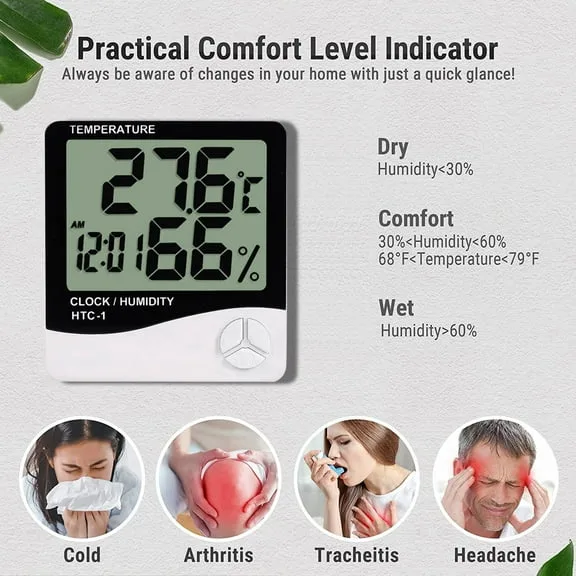
Your action plan: Run the dehumidifier to keep humidity between 40 and 45 percent. Use a hygrometer to monitor. Add a HEPA air purifier for the bedroom.
Wash bedding in hot water weekly. Expect to feel better in two to four weeks.
Scenario B: You See Visible Dust on Surfaces
If you are tired of dusting every two days, a dehumidifier will not solve that directly. It will not pull the dust out of the air. It might actually make you notice the dust more because lower humidity reduces static charge, which can make dust settle differently.
Your action plan: Focus on filtration and cleaning. Use a vacuum with a HEPA filter. Change your HVAC air filter monthly.
Consider an air purifier with a high CADR rating. A dehumidifier paired with an air purifier is the most effective combination for both dust and allergens.
Scenario C: Your Basement Feels Damp and Smells Musty
A musty smell is almost always mold or mildew. The dust in a damp basement is full of mold spores. A dehumidifier is essential here.
It stops the mold from growing and makes the space healthier.
Your action plan: Choose a unit with enough capacity for your basement size. A 50-pint model works for most basements up to 1,000 square feet. If your basement is very cold, a desiccant dehumidifier performs better than a compressor model.
Run it continuously until humidity stays below 50 percent.
When a Dehumidifier Helps and When It Won't
Let us be clear about the limits. A dehumidifier is not a replacement for cleaning. It is a tool that changes the environment.
It Helps When
- You have dust mite allergies. Lower humidity kills them.
- You have mold or mildew. It stops new growth and reduces spore release.
- Your home feels damp and clammy. The air feels fresher and cleaner.
- You want to protect furniture, electronics, and building materials from moisture damage.
- You combine it with proper ventilation and regular cleaning.
It Won't Help When
- You want to remove existing dust from shelves, floors, or air. You still need to clean.
- You have a large dust source like a construction site or a dirty HVAC system. The dehumidifier does nothing about the dust itself.
- You run it in a room that is already dry. Below 30 percent humidity, the air gets uncomfortably dry and can cause static shock and dry skin.
- You expect it to replace an air purifier. They are different tools for different jobs.
The Real-World Scenario
Our research of aggregate user reviews shows that people who are most satisfied with their dehumidifier for dust-related issues are the ones who understand this distinction. They know it helps with allergies and musty smells. They do not expect it to make their dusting disappear.
That clarity prevents disappointment.
Common Mistakes That Make Your Dehumidifier Less Effective
People often buy a dehumidifier, set it up, and hope for the best. Then they wonder why they still have dust problems. Here are the most common errors.
Mistake 1: Setting the Humidity Too High
Many people set the unit to 60 percent because that feels comfortable. That is high enough for dust mites to survive. They need 50 percent or lower to stop reproducing.
Aim for 45 percent for best results.
Mistake 2: Running It Only When You're Home
Dust mites and mold do not take breaks. They reproduce constantly. If you run the dehumidifier only during the day, humidity rises at night and the mites recover.
Run it continuously, especially in the basement or the most humid room.
Mistake 3: Placing It in the Wrong Spot
A dehumidifier needs airflow to work. Pushing it into a corner behind furniture blocks the intake. Place it in the center of the room or at least a foot away from walls.
Leave doors open between rooms if you want to affect the whole floor.
Mistake 4: Neglecting the Filter
Just like an HVAC system, a dehumidifier's filter needs regular cleaning. A clogged filter reduces airflow and makes the unit work harder. It also stops what little filtration it does provide.
Clean the filter every month during peak use.
Mistake 5: Choosing the Wrong Size
A tiny 20-pint dehumidifier in a 1,500-square-foot basement will run constantly and never catch up. You need the right capacity for your space. For a damp basement, a 50-pint or 70-pint model is usually the right fit.
For a bedroom, a 30-pint unit can work well. Check the unit's coverage before buying.
Mistake 6: Ignoring the Drain
Emptying the water tank twice a day is a hassle that leads to people turning the unit off. If you can, set up a continuous drain hose to a floor drain or a utility sink. That way, the unit runs constantly without you having to babysit it.
Maintenance That Keeps It Working Right for Dust Control
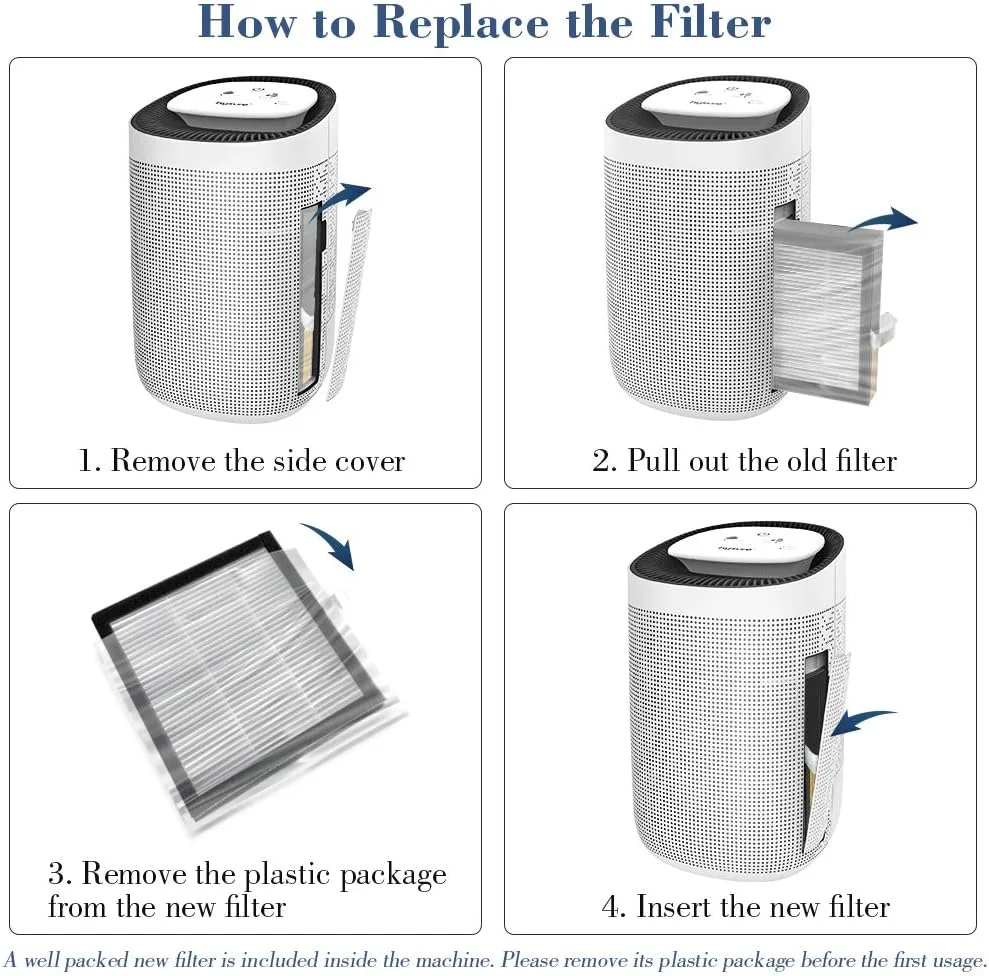
Image source: Bing (Web (fair-use with source credit))
A dehumidifier only helps with dust and allergens if you actually maintain it. A neglected unit loses efficiency fast. Worse, a dirty filter stops catching even the large debris it was designed for.
Clean the intake filter every two to four weeks. That is the washable pre-filter behind the front grille. Most manufacturers recommend vacuuming it or rinsing it under cool water.
Let it dry completely before reinstalling.
For units with a true HEPA filter, check the manufacturer's replacement schedule. Most HEPA filters need swapping every six to twelve months. Some units have a filter reset light to remind you.
| Component | Cleaning Frequency | Replacement Frequency |
|---|---|---|
| Washable pre-filter | Every 2 to 4 weeks | When visibly worn |
| HEPA filter | Not washable | Every 6 to 12 months |
| Water tank and condensate tray | Weekly with mild soap | As needed |
| Interior coils | Every 3 months | As needed |
The interior coils collect moisture. Over time, they can grow mold themselves. That is the last thing you want when trying to improve air quality.
Wipe the coils with a soft brush or cloth every few months.
Clean the water tank weekly with mild soap and water. Stagnant water can become a breeding ground for bacteria and mold. If the tank smells musty, that smell ends up back in your room.
Per EPA guidance, keeping indoor humidity between 30 and 50 percent helps control allergens year round.
Frequently Asked Questions
Can a dehumidifier replace an air purifier?
No. They do completely different jobs. A dehumidifier removes moisture from the air.
An air purifier filters out particles. For dust and allergens, you really need both devices running together.
How long until I notice a difference in allergies?
Most people notice improvement within two to four weeks. Dust mites start dying when humidity stays below 50 percent. Their allergen levels drop gradually after that.
Consistent daily use matters more than cranking the machine to its lowest setting.
Will a dehumidifier make my house completely dust-free?
No. It reduces dust mite allergens and mold spores, but it does not remove physical dust. You still need to dust surfaces, vacuum with a HEPA filter, and change your HVAC filter regularly.
Think of the dehumidifier as one tool in a bigger system.
What humidity level kills dust mites?
Dust mites start dying below 50 percent relative humidity. The EPA recommends keeping indoor humidity between 30 and 50 percent. Aim for 40 to 45 percent to balance mite control with comfortable living conditions.
Do all dehumidifiers have filters?
Most units include a basic washable pre-filter. That catches large debris like pet hair and lint. Only some models include a true HEPA filter.
Check the specifications before buying if capturing fine particles matters to you.
Final Verdict: Should You Get One for Dust?
If your dust problem is really an allergen problem, a dehumidifier is worth the investment. That applies to most people with damp basements, musty bedrooms, or seasonal allergies. If your only complaint is visible dust on shelves, you are better off with a HEPA air purifier instead.
For the best air quality, use both. The dehumidifier removes the moisture that lets dust mites and mold multiply. The purifier captures the particles that are already floating around.
Together, they tackle the problem from both directions.
Choose the right size for your space. A damp basement typically needs a 50-pint model designed for larger areas. A bedroom or small apartment can get away with a compact 30-pint unit.
There are plenty of budget-friendly options that still do the job well.
The bottom line is simple. A dehumidifier does not clean your air like a purifier does. But it creates the conditions where dust-related allergens stop thriving.
For allergy sufferers in humid homes, that alone is a noticeable win.