Why Is My Basement Still Humid With a Dehumidifier
You're standing in a basement that feels like a wet blanket. The dehumidifier has been running for two days straight, the bucket keeps filling, and the air still feels thick. It's one of the most frustrating home mysteries out there: why is my basement still humid with a dehumidifier working right in front of you?
The short answer is that most basement humidity problems aren't caused by a broken dehumidifier. They're caused by a system that's undersized, poorly placed, or fighting a moisture source it was never designed to handle. The EPA recommends keeping indoor relative humidity between 30% and 50% to prevent mold and structural decay.
Hitting that range takes more than just pressing the "on" button.
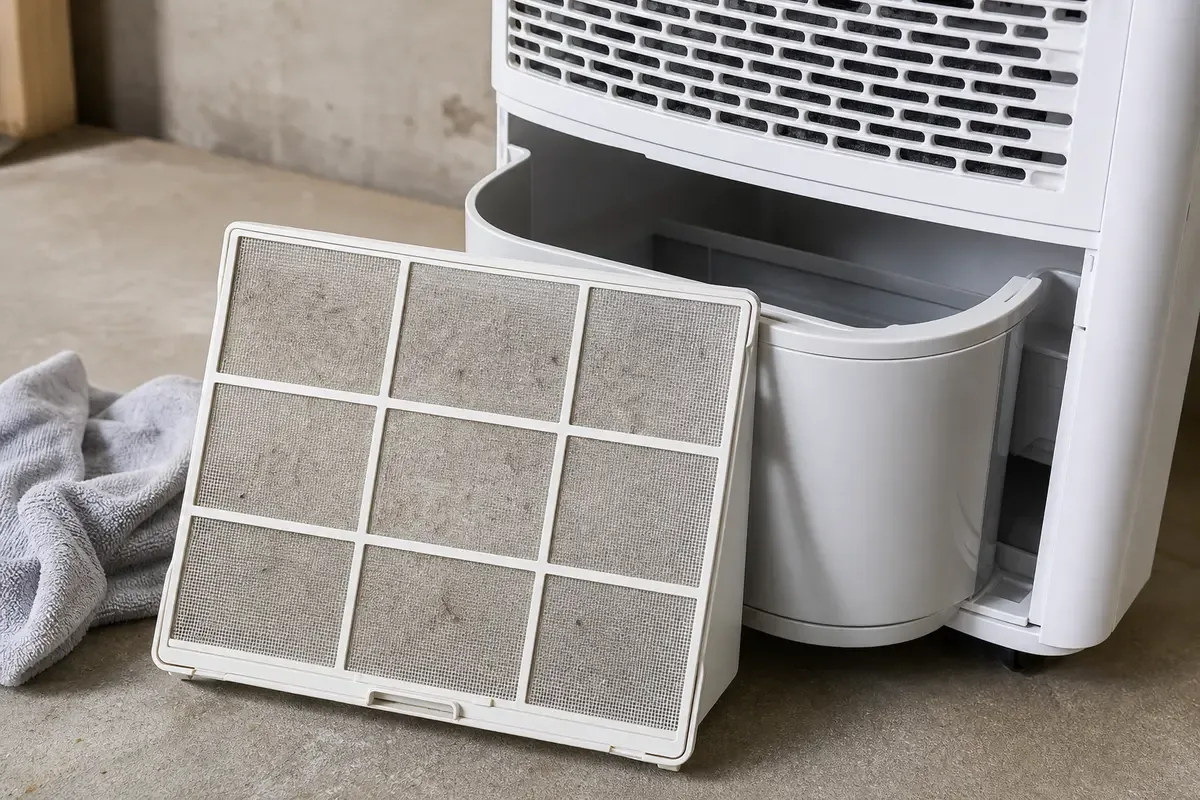
Image source: Bing (Web (fair-use with source credit))
Quick Answer
Your dehumidifier is likely undersized for the square footage. It might be placed too close to a wall, or a hidden moisture source is overwhelming its capacity. Check for high humidity readings, open crawlspace access, or a unit working below 65°F where efficiency drops sharply.
Measure the space, verify the water removal rate, and confirm the unit drains continuously.
Most standard portable dehumidifiers remove 20 to 50 pints per day. A damp basement with exposed concrete and poor drainage can easily produce 10 to 15 gallons of moisture daily. If your unit sits on the low end of that range, it's simply outmatched.
How a Dehumidifier Actually Works (and Where It Fails)
A compressor dehumidifier pulls humid air across cold coils. Moisture condenses on the coils and drips into the bucket or drain hose. The dry air gets reheated and pushed back into the room.
That loop has three physical limits: the size of the coils, the airflow across them, and the temperature of the surrounding air.
The Temperature Problem
Most standard dehumidifiers are tested at 80°F and 60% relative humidity. That's the rating on the box. When your basement hovers around 60°F to 65°F, the same unit extracts much less moisture.
The coils get colder, frost forms, and the machine spends energy defrosting instead of dehumidifying. This is the biggest performance gap we see in real basements.
The Airflow Trap
A dehumidifier needs to breathe. If you park it directly against a wall, the intake gets starved. Airflow drops, the coils get too cold, and the unit starts short-cycling on the frost sensor.
Manufacturer specs typically recommend six to twelve inches of clearance on all sides. Boxes stacked around the unit often sabotage its basic function.
The Recirculation Limit
A dehumidifier only treats the air that reaches its intake. It does not push dry air through closed doors or separate rooms. If your basement has a storage area behind a door, the main unit struggles to condition the whole space.
You end up with one dry pocket surrounded by dampness.
The 5-Step Diagnostic Workflow to Find the Real Problem
Most people skip this part. They assume the dehumidifier is the whole system. In reality, it's just one component.
Work through these five steps in order.
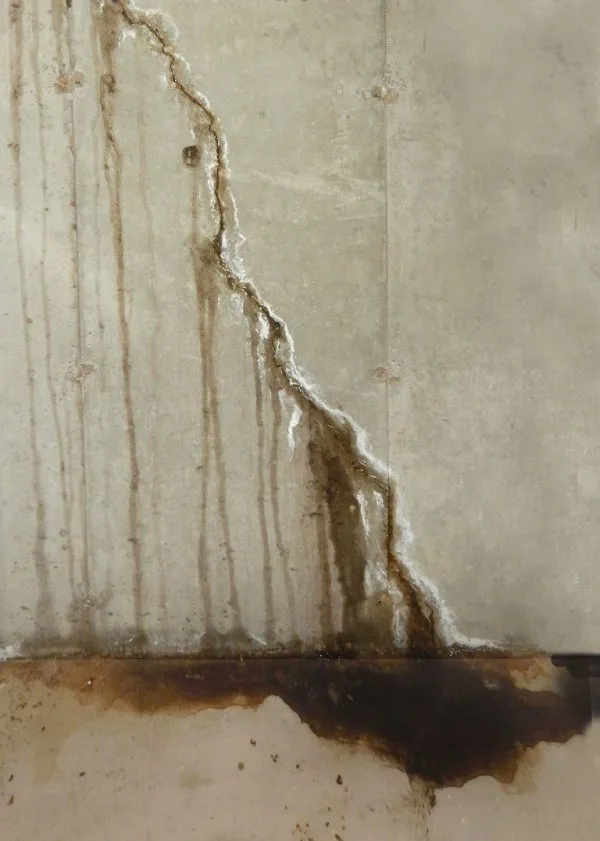
Image source: Bing (Web (fair-use with source credit))
Step 1: Verify the Humidity Reading
Buy a separate hygrometer and place it at least ten feet from the dehumidifier. Wait 20 minutes for it to stabilize. If the reading stays above 60%, the unit is underperforming or undersized.
If it sits between 30% and 50%, the dehumidifier is working and the problem is something else. A handheld hygrometer costs around $10 and is the most reliable diagnostic tool you can own.
Step 2: Check the Drainage Setup
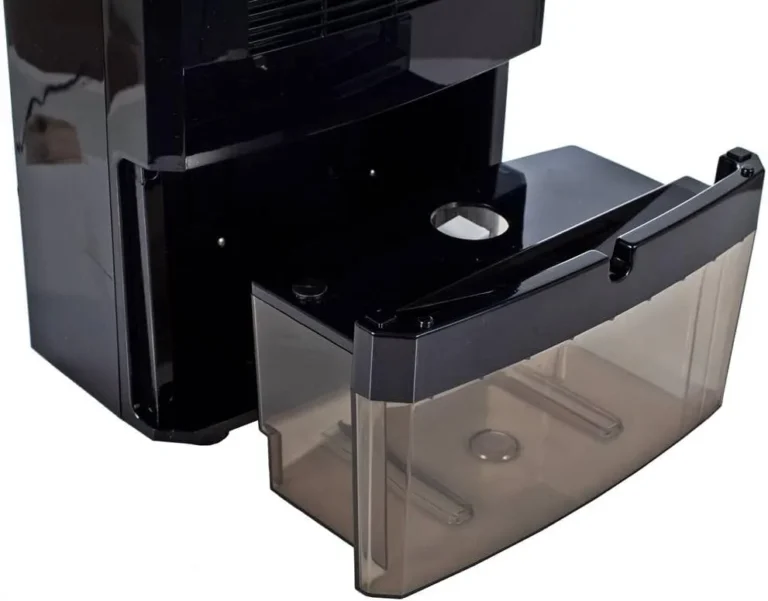
A full bucket shuts the unit off automatically. That's the biggest hidden culprit. If the bucket fills every four hours and you empty it once a day, the unit runs for maybe six hours and does nothing for the other eighteen.
Verify that the continuous drain hose is connected, clear of kinks, and flowing into a floor drain or sump pit.
Step 3: Identify the Moisture Source
Feel the concrete floor and walls. Damp or visibly wet surfaces mean groundwater or vapor intrusion. A moisture meter on the wall gives you a definitive reading.
HVAC condensation lines, leaky pipes, and an unsealed sump pit all add meaningful moisture to basement air. These sources feed the dehumidifier faster than it can cope.
Step 4: Evaluate the Coverage Ratio
Match the rated pint capacity against your basement's square footage. A 30-pint unit realistically covers 500 to 1,000 square feet of moderately damp space. A 70-pint unit handles up to 2,500 square feet.
If your basement is 1,800 square feet and you're running a small-capacity model, you have a coverage mismatch.
Step 5: Test the Airflow Path
Close all basement windows and vents. Prop interior doors open. Move the dehumidifier toward the center of the space, away from walls and furniture.
Run the unit for 24 hours and log the water removed. Compare that against the rated extraction rate to see if the machine meets its spec.
4 Common Mistakes That Keep Your Basement Damp
These mistakes show up constantly in basements that never feel dry. The dehumidifier is running, the dial is set low, and the air still wins.
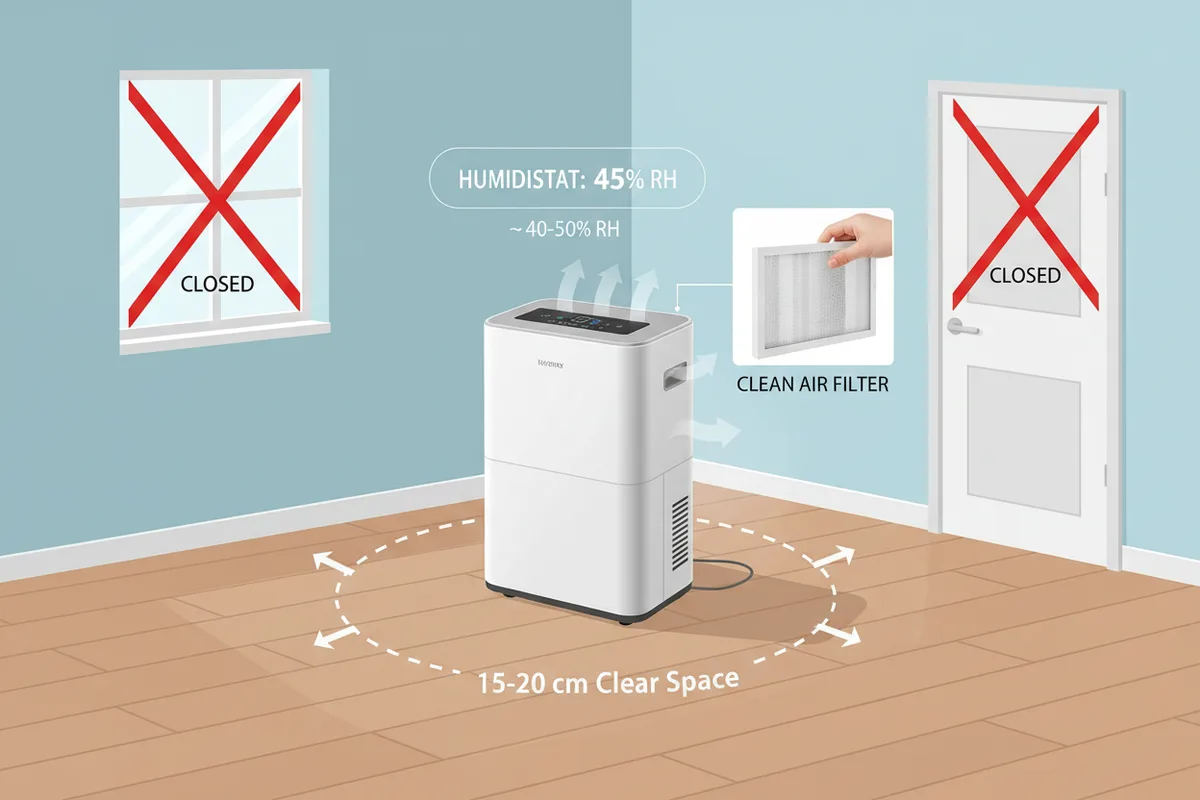
Image source: Bing (Web (fair-use with source credit))
Ignoring the Crawlspace
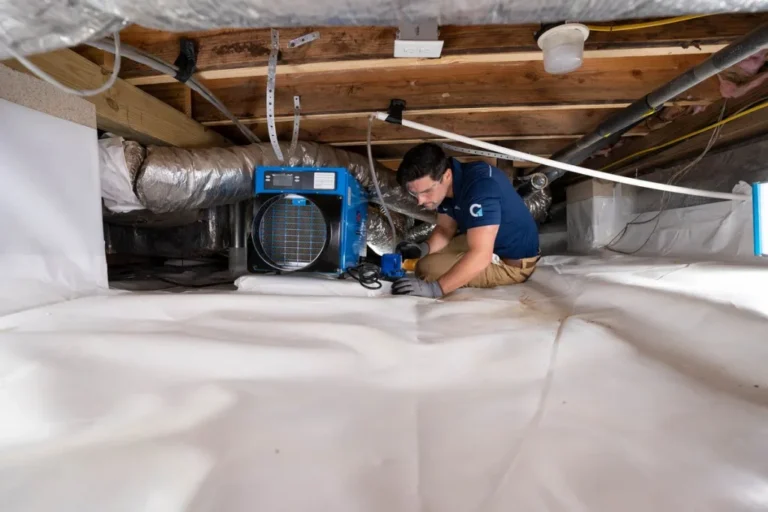
An open crawlspace vent connects directly to the earth beneath your home. Soil constantly releases moisture into the air. If your basement shares air with a vented crawlspace, you're dehumidifying the outdoors.
Encapsulation with a vapor barrier is the only real fix.
Letting the Filter Clog
A dusty filter restricts airflow and drops extraction efficiency by 20% or more. Check the filter every month during heavy-use seasons. Rinse it, let it dry, and pop it back in.
A dehumidifier running with a clogged filter works harder and removes less water.
Draining Into a Full Sump Pit
Many owners run the drain hose into the sump pit. If the sump pump is dead or the pit is full, the water backs up and stays in the basement environment. It looks like the unit is working, but it's recycling the same moisture.
Opening Ground-Level Windows
A dehumidifier cannot outwork a wide-open basement window in humid weather. Warm outdoor air carries more moisture indoors, and the machine recirculates that same humid air. During peak humidity season, keep basement windows closed and rely on the dehumidifier to condition the space.
Long-Term Optimization: Keeping Your Setup Working Season After Season
Once you find the root cause and adjust your setup, the work isn't over. Basement conditions change with the weather, groundwater levels, and how you use the space. A setup that works in October may fail in July.
Seasonal Adjustments
In winter, basement temperatures drop and extraction efficiency falls. You may need a low-temperature rated unit or a model built for year-round use. In summer, humidity load spikes and you need maximum airflow and reliable drainage.
Structural Upgrades That Help
- Extend downspouts at least six feet away from the foundation.
- Grade the soil so it slopes away from the house.
- Seal foundation cracks with hydraulic cement or epoxy.
- Apply a waterproof coating to interior walls.
- Install a sealed lid on the sump pit.
These changes reduce the amount of moisture entering the basement. That takes the load off the dehumidifier and gives you a realistic shot at hitting the 50% target. A dehumidifier is a machine, not a miracle worker.
Monitoring and Maintenance Schedule
Check the humidity reading weekly. Clean the filter monthly. Inspect the drain line quarterly.
Log the amount of water removed each day during peak season. If the daily total suddenly drops, something is wrong. If it stays high despite good airflow and a clear drain line, you likely need a larger unit.
For a long-term fix, a 70-pint model or a premium whole-basement option may be the practical upgrade.
The EPA's indoor air quality guidance on moisture control confirms that keeping relative humidity below 60% is essential for preventing mold. Aim for that 30% to 50% sweet spot. If your current unit cannot maintain that range, it's not the right tool for the job.
As of 2026, most quality dehumidifiers can hit that target if they're sized and placed correctly.
Frequently Asked Questions
Should I run my dehumidifier 24 hours a day in the basement?
Yes, in a damp basement the unit should run continuously until humidity drops below 50%. Once it hits that target, the humidistat cycles the compressor automatically. A unit that runs nonstop without ever shutting off is undersized or fighting a constant moisture source.
What humidity level should a dehumidifier be set at in a basement?
Set the target to 50% relative humidity. The EPA recommends 30% to 50% for indoor spaces to prevent mold growth. If the unit cannot reach 50% after 48 hours of continuous operation, the capacity is too low or a hidden moisture source is overwhelming the system.
Why does my dehumidifier run all day but never stop?
It's probably undersized for the square footage, or the basement is too cold. Below 65°F, compressor efficiency drops and the unit spends energy defrosting. A unit that never cycles off is a clear sign of a mismatch between capacity and moisture load.
Can a dehumidifier be too big for a basement?
Yes. An oversized unit short-cycles. It pulls humidity down fast, then shuts off before the air circulates evenly.
That frequent on-off cycling wears out the compressor. Match the pint capacity to the square footage for consistent performance.
How do I know if my basement dehumidifier is working properly?
Place a separate hygrometer ten feet away from the unit. After 24 hours of continuous operation, the reading should be below 55%. If it matches the unit's display, everything is fine.
If it's significantly higher, the unit is underperforming or the sensor is faulty.
Is it normal for a dehumidifier to ice up in a cold basement?
Yes, that's common below 60°F. Moisture freezes on the coils, and the unit cycles into defrost mode frequently. This cuts extraction efficiency dramatically.
A low-temperature rated unit or a desiccant dehumidifier handles cold basements far better.