Should You Run a Dehumidifier in the Bedroom
Your bedroom feels heavy. The air sticks to your skin. The sheets feel damp even after an hour under the fan.
You've wondered whether a dehumidifier would fix it. But you're not sure if it's worth the noise, the cost, and the hassle. The honest answer is that it depends entirely on your specific room, climate, and comfort needs.
The question of should you run a dehumidifier in the bedroom isn't a simple yes or no. According to EPA indoor air quality guidelines, bedrooms should stay between 30% and 50% relative humidity for optimal health and comfort. As of 2026, that standard holds firm.
If your room consistently sits above that range, a dehumidifier probably makes sense. Below that, you might be better off saving the money. Let's walk through exactly how to figure out which side you're on.
Quick Answer
Yes, run a dehumidifier in the bedroom if the relative humidity exceeds 50%. It reduces dust mites, mold, and musty odors. No, skip it if humidity stays below 50%.
You'll waste energy and risk dry skin and static. Measure first with a hygrometer. Then decide based on your numbers.
Why This Question Is Trickier Than It Seems
Most people assume a dehumidifier is either always good or always bad. The reality sits somewhere in the middle. The right answer shifts based on your climate, your home's construction, your sleeping habits, and even the season.
Here's the core problem: humidity is invisible. You can't tell by looking whether your bedroom sits at 40% or 65% relative humidity. Your body feels the difference, sure.
But it's easy to confuse "too humid" with "too warm" or "bad ventilation."
That's why guessing is dangerous. Run a dehumidifier in a room that's already at 35% humidity, and you'll wake up with a scratchy throat, dry eyes, and cracked lips. The air gets so dry that your skin loses moisture overnight.
Static electricity builds up on your blankets. Wooden furniture can even develop small cracks over time.
On the flip side, ignoring a genuinely humid bedroom means sleeping in a breeding ground for dust mites. These microscopic pests thrive at humidity levels above 50%. According to research cited by the American Lung Association, dust mites are a leading trigger for allergy symptoms and asthma attacks.
Their droppings accumulate in your mattress, pillows, and bedding.
So the real question isn't "should you run one" but "should your bedroom have one." That distinction matters. A coastal apartment in Florida likely needs one. A mountain cabin in Colorado probably doesn't.
Your neighbor's solution might be completely wrong for you.
Manufacturer specifications support this nuance. Most dehumidifier units include an auto-humidistat precisely because the ideal setting varies. You set a target, and the unit cycles on and off to maintain it.
That's the smart way to use one. Not running it on full blast all night.
This section is where most people get stuck. They read generic advice that says "dehumidifiers are great for allergies" and buy one without checking their actual humidity. Then they over-dry the room and blame the machine.
The machine wasn't wrong. The approach was.
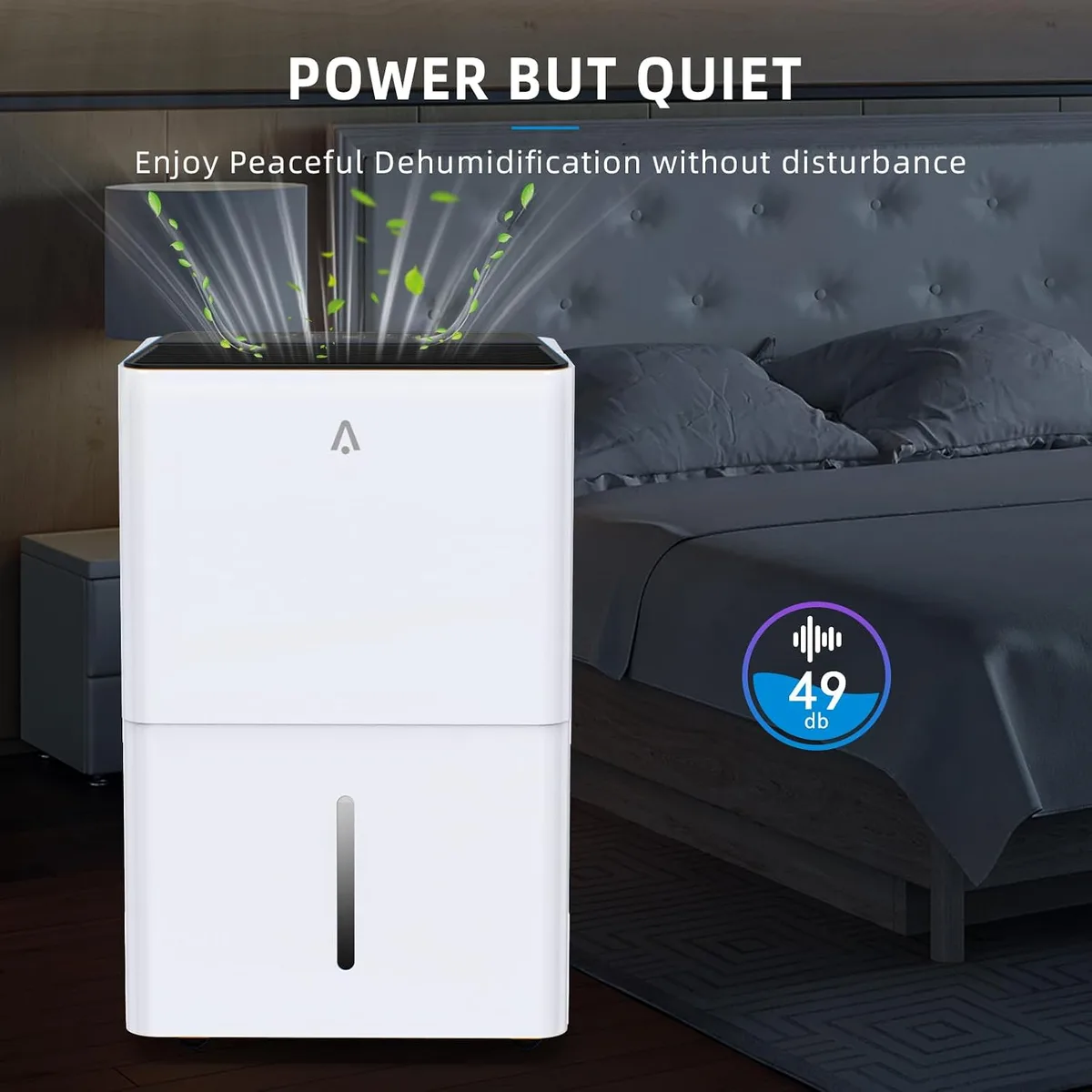
Image source: Bing (Web (fair-use with source credit))
The Two-Minute Decision Framework
Before you spend money on a dehumidifier, spend two minutes gathering basic information. This framework works for any bedroom, in any climate.
Step 1: Buy a hygrometer.
A hygrometer measures relative humidity. It costs between $10 and $20. You can find one at any hardware store or online retailer.
Digital models are more accurate than analog versions. Place it on your nightstand or dresser, away from windows and vents. Let it sit for 24 hours to get a consistent reading.
Check the number at different times of day. Morning readings matter most. Overnight humidity spikes as you sleep, breathe, and sweat.
The peak usually happens around dawn. If you're only checking at noon, you're missing the worst hours.
Step 2: Compare your reading to the sweet spot.
The target zone is 30% to 50% relative humidity. The American Society of Heating, Refrigerating and Air-Conditioning Engineers (ASHRAE) recommends keeping indoor humidity below 60% to prevent mold growth. Most experts agree that 45% is the practical sweet spot for bedrooms.
Here's your decision branch:
- Above 60%: You definitely need a dehumidifier. Mold risk is real, and dust mites are thriving.
- Between 50% and 60%: You'll benefit from one, especially if you have allergies or notice condensation on windows.
- Between 40% and 50%: You're in a comfort zone. Skip the dehumidifier unless symptoms tell you otherwise.
- Below 40%: Do not run a dehumidifier. You need more moisture, not less.
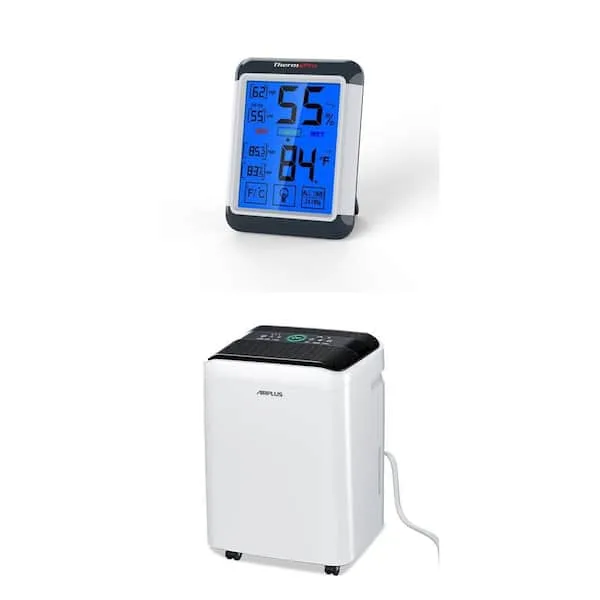
Image source: Bing (Web (fair-use with source credit))
Step 3: Consider your symptoms.
Numbers matter, but so does your body. Pay attention to how you feel when you wake up.
Waking with a stuffy nose, congestion, or itchy eyes suggests allergens in the air. Humidity above 50% often worsens those. Musty odors mean mold or mildew is already growing somewhere.
Condensation on the inside of your windows is a clear sign that indoor moisture is too high.
Dry throat, bloodshot eyes, and static shocks point in the opposite direction. Your air is too dry. Adding a dehumidifier would make those symptoms worse.
Step 4: Factor in your climate and season.
Humidity isn't static. Summer brings more moisture indoors, especially in humid climates. Winter heating dries the air out.
It often drops indoor humidity below 30% in northern states. Your decision might be "yes" in July and "no" in January.
If you live in a humid coastal region like the Gulf Coast or the Pacific Northwest, a dehumidifier likely earns its keep year-round. In arid climates like the Southwest, you rarely need one except perhaps during a rare monsoon season.
For a more targeted recommendation based on room size, our reviews of small-capacity units for bedrooms break down which pint ratings make sense for typical sleeping spaces.
How Humidity Affects Your Sleep, Health, and Bedroom
Humidity doesn't just make you feel sticky. It physically changes how your body sleeps and how your room behaves. Understanding these effects helps you make a smarter decision.
Sleep quality suffers in high humidity.
Your body regulates temperature during sleep by sweating. When humidity is high, sweat doesn't evaporate efficiently. Your body stays hot, and you toss and turn more.
Research consistently links high bedroom humidity to reduced deep sleep and more nighttime awakenings.
Some people describe it as "restless" sleep. You wake up groggy even after eight hours. The air feels heavy, and your pillowcase feels slightly damp.
That's your body fighting the environment instead of resting.
Allergies get worse above 50% humidity.
The science here is clear. Dust mites absorb moisture from the air through their bodies. Below 50% relative humidity, they dehydrate and die.
Above that threshold, they reproduce rapidly. A single mattress can harbor millions of dust mites if conditions are right.
Their fecal particles and body fragments become airborne when you move around in bed. You inhale them all night long. For allergy sufferers, this is the difference between waking clear-headed and waking congested.
Mold follows the same pattern. Mold spores are everywhere, indoors and out. They only colonize when moisture is available.
Humid bedrooms provide that moisture on walls, window sills, and upholstery. Once mold takes hold, it's difficult to fully remove. You'll keep inhaling spores until you do.
Condensation causes structural damage.
High humidity means water vapor in the air. When warm, moist air hits a cold surface like a window or an exterior wall, it condenses into liquid water. Over time, that moisture seeps into paint, drywall, and wood framing.
This is how rot and structural damage begin.
You'll notice water droplets on the inside of windows in the morning. Black specks might appear on window sills. The paint might bubble or peel around exterior walls.
These are visual warnings that your bedroom is holding too much moisture.
Low humidity has its own problems.
Running a dehumidifier in an already-dry room creates a different set of issues. Nasal passages dry out, making you more susceptible to respiratory infections. Skin loses moisture and becomes itchy or flaky.
Wood floors and furniture can shrink and develop gaps.
The takeaway isn't that humidity is bad. It's that extremes in either direction cause problems. Your goal is balance.
Your Personal Decision Tree: 6 Questions to Answer
Now it's time to apply this to your specific situation. Work through these six questions in order. Your answers point toward a clear recommendation.
Question 1: What does your hygrometer say?
This is your baseline. If you don't have a reading yet, stop here and measure first. Everything else builds on this number.
- Above 60%: High priority for a dehumidifier.
- 50% to 60%: Moderate priority.
- 30% to 50%: No priority.
- Below 30%: You need a humidifier instead.

Image source: Bing (Web (fair-use with source credit))
Question 2: Do you have allergy symptoms or asthma?
If you wake with congestion, sneezing, or itchy eyes, allergens are affecting you. Dust mites are the most likely culprit in a humid bedroom. Keeping humidity below 50% dramatically reduces their population.
This tips the scale toward running a dehumidifier, even at the lower end of the moderate range.
Question 3: Can you tolerate the noise?
This is the practical filter that catches most people. Compressor-based dehumidifiers produce between 30 and 50 decibels. That's roughly the volume of a quiet library to a gentle refrigerator hum.
Some people fall asleep easily with that background noise. Others can't stand it.
If noise is a dealbreaker, consider a desiccant dehumidifier. These use a fan and absorbent material rather than a compressor. They run significantly quieter.
They're less efficient in warm conditions, but that matters less in a bedroom. Our comparison of quiet compact units highlights which models prioritize silent operation.
Question 4: How large is your bedroom?
Size determines the pint capacity you need. A small bedroom under 200 square feet typically needs a 20 to 30-pint unit. Larger master bedrooms around 300 square feet do better with a 35 to 50-pint model.
Oversizing causes waste and excess noise. Undersizing means the unit runs constantly without keeping up.
Question 5: Do you have a drainage solution?
Dehumidifiers collect water in a tank that needs emptying. During humid nights, a 20-pint unit can fill its tank in 8 to 12 hours. If you don't want to wake up to an auto-shutoff and a full tank, look for a unit with a continuous drain hose option.
That lets water flow directly into a floor drain. It eliminates daily emptying.
Question 6: Is your bedroom already dry in other seasons?
If winter heating drops your bedroom below 40% humidity, running a dehumidifier year-round is wrong. You only need it during humid months. Seasonally operating the unit is cheaper and more comfortable than running it 365 days a year.
By the end of these six questions, you should have a clear picture. High humidity plus allergies plus acceptable noise equals yes. Low humidity plus dry symptoms equals no.
Something in the middle means you need a targeted approach. Run the unit only at night or only during humid weeks. Our guide to mid-size units for larger rooms helps you right-size your purchase if you land on "yes."
How to Run a Dehumidifier in a Bedroom Without Regretting It
You've decided a dehumidifier makes sense. Great. Now the key is setting it up correctly so you get the benefits without the downsides.
Set the right target humidity.
Don't set it to the lowest possible number. That's a common mistake. Set the auto-humidistat to 45% relative humidity.
That's the sweet spot for comfort, allergy control, and energy efficiency. If your room stays at 45%, the unit will cycle on and off less often. That means less noise and lower electricity bills.
Place it properly.
Put the dehumidifier at least six inches away from walls and furniture. It needs airflow to work. If you tuck it in a corner behind a dresser, it will struggle to pull moisture from the room.
Place it near the center of the room if possible. On a nightstand or dresser top works for small units. Floor placement is better for larger models.
Choose the right drainage method.
For bedroom use, a continuous drain hose is the most convenient option. Run the hose to a floor drain, a sink, or a window. If you don't have a drain nearby, set the unit to auto-shutoff when the tank is full.
Then empty it every morning. Some people find a morning routine easier than a middle-of-the-night interruption.
Run it during the day, not just at night.
Most people think of running a dehumidifier only while sleeping. But running it during the day when you're not in the room is more effective. The unit pulls moisture out while the room is empty.
Then you turn it off an hour before bed if noise bothers you. The air stays dry for several hours after the unit stops.
For larger bedrooms that need sustained moisture removal, a 50-pint model for large rooms provides the capacity to hit target humidity before bedtime.
Monitor and adjust.
Check your hygrometer reading every few days for the first week. Adjust the target up or down based on how you feel. If you wake up with dry eyes, bump the target to 50%.
If you still see condensation on windows, drop it to 40%. Small adjustments make a big difference.
The 5 Most Common Bedroom Dehumidifier Mistakes
Avoid these pitfalls. They're the reason most people give up on their dehumidifier.
1. Over-drying the room.
This is mistake number one. People set the humidity target too low and wonder why they wake up with a dry throat and static shocks. Your bedroom is not a basement.
It doesn't need to be at 30% humidity. Keep it at 45% unless you have a specific reason to go lower.
2. Ignoring the noise level.
You bought a powerful compressor unit and now can't sleep. The noise is too loud. This is entirely preventable.
Check the decibel rating before you buy. Look for units with a "sleep mode" or "quiet mode" that reduces fan speed. Desiccant models are quieter but more expensive.
Read reviews from people who use the unit in a bedroom specifically.
3. Buying the wrong size.
A 70-pint unit in a 150-square-foot bedroom is overkill. It will cycle on and off constantly, waste energy, and create more noise than necessary. A 20-pint or 30-pint unit is usually enough for a standard bedroom.
If you're unsure, our comparison of budget-friendly options helps you find the right capacity without overspending.
4. Forgetting to clean the filter.
A dirty filter blocks airflow. The unit works harder, uses more electricity, and removes less moisture. Clean the filter every two to four weeks.
Most filters are washable. Rinse them under cold water and let them dry completely before reinstalling. A clean filter also reduces the dust that the unit kicks back into the room.
5. Neglecting the drainage.
You wake up to a full tank and an auto-shutoff. The unit stopped running at 3 AM. The room was humid all night.
This happens when you don't empty the tank before bed or don't set up a continuous drain. If you're a heavy sleeper, set a reminder to check the tank before you go to sleep. Better yet, use the hose drain option.
Frequently Asked Questions
Will a dehumidifier make my bedroom too dry?
Yes, if you set the target too low or run it in a room that's already dry. Keep the target at 45% relative humidity. Monitor your symptoms.
If you notice dry skin, a scratchy throat, or static electricity, raise the target to 50%. The unit will stop running when it reaches the set level.
Can I run a dehumidifier all night?
Yes, as long as the noise doesn't bother you and the tank is large enough to last the night. Many units have a quiet sleep mode that reduces fan speed. Set the auto-humidistat to 45% so the unit cycles on and off.
It won't run continuously. Check the tank capacity. A 20-pint unit typically runs 8 to 12 hours before needing emptying.
Is a dehumidifier or a humidifier better for a bedroom?
It depends on your humidity level. If your hygrometer reads above 50%, you need a dehumidifier. If it reads below 30%, you need a humidifier.
If it's between 30% and 50%, you don't need either. The wrong choice makes symptoms worse. Always measure first.
Will a dehumidifier help with allergies?
Yes, if your allergies are triggered by dust mites or mold. Both thrive in humidity above 50%. Keeping your bedroom below that threshold reduces their populations.
You may notice fewer symptoms within a few weeks. If your allergies are triggered by pollen, pet dander, or smoke, an air purifier is a better option.
How much does it cost to run a dehumidifier in a bedroom?
A 20-pint unit uses about 300 to 400 watts. Running it for 8 hours costs roughly 10 to 20 cents per night, depending on your local electricity rates. A 50-pint unit uses more power.
It costs about 25 to 40 cents per night. The exact cost depends on how often the unit cycles on and off.
Do I need a dehumidifier if I have air conditioning?
Air conditioning removes some moisture, but not always enough. In humid climates, AC units are designed to cool the air, not dry it. They often leave humidity at 55% to 65% in a bedroom.
A dehumidifier can bring it down to 45% more efficiently than running the AC colder. If you find your bedroom feels cool but clammy, a dehumidifier fills the gap.
Final Verdict: Should You Run a Dehumidifier in Your Bedroom?
Here's the bottom line. Measure your humidity first. If it's above 50%, a dehumidifier will improve your sleep, reduce allergens, and protect your room from mold.
If it's below 50%, you don't need one. If it's below 30%, you need a humidifier instead.
Run through the six questions one more time. Check your hygrometer reading. Consider your symptoms.
Factor in your noise tolerance and your room size. If the answer is still yes, buy a unit that fits your bedroom size, set it to 45%, and use a continuous drain if possible.
If the answer is no, you just saved yourself $150 and a night of poor sleep. That's a win too.
For those who land on "yes," our roundup of year-round dehumidifiers covers models that perform well across seasons. And if you're looking for something simple and affordable, the best cheap dehumidifier options offer reliable performance without breaking the bank.
The decision is yours. Now you have the information to make it right.