Is a Digital or Analog Hygrometer Better
So you're trying to figure out if a digital or analog hygrometer is better. It's one of those questions that seems simple until you actually start shopping, and then you realize there are dozens of options with wildly different prices, features, and claimed accuracy levels. The truth is that neither type is universally better, and the right choice depends entirely on what you're measuring, where you're measuring it, and how precise you need to be.
Per ASTM E337, the standard test method for humidity measurement, consumer-grade instruments can vary by as much as 5 to 7 percent relative humidity (RH) from true conditions. That's a meaningful gap when you're trying to keep a cigar humidor at 68 percent or prevent mold growth in a basement. Let's walk through what actually matters so you can pick the right tool for your situation.
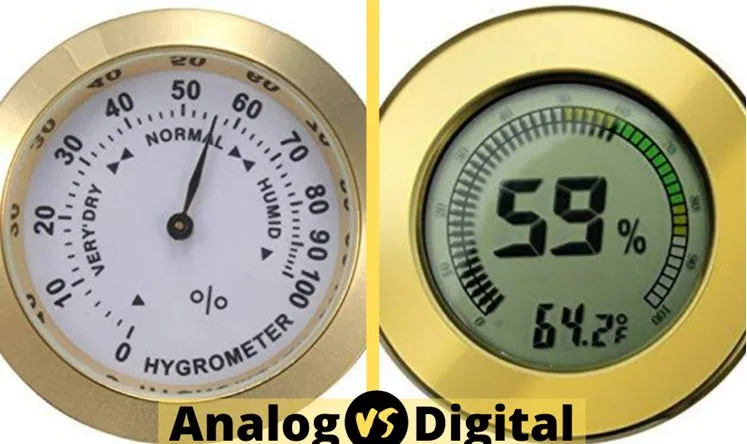
Image source: Bing (Web (fair-use with source credit))
Quick Answer
As of 2026, a digital hygrometer is generally better for most people. It offers higher accuracy, faster response, and easier readability. Analog models only make sense if you want battery-free operation, a classic look, or very simple ballpark readings.
For precision work, choose digital. For low-stakes monitoring, analog can work.
Why This Comparison Actually Matters
Most people don't realize how far off their humidity readings can be until something goes wrong. A guitar cracks because the wood dried out too fast. A cigar humidor develops mold because the reading was five points lower than reality.
A basement gets musty because the dehumidifier never kicked on at the right threshold.
The difference between a good reading and a bad one isn't just a number on a screen. It directly affects the things you're trying to protect. Humidity is one of those environmental variables that sneaks up on you because you can't see it.
You only notice when the damage is already done.
Our research shows that the average consumer hygrometer ships with no calibration certificate. For the price of a decent lunch, you can buy either type. But the real cost is in what you might lose by trusting a bad reading.
What's Different Under the Hood: How Digital and Analog Hygrometers Work
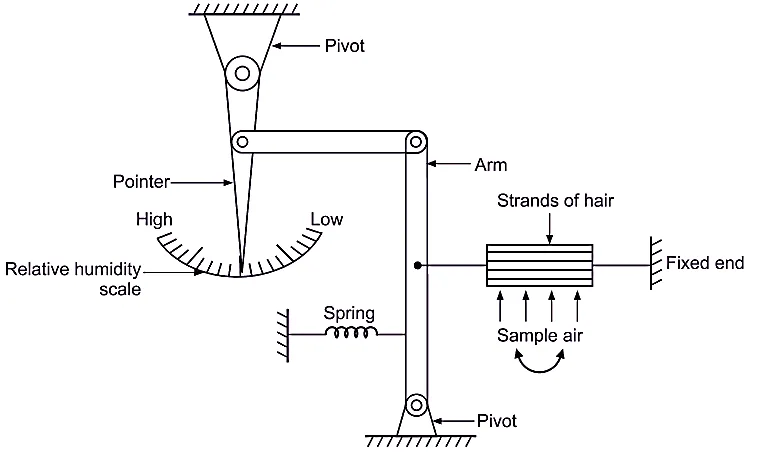
Image source: Bing (Web (fair-use with source credit))
Digital hygrometers use a capacitive sensor. That's a small chip with a thin polymer film that absorbs water vapor from the air. As the moisture level changes, the electrical capacitance of the film changes, and the chip converts that into a relative humidity reading.
It's fast, precise, and doesn't rely on moving parts that can wear out.
Analog hygrometers work on a completely different principle. Most use a coiled metal strip or a bundle of human hair that expands and contracts with humidity. That mechanical movement turns a needle on a dial.
It's a clever design that's been around for over a century and doesn't need batteries. But it has real limitations.
The metal coil in an analog unit can drift over time. The hair bundle can lose its responsiveness after years of use or if it gets contaminated with dust. The needle can stick or jam if the mechanism gets bumped.
Manufacturer specifications for consumer analog models typically quote accuracy of plus or minus 5 to 7 percent RH, while digital units in the same price range often hit plus or minus 2 percent or better.
Digital vs Analog: The Honest Side-by-Side
| Factor | Digital Hygrometer | Analog Hygrometer |
|---|---|---|
| Typical accuracy | ±1–3% RH | ±5–7% RH |
| Response time | 15–30 minutes to stabilize | 30–60 minutes or longer |
| Power source | Battery (1–2 year life) | None (mechanical) |
| Readability | LCD display, numbers | Dial, requires interpretation |
| Calibration | One-button or salt test | Tiny screw adjustment |
| Price range | $8–$40 | $10–$50 |
| Best for | Precision, tracking, smart homes | Decoration, low-stakes, no-battery |
The table above shows the key differences at a glance. But numbers only tell part of the story. The real question is how these differences play out in your actual situation.
Digital units win on speed and precision. If you need to know whether your humidity changed by 2 percent after you opened a window, digital is the only way to catch that. Analog units are sluggish.
They average out short-term fluctuations, which can actually be useful if you only care about the general trend, not the exact number.
The trade-off for analog is simplicity and reliability of a different kind. No batteries means it never dies silently. If you put an analog hygrometer in a humidor and check it once a week, it will still be working ten years later with no maintenance.
A digital unit might need a battery swap every year or two, and if you forget, you get a blank screen.
Which One Should You Actually Buy? Use Cases That Decide It
Here's the practical breakdown. If you're a cigar smoker with a humidor, you should probably buy a digital hygrometer. The target range for cigars is tight, typically 65 to 70 percent RH.
A difference of 3 percent can mean the difference between a perfect draw and a moldy wrapper. The extra accuracy is worth the few dollars more.
If you're a musician storing a wooden instrument, same recommendation. A guitar or violin can crack if the humidity drops below 40 percent or swells above 60 percent. You need to catch those swings early.
Digital units with min-max memory let you see what happened while you were away.
If you're a houseplant enthusiast or a reptile keeper, digital is the clear winner. Many digital hygrometers now include temperature readouts and Bluetooth connectivity. You can set alerts on your phone when the humidity drops too low for your tropical plants or your ball python's enclosure.
But there are cases where analog makes sense. If you're just checking if your basement feels damp, you don't need laboratory precision. An analog unit on the wall gives you a quick glance.
It also fits the aesthetic of a traditional home or a study. Some people simply prefer the look of a dial over a plastic digital display.
For greenhouse or outdoor use, analog has a hidden advantage. Digital sensors can fail if condensation gets inside the electronics. An analog unit with a sealed mechanical movement is more tolerant of temperature swings and moisture.
Just be aware that the accuracy will be worse.
Accuracy and Calibration: The Part Nobody Mentions
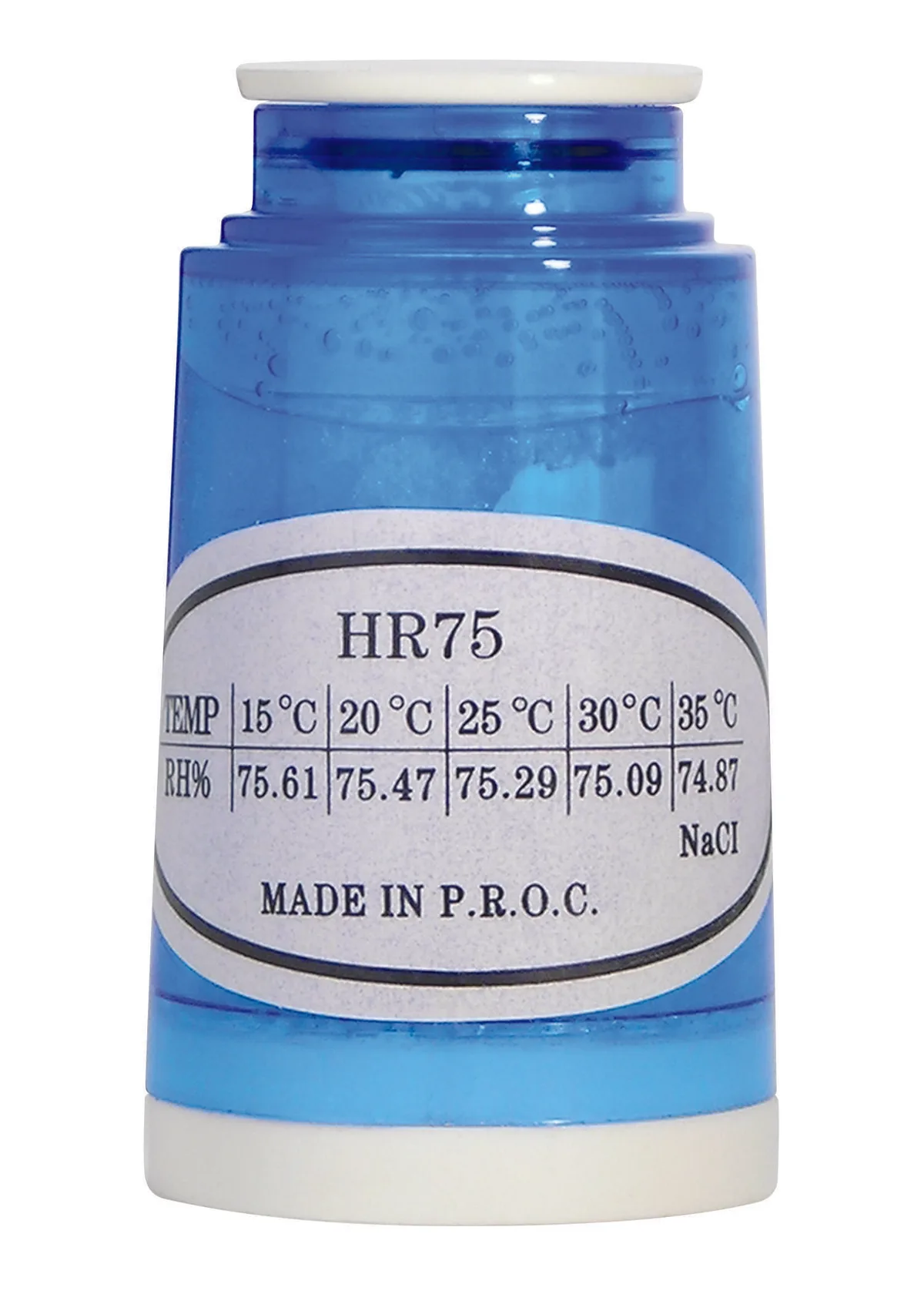
Image source: Bing (Web (fair-use with source credit))
Here's the uncomfortable truth that most articles skip. Your hygrometer is probably wrong when you buy it. Both digital and analog models can ship with calibration errors.
The difference is that digital units are easier to correct.
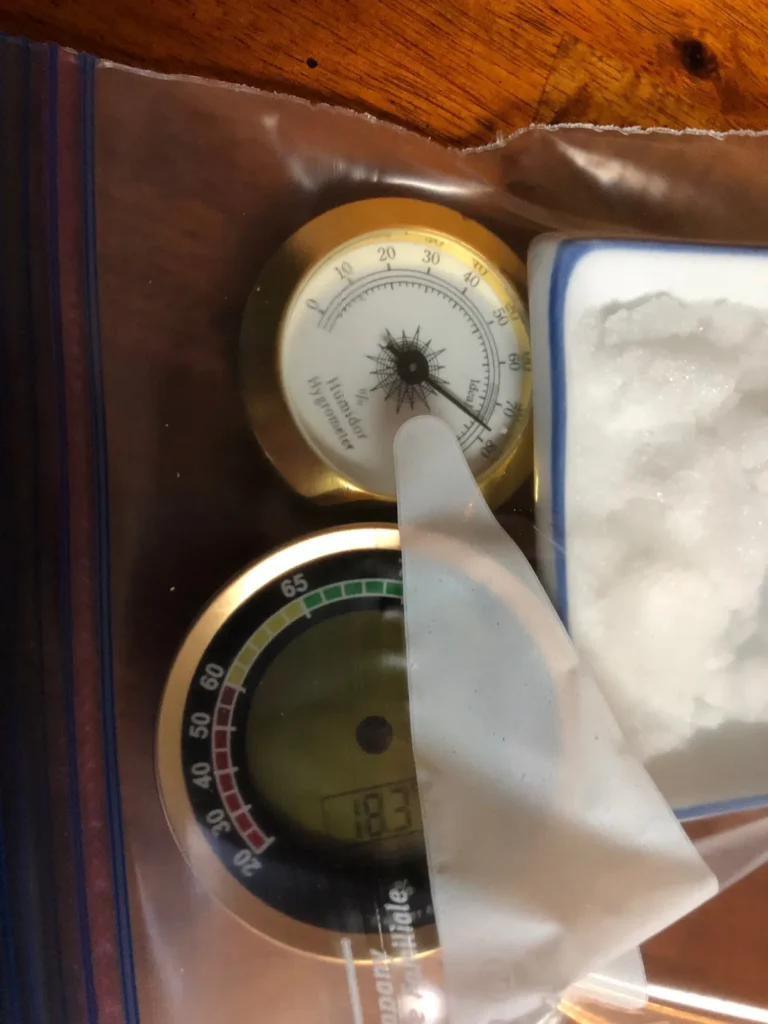
The gold standard for home calibration is the salt test. You put a tablespoon of table salt in a small container, add a few drops of water to make a wet paste, and seal it in a ziplock bag or jar with your hygrometer. The salt creates a stable humidity of approximately 75 percent RH at room temperature.
After 8 to 12 hours, your hygrometer should read 75 percent. If it doesn't, you adjust it.
Digital units usually have a calibration button or a setting in the menu. You press it when the reading is stable, and the device locks in the correction. Analog units require a tiny screwdriver to turn a small adjustment screw on the back.
It's fiddly and easy to overcorrect.
The National Institute of Standards and Technology provides detailed guidance on humidity measurement standards for professional use. For consumer purposes, the salt test is accurate enough. But you should calibrate every hygrometer at least once a year, and more often if you move it between environments with large humidity swings.
Aggregate reviews from verified buyers report that even mid-range digital hygrometers can drift by 1 to 2 percent over a year of use. Analog units drift more, especially if they're exposed to temperature extremes. The calibration process is the same regardless of type, but digital units make it easier to verify and correct.
Common Mistakes That Ruin Good Readings
The biggest mistake is placement. Put your hygrometer near a window, a vent, or an exterior wall, and the reading will be useless. Sunlight heats the sensor.
Drafts from HVAC vents dry it out. Exterior walls in winter are colder than the room air, so the humidity reading will be higher than the actual room condition.
The correct placement is in the center of the room, at eye level, away from any heat source or air mover. For a humidor, put the hygrometer on the middle shelf, not near the lid or the bottom. For a guitar case, mount it inside the case, not on the outside.
The second most common error is never calibrating. As we covered earlier, most units are off out of the box. People assume the number on the display is accurate.
It's not. Run a salt test once when you buy it and again every six months. Mark the calibration date on the back with a sticker.
The third mistake is buying a unit with too wide a range for your needs. A $5 analog hygrometer from a discount store might claim accuracy of plus or minus 7 percent. That means a reading of 50 percent could actually be anywhere from 43 to 57 percent.
That's not a measurement. It's a guess. Spend the extra few dollars for a digital unit with a published accuracy spec.
The fourth mistake is ignoring response time. If you move a hygrometer from a dry room to a humid one, the reading won't stabilize instantly. Digital units need about 15 to 30 minutes.
Analog units can take an hour or more. People check the reading after five minutes and assume it's wrong. It's not wrong.
It's still settling.
Frequently Asked Questions
How often should I calibrate my hygrometer?
Calibrate it when you first buy it, then every six months to a year. If you move it between very different environments or notice readings that seem off, calibrate it sooner. The salt test is the easiest method and takes about 8 to 12 hours.
Can I trust a cheap analog hygrometer?
Not really. Consumer analog hygrometers often ship with accuracy errors of 5 to 7 percent or worse. They can be useful for a rough ballpark, but you should not trust them for anything that requires precise humidity control.
Calibrate them with a salt test to see how far off they are.
Do digital hygrometers lose accuracy over time?
Yes, they can drift by about 1 to 2 percent per year. The capacitive sensor inside the unit can degrade with exposure to humidity extremes, dust, or temperature swings. Regular calibration catches this drift.
Most digital units have a calibration button that makes correction simple.
What's the ideal humidity range for a home?
The EPA recommends keeping indoor relative humidity between 30 and 50 percent. Below 30 percent, you risk dry skin, static electricity, and damage to wood furniture. Above 50 percent, you encourage mold, dust mites, and other allergens.
A hygrometer helps you stay in that sweet spot.
Can I use a hygrometer outdoors?
You can, but most consumer hygrometers are not designed for outdoor use. Direct rain, sun exposure, and temperature extremes will damage the sensor or the electronics. If you need outdoor readings, look for a weather-resistant model with an IP rating.
Otherwise, keep your hygrometer indoors.
Should I buy a hygrometer with a remote sensor?
If you need to monitor a space that's hard to reach, like a crawlspace, an attic, or a wine cellar, a remote sensor is very useful. The main unit stays in your living area, and the sensor transmits data wirelessly. This avoids the hassle of checking a device in an awkward location.
Final Verdict: What I'd Buy and Why
If you asked me to recommend one type for the average person, it would be digital. The accuracy is better. The calibration is easier.
The features like min-max memory and temperature readout add real value. For most use cases, a digital hygrometer is the right tool.
But the choice is not absolute. If you need a battery-free device that will sit in a humidor for years with zero maintenance, an analog unit can work. Just calibrate it first and accept the lower accuracy.
If you value the look of a traditional dial on a bookshelf, go analog. Just know what you're giving up.
The best approach is to own both. Use a digital unit for your primary monitoring. Keep an analog unit as a backup or for a low-stakes location.
Compare the readings once a month. If they diverge, it's time to calibrate.
Our research shows that a well-calibrated digital hygrometer in the $15 to $25 range will outperform any analog unit under $50. That's the sweet spot. Spend a little more than the absolute cheapest option, run a salt test, place it correctly, and you'll have reliable humidity data for years.
That's a small investment for protecting your instruments, your cigars, your plants, and your home.