What Is the Best Humidity Level for a Dehumidifier
You walk into your basement and that damp, musty smell hits you again. You finally bought a dehumidifier, but now you’re staring at the dial wondering what number to set it to. The truth is, the answer to what is the best humidity level for a dehumidifier isn’t a single number.
It depends on where you are, what season it is, and what you’re trying to protect.
According to the EPA, indoor relative humidity should stay between 30% and 50% to prevent mold and dust mites. But that range is a starting point, not a rule. The right setting changes based on your specific situation.
A basement wants a different number than a bedroom in winter. Let’s walk through it step by step so you can dial in the perfect humidity without guesswork.
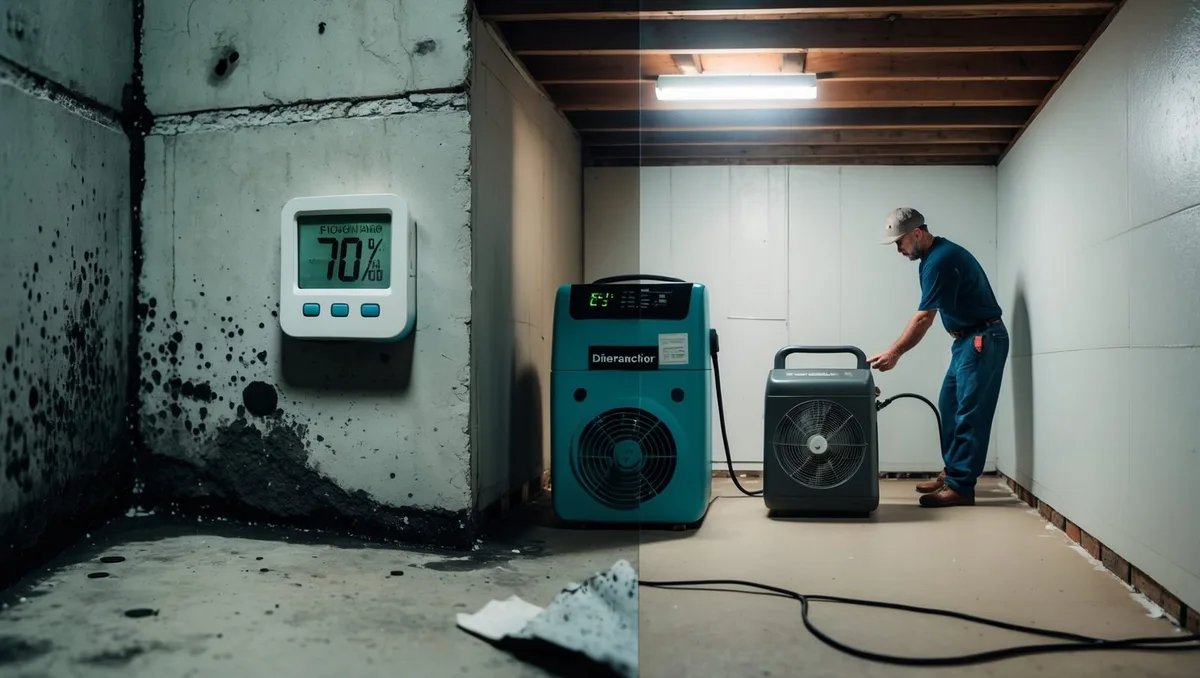
Image source: Bing (Web (fair-use with source credit))
The Short Answer: 30–50% Isn’t One-Size-Fits-All
Set your dehumidifier between 30% and 50% relative humidity. That’s the quick answer. For most rooms in summer, aim for 45% to 50%.
In winter in a cold climate, drop to 30% to 40%. Basements work best at 50% to 55% to avoid over-drying concrete floors and wooden beams. If you have allergies or asthma, keep it at 40% to 50% to reduce dust mites and mold spores.
Stay under 60%. Above that, mold and mildew start growing fast. Below 30%, you’ll deal with dry skin, static shocks, and cracked wood furniture.
Pick your number based on your space and what you’re protecting. For most homeowners, 45% is a safe middle ground year-round.
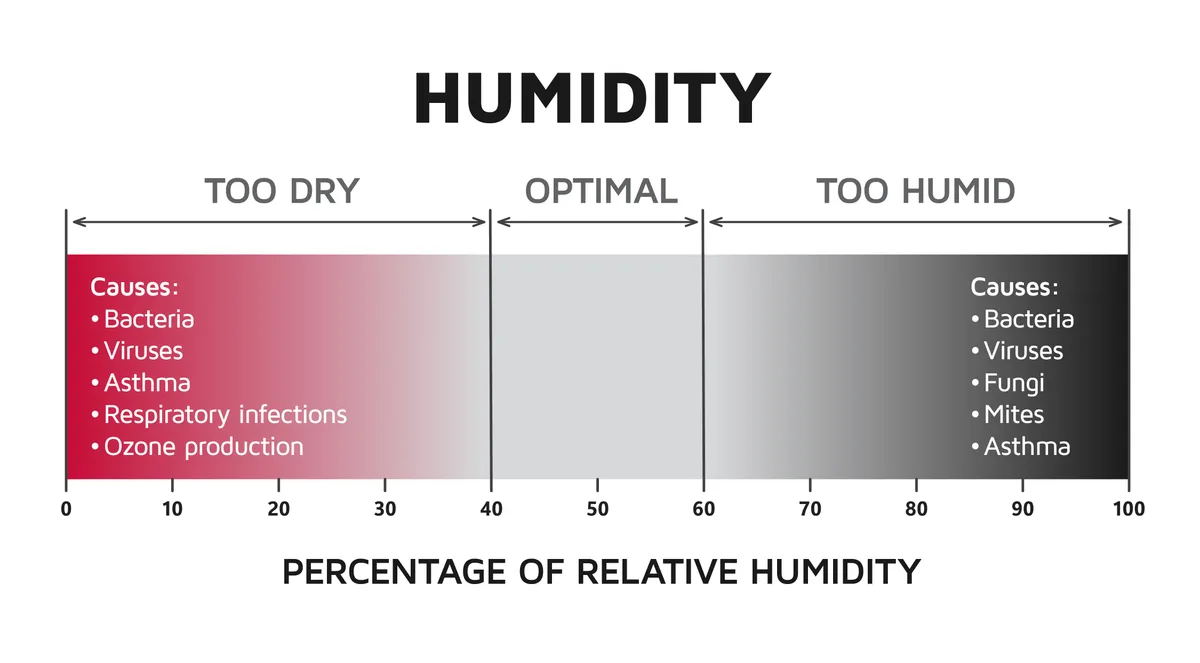
Image source: Bing (Web (fair-use with source credit))
Why Humidity Levels Matter More Than You Think
Humidity isn’t just about comfort. It’s about health and home preservation. When indoor humidity climbs above 60%, you create the perfect environment for mold, dust mites, and bacteria.
Dust mites thrive above 50%. Mold can grow on drywall in as little as 24 to 48 hours.
On the other end, humidity below 30% dries out your nasal passages, making you more vulnerable to colds and flu. It also causes static electricity that can damage electronics. It leads to cracks in wooden flooring and furniture.
Your dehumidifier’s job is to keep that balance. But the right level depends on the room. A basement below grade stays cooler and more damp.
Too low a setting can cause condensation on cold pipes, leading to more mold, not less. A bedroom with allergy sufferers benefits from a slightly lower target. A garage or workshop might prioritize protecting tools over perfect comfort.
Knowing the number matters, but knowing why that number works for your specific space matters more. That’s where the decision tree comes in.
Decision Tree: Find Your Ideal Humidity Setting
Use this simple if/then guide to find your target humidity. Start with the room type, then check the season.
If you’re in a basement or crawl space:
- Summer: Set it to 50% to 55%. This keeps mold away without pulling too much moisture from concrete, which can cause efflorescence (white crusty salt deposits).
- Winter: Lower to 40% to 45%. Cold basements need less dehumidification. Too low can cause frozen coils and waste energy.
If you’re in a main living area or bedroom:
- Summer: Stick with 40% to 50%. This feels comfortable and keeps dust mites under control.
- Winter: Run at 30% to 40% if you live in a cold climate. If you’re in a humid coastal winter, keep it around 45%.
If you have allergies, asthma, or sinus issues:
- Keep it at 40% to 45% year-round. That’s the sweet spot where dust mites and mold spores drop off sharply.
If you’re in a garage or workshop:
- Set it to 50% to 55%. This protects tools and wood from rust and warping without running the unit constantly.
If you’re in an RV or boat:
- Aim for 50% to 55%. Smaller spaces need careful monitoring. Use a separate hygrometer to verify the built-in sensor.
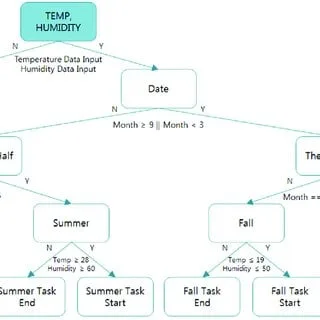
Image source: Bing (Web (fair-use with source credit))
Your dehumidifier’s built-in humidistat may not be perfectly accurate. Budget models can be off by 5% to 10%. Get a separate digital hygrometer for $10 to $15 to double-check.
Adjust the setting until the room matches your target.
5 Common Humidity Setting Mistakes (And How to Fix Them)
1. Setting it too low (below 30%)
You’ll get dry air, static, and cracked wood. This often happens when people think “lower is better.” Fix it: raise the setting to 40% and see if condensation or mustiness returns. Usually it won’t.
2. Setting it too high (above 60%)
You’re basically running the dehumidifier for show. Mold and dust mites will still thrive. Fix it: dial it down to 50% and check for improvement in 48 hours.
3. Not adjusting for the seasons
Leaving it at 45% all year works in mild climates. In cold winters, that can cause the unit to run unnecessarily. Fix it: drop it to 35% in winter if your basement stays dry.
4. Ignoring the room’s actual temperature
Dehumidifiers work best above 65°F. In a cold basement, the compressor may struggle or ice up. Fix it: raise the room temperature, use a desiccant dehumidifier, or set the target a couple points higher to reduce runtime.
5. Trusting the built-in hygrometer blindly
Many dehumidifiers read high by 5% to 10%. You might be at 55% when you think it’s 45%. Fix it: place a separate hygrometer in the same room and compare for a day.
Adjust the dehumidifier until the external meter reads your goal.
Real-World Examples: What to Do in Different Scenarios
Scenario 1: The damp basement in a humid summer (e.g., Atlanta, August)
A homeowner has a finished basement that smells musty. They set the dehumidifier to 50% and run it continuously for three days. Result: musty smell gone, condensation on windows disappears.
They keep it at 50% during summer and drop to 40% in winter.
Scenario 2: The allergy sufferer in a dry winter home (e.g., Denver, January)
Indoor humidity is at 20% without a humidifier. Running a dehumidifier would make things worse. Mistake fixed: they stop using the dehumidifier in winter and add a humidifier to bring humidity to 35% for comfort.
Scenario 3: The garage workshop with metal tools (e.g., Houston, year-round)
The user sets the dehumidifier to 45%, but tools still rust. The unit is poorly located near a door, cycling air too fast. Fix: move it to a sheltered area, keep the door closed, and set to 50% to reduce runtime.
Rust stops.
Scenario 4: The RV in a coastal climate (e.g., Florida, spring)
Small dehumidifier runs 24/7 and fills the bucket twice a day. The owner sets it to 40%, which is too aggressive for the small space. Adjust: set to 55% and use a fan to circulate air.
Condensation on windows stops, and the bucket only fills once per day.
These real-world adjustments show that the perfect humidity number solves your specific problem without overworking your dehumidifier. If you’re unsure, start at 50% and adjust down in 5% increments. Stop when the musty smell, condensation, or dust mites disappear but before your nose gets dry.
For more guidance, check out our best dehumidifier guide. If you’re tackling a damp basement, the best dehumidifier for basement page has you covered.
Frequently Asked Questions
What humidity level stops mold growth?
Keep indoor humidity below 60%. At 60% and above, mold spores begin to grow on surfaces within 24 to 48 hours. For reliable prevention, aim for 45% to 50%.
That gives a comfortable buffer against humid days and sensor drift.
Should I run my dehumidifier all the time?
No. Set it to maintain your target humidity and let the unit cycle on and off. Continuous running wastes energy and wears out the compressor faster.
Use the auto mode or set a timer. If it runs constantly, your target is too low or the unit is undersized.
What humidity is too low for a house?
Below 30% causes problems. You’ll notice dry skin, static electricity, cracked wood floors, and irritated sinuses. If your dehumidifier drives it below 30%, raise the setting.
In winter, many homes actually need a humidifier instead of a dehumidifier.
Do I need a dehumidifier in winter?
It depends on your climate and home. In cold, dry winters, indoor humidity often drops below 30% naturally. Running a dehumidifier then makes things worse.
In mild, humid winters (like the Pacific Northwest or Gulf Coast), you might still need it at a lower setting.
How do I know if my dehumidifier setting is correct?
Use a separate hygrometer placed in the same room. Wait 24 hours and compare the reading to your dehumidifier’s display. If it’s more than 5% off, adjust the dehumidifier until the hygrometer shows your target.
This is the most reliable method.
Can I set my dehumidifier to 30% in a basement?
Only if you have serious moisture problems that require aggressive drying. Otherwise, 30% is too low for most basements. It can cause concrete to crack, wood to warp, and the unit to run excessively.
Stick with 50% to 55% unless you’re drying out a flood.
Final Decision Guide: Your Quick Reference
Use this table as your go-to cheat sheet. Find your situation, set the dehumidifier to the recommended level, then adjust up or down by 5% based on a separate hygrometer reading.
| Situation | Recommended Humidity | Notes |
|---|---|---|
| Basement, summer | 50% to 55% | Prevents mold without over-drying concrete |
| Basement, winter | 40% to 45% | Cold basements need less dehumidification |
| Main living area, summer | 40% to 50% | Comfortable and dust mite control |
| Main living area, winter | 30% to 40% | Only if humidity is above 40% naturally |
| Allergy / asthma sufferer | 40% to 45% | Year-round sweet spot for dust mites and mold |
| Garage / workshop | 50% to 55% | Protects tools and wood from rust and warp |
| RV / boat | 50% to 55% | Small space, monitor with separate hygrometer |
Set the right number, check it with a hygrometer, and you’ll keep your home dry, healthy, and comfortable all year long.