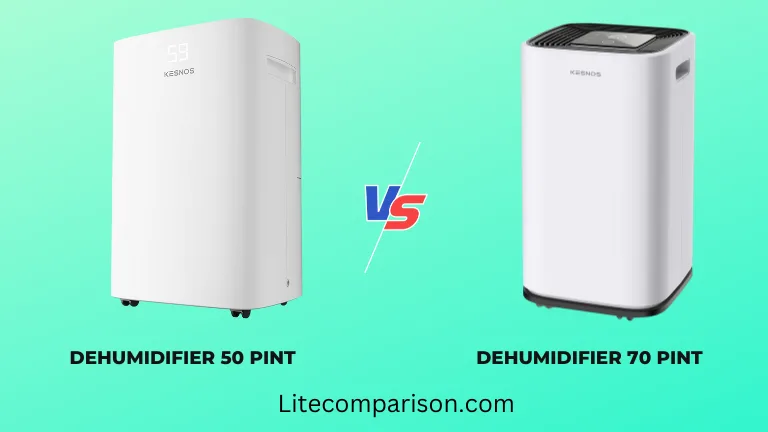
Can a Dehumidifier Be Plugged Into an Extension Cord
Of course you can place a dehumidifier in a basement corner that's far from an outlet. The question is: can a dehumidifier be plugged into an extension cord without starting a fire or wrecking the machine? The honest answer is yes, but only under very specific conditions.
Per the National Electrical Code (NEC) and manufacturer guidelines, most portable dehumidifiers draw between 3.5 and 6.0 amps at 120 volts. That continuous load is enough to melt a cheap, undersized extension cord. Let's look at the real risks and the exact rules you need to follow.
Quick Answer
Yes, you can. But only with a heavy-duty extension cord. Use a 14-gauge or 12-gauge cord.
Keep it shorter than 25 feet. Never use a light-duty household cord. Plug the dehumidifier into the cord, then the cord into a grounded outlet.
The Real Problem: Why Dehumidifiers and Extension Cords Don't Naturally Mix
Dehumidifiers run for hours at a time. That steady, continuous draw is different from a vacuum cleaner or a power tool that runs for a few minutes. The longer the cord, the more resistance builds up.
Resistance creates heat. And heat is what melts wiring and starts fires.
Manufacturers know this. That's why almost every user manual includes a warning that says "do not use an extension cord." They're covering themselves legally. But the deeper reason is that most people grab the wrong cord.
You cannot use a 16-gauge lamp cord or a 10-foot power strip. Those are not built for sustained loads.
As of 2026, the National Electrical Code (NFPA 70) still treats extension cords as temporary wiring. You're not supposed to use them as a permanent solution. But in a rented basement where you can't install a new outlet, you might have no choice.
The key is matching the cord to the load.

Image source: Bing (Web (fair-use with source credit))
What's Actually Draining Power: Amps, Watts, and Startup Surge
Every dehumidifier has a nameplate on the back or side. It lists the voltage, amperage, and wattage. That's your starting point.
A typical 50-pint unit draws around 4.5 amps during normal operation. That's about 540 watts.
But there's a hidden factor. Compressor-based dehumidifiers have a startup surge. When the compressor kicks on, it can pull 2 to 3 times its running amperage for a split second.
That brief surge can trip a weak breaker or overload a thin extension cord. Desiccant dehumidifiers don't have this surge, but they draw more continuous power, often 6 to 8 amps.
The wattage matters too. Watts are volts times amps. So a unit running at 5 amps and 120 volts consumes 600 watts.
If you use a cord rated for 1200 watts, you're fine. But a 16-gauge cord rated for 900 watts is pushing it. The margin for error shrinks with every foot of cord.
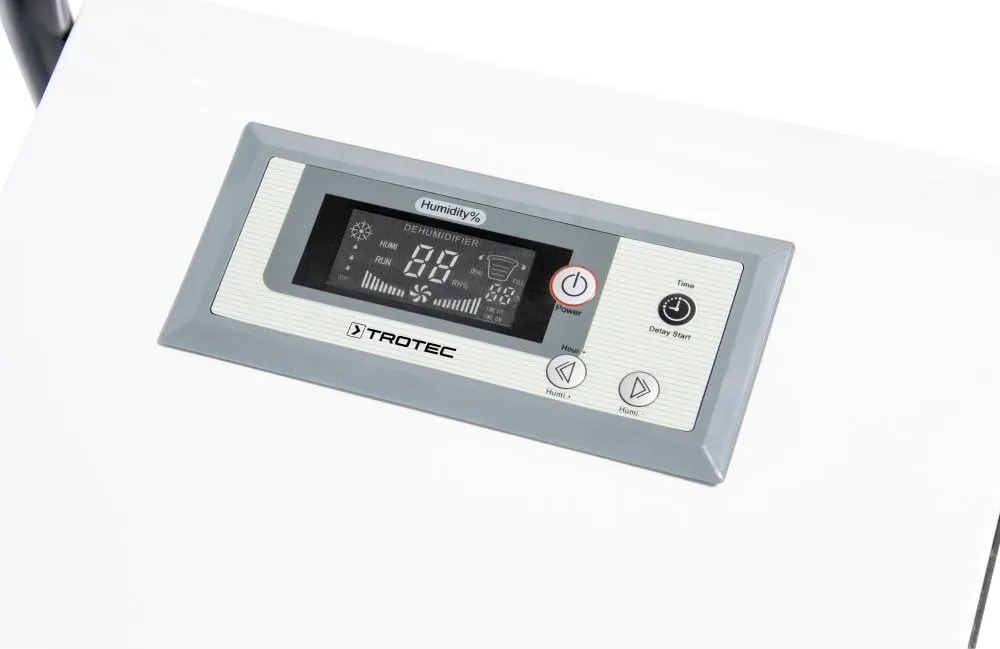
Image source: Bing (Web (fair-use with source credit))
The Math That Tells You If It's Safe
Here's the simple calculation. Find the amp draw on your dehumidifier's nameplate. Multiply that by 1.25 to add a safety margin.
That's the minimum amp rating your extension cord must handle.
For example, if your unit draws 5.0 amps:
- 5.0 x 1.25 = 6.25 amps
You need a cord rated for at least 6.25 amps. But you should never use a cord rated for exactly that number. Go bigger.
A 14-gauge cord is rated for 15 amps at 25 feet. That gives you more than double the safety margin.
The distance matters. The farther the electricity travels, the more voltage it loses. Voltage drop means the dehumidifier works harder, draws more current, and runs hotter.
In our research, sticking to a 25-foot cord or shorter is the sweet spot. That keeps voltage drop under 3 percent, which is the NEC recommendation for appliance circuits.
The One Table That Prevents Mistakes: Matching Cord Length to Wire Gauge
This table is your cheat sheet. It shows the correct wire gauge for different dehumidifier amp draws and cord lengths. The thicker the wire (lower gauge number), the more current it can handle safely.
| Cord Length | 14 AWG (15 amps) | 12 AWG (20 amps) | 10 AWG (30 amps) |
|---|---|---|---|
| 25 feet | Up to 6.0 amps | Up to 8.0 amps | Up to 10.0 amps |
| 50 feet | Up to 4.0 amps | Up to 6.0 amps | Up to 8.0 amps |
| 75 feet | Not recommended | Up to 4.5 amps | Up to 6.5 amps |
| 100 feet | Not recommended | Up to 3.5 amps | Up to 5.0 amps |
Most dehumidifiers fall in the 3.5 to 6.0 amp range. For a 50-foot run, you need 12-gauge wire. For a 25-foot run, 14-gauge is fine.
Never use a 16-gauge cord for any dehumidifier. It's too thin and will overheat.
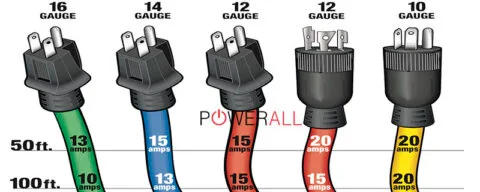
Image source: Bing (Web (fair-use with source credit))
Step-by-Step: How to Use an Extension Cord Safely (If You Must)
If you're in a situation where you absolutely need an extension cord, follow these steps. They are based on manufacturer specs and NEC guidelines.
1. Check the nameplate. Write down the amp draw and wattage. If it's a 50-pint unit, expect 4.5 to 5.5 amps.
2. Buy the right cord. Get a 14-gauge or 12-gauge outdoor-rated cord. Look for the UL or ETL mark.
The cord should have a three-prong grounded plug. Never use a two-prong cord.
3. Keep it short. Use the shortest cord that reaches the outlet. A 25-foot cord is ideal.
If you need 50 feet, step up to 12-gauge.
4. Plug in the dehumidifier first. Connect the dehumidifier's power cord to the extension cord. Then plug the extension cord into the wall.
This reduces the chance of loose connections.
5. Monitor the cord. After 30 minutes, feel the cord near the plug. If it's warm, you're pushing too much current.
Unplug it and get a thicker cord. If it's hot, stop using it immediately.
6. Keep it uncovered. Never run the cord under a rug, through a wall, or behind furniture. That traps heat and increases fire risk.
If you're looking for a model that plays nice with tight spaces, check out our guide to the best dehumidifier options for your home. It covers units that draw less power, which makes the extension cord question less of a worry.
Mistakes That Could Melt Your Cord (or Worse)
Most extension cord problems come from the same handful of errors. Knowing them upfront saves you from a costly fire or a fried compressor.
Using a light-duty cord. A 16-gauge indoor cord looks fine for a small appliance. It's not. Dehumidifiers pull continuous current for hours.
That sustained load heats up thin wires fast. Within 30 minutes, the cord can feel warm to the touch. Within an hour, it can melt the insulation.
Coiling the cord while it's running. Extension cords generate heat along their entire length. If you keep it coiled up on a spool or in a loop, that heat has nowhere to go. The center of the coil gets hot enough to melt the jacket.
Always unspool the full length before plugging anything in.
Running the cord under a rug or through a doorway. Carpets trap heat. Doorways pinch the cord and damage the insulation over time. Both create hotspots that can lead to shorts or arcing.
Plugging a dehumidifier into a power strip or surge protector. Power strips are not rated for continuous loads over 15 amps total. A dehumidifier alone can draw 5 to 6 amps. Add any other device and you're close to the limit.
The strip's internal breaker can trip, or worse, the strip can overheat and melt.
Ignoring a warm plug. If the plug feels hot to the touch after 30 minutes, you have a problem. It could be a loose connection, an undersized cord, or a failing outlet. Stop using it immediately.
Check the cord gauge and the outlet condition.
Using a damaged or frayed cord. A cut in the outer jacket exposes the live wires inside. In a damp basement, that's a shock hazard waiting to happen. Inspect the cord every time you set it up.
Replace it at the first sign of wear.
Why It's Often Better to Skip the Cord: Smarter Alternatives
Sometimes the safest option is not using an extension cord at all. Here are a few alternatives that solve the root problem.
Move the dehumidifier closer to the outlet. It sounds obvious. But many people set the unit in a corner and then try to reach the outlet. If the floor is level and the drainage works, just move the unit.
A shorter factory cord is always safer than any extension cord.
Install a new outlet. If you own the home, hiring an electrician to add a dedicated outlet near the dehumidifier costs around $150 to $300. That's a one-time expense. It eliminates the extension cord question forever.
It also keeps your warranty intact.
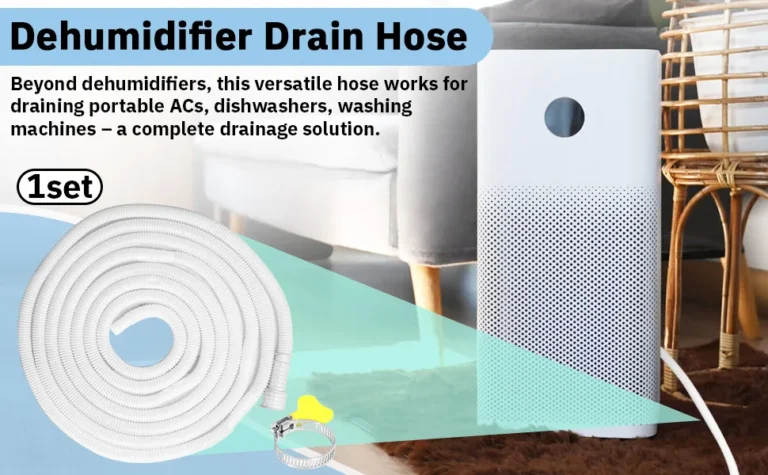
Use a condensate pump to drain farther away. Some dehumidifiers come with a built-in pump. Others accept an external pump kit. The pump lets you run a small drain hose up a wall or across a ceiling to a sink or floor drain.
That way, the dehumidifier stays near the outlet, and the water goes where you need it.
Choose a lower-amp model. If you're shopping for a new unit, look at the amp draw on the spec sheet. A 30-pint model draws around 3.5 amps. A 50-pint model draws 5.5 amps.
The lower the amps, the more forgiving the cord requirements. If you need a unit that fits tight spaces and lower power circuits, check our recommendations for the best dehumidifier for basement setups. Some models are designed to work on standard 15-amp circuits without straining.
Run a dedicated circuit for the basement. In older homes, a single 15-amp circuit often serves an entire basement. Adding a dehumidifier on top of a freezer, a washing machine, and lights can overload the circuit. A dedicated 20-amp circuit for the dehumidifier costs more upfront but solves every power issue permanently.
FAQs About Dehumidifier Power and Extension Cords
Can I use a 50-foot extension cord for my dehumidifier?
Only if you use a 12-gauge or 10-gauge cord. At 50 feet, voltage drop becomes significant. A 14-gauge cord at that length loses enough voltage to make the compressor work harder.
Stick to 12-gauge for 50-foot runs, and only if the dehumidifier draws under 6 amps.
What happens if I use a 16-gauge extension cord?
The cord will overheat. A 16-gauge cord is rated for about 10 amps at short lengths, but that rating drops fast with continuous load. After an hour, the cord can reach unsafe temperatures.
Aggregate user reports show melted plugs and damaged outlets from this exact mistake.
Will using an extension cord void my dehumidifier warranty?
Most manufacturers say yes. The user manual almost always states "do not use an extension cord." If the cord causes a power surge or damages the compressor, the manufacturer can refuse the warranty claim. Check your specific model's manual before using any cord.
Can I plug two dehumidifiers into one extension cord?
No. Never daisy-chain appliances on a single extension cord. Each dehumidifier draws 4 to 6 amps.
Two units on one cord push the load past 10 amps. That exceeds the safe capacity of most 14-gauge cords, especially on longer runs.
Does a GFCI outlet change anything for extension cord use?
A GFCI outlet adds protection against ground faults, but it does not protect against overloads. The cord can still overheat even with a GFCI. The GFCI trips on current leaks, not on excess heat.
You still need the correct wire gauge and cord length.
What's the bottom line on extension cords and dehumidifiers?
Use a heavy-duty cord, keep it short, and match the gauge to the amp draw. If you can avoid the cord entirely, do that. Install a new outlet or move the unit closer.
Your safety and your appliance's lifespan depend on getting this one detail right.