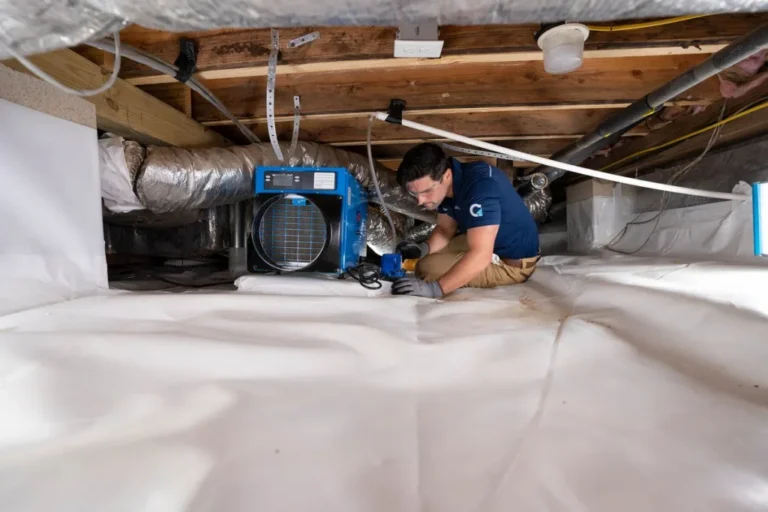
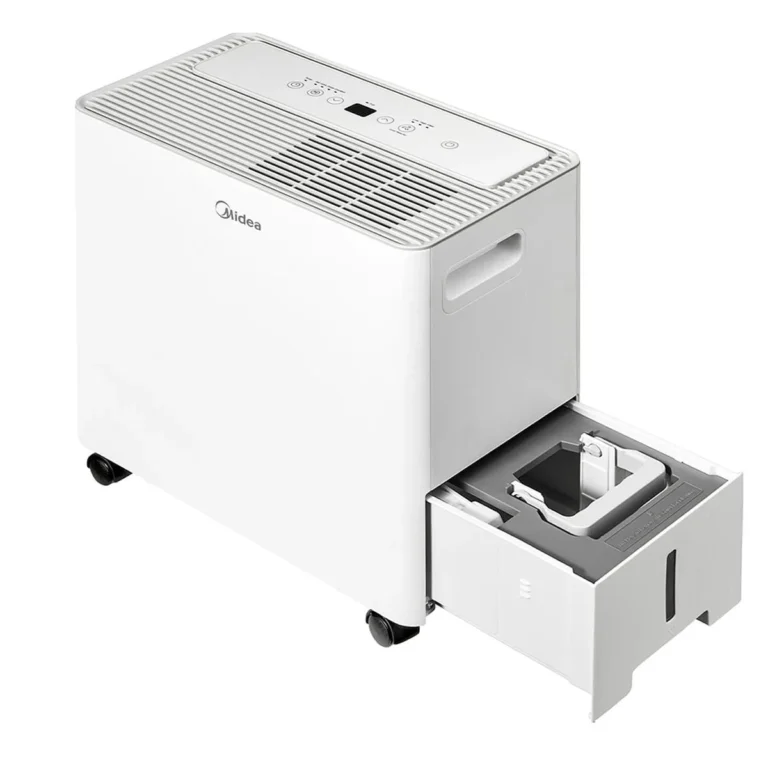
Do Dehumidifiers Use a Lot of Electricity
So, do dehumidifiers use a lot of electricity? It’s a fair question, especially if you’ve seen your energy bill spike after running one. No one wants to trade damp air for a higher electric bill.
Here’s the good news: a typical 50‑pint dehumidifier draws around 500 to 600 watts. That’s about the same as a window air conditioner on low. But the real answer isn’t that simple.
It depends on your setup, your space, and how you use it.
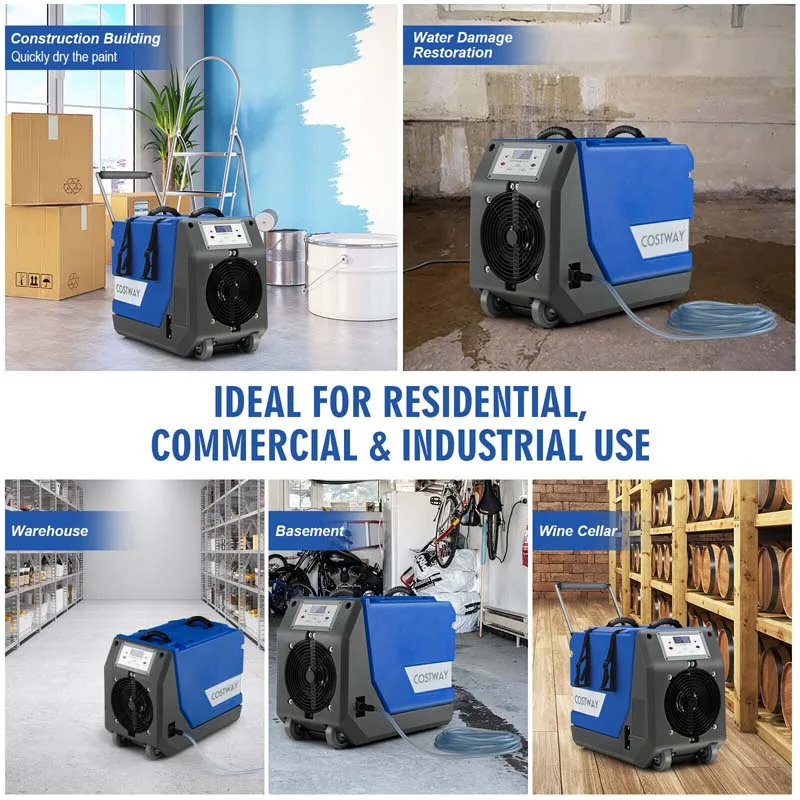
Image source: Bing (Web (fair-use with source credit))
Quick Answer
No, a dehumidifier doesn’t use a lot of electricity by itself. The average unit pulls 300 to 800 watts. Actual monthly cost is usually $10 to $30 for the whole year.
Compare that to an air conditioner at $50 to $100 per month. The key is how often the compressor kicks on. It cycles on and off based on humidity, not a constant drain.
What Determines How Much Electricity a Dehumidifier Actually Uses?
The biggest factor is the unit’s pint capacity. A 30‑pint model draws about 300 to 400 watts. A 70‑pint unit pulls 700 to 800 watts under load.
Wattage alone doesn’t tell the story. Run time is everything.
A dehumidifier doesn’t run 24 hours straight unless the space is very damp. Most cycle on and off based on humidity levels. If your basement sits at 80% relative humidity, the compressor runs longer.
At 60%, it runs less.
Your humidity setpoint also matters. Setting the target at 30% forces the unit to run almost nonstop. A 50% setpoint gives the compressor breaks.
That difference can double your monthly cost.
Here’s a quick comparison of typical wattage and runtime for common sizes:
| Unit Size (pints/day) | Typical Wattage | Typical Run Hours/Day | Monthly kWh |
|---|---|---|---|
| 30‑pint | 300 W | 8–12 hours | 72–108 kWh |
| 50‑pint | 500 W | 8–12 hours | 120–180 kWh |
| 70‑pint | 700 W | 8–12 hours | 168–252 kWh |
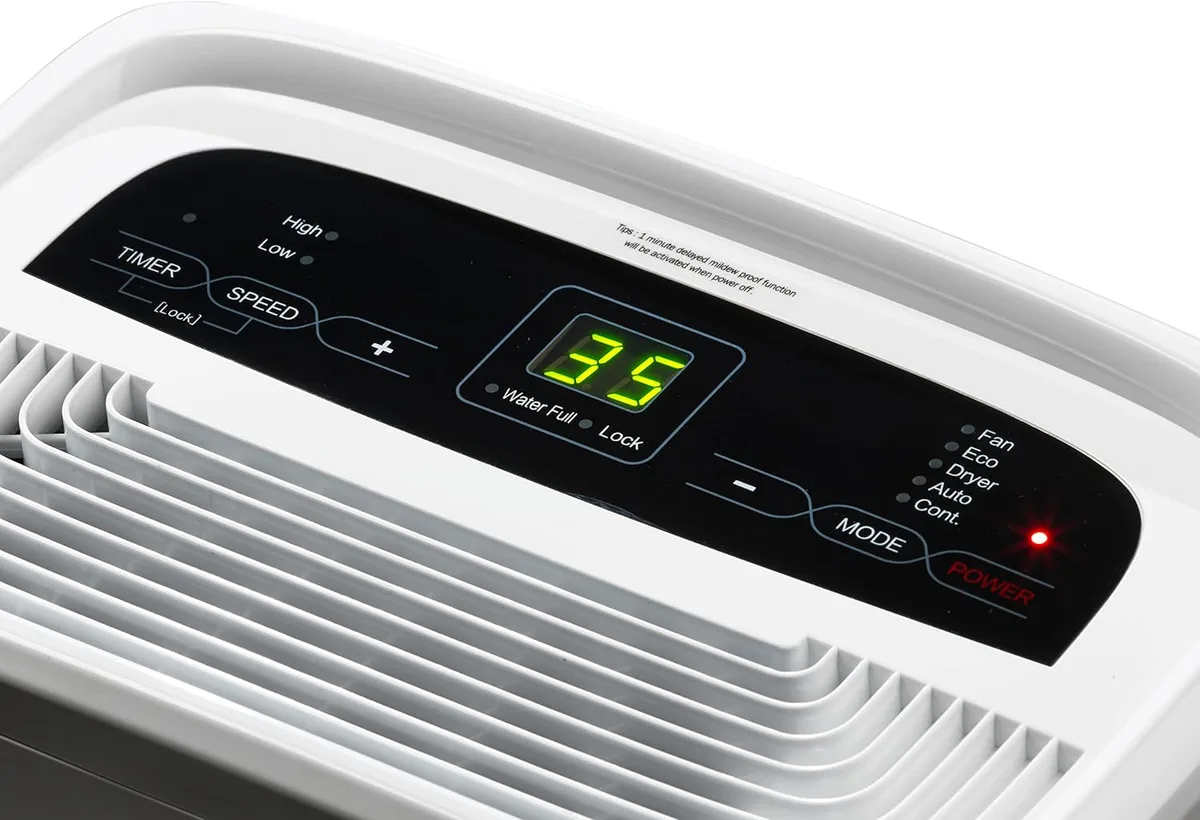
Image source: Bing (Web (fair-use with source credit))
Room size and conditions also affect runtime. An open basement with poor air circulation holds moisture longer. A small, enclosed space dries out faster.
Insulation, temperature, and the number of people in the room all play a role.
How to Calculate Your Dehumidifier’s Monthly Cost in 3 Minutes
You don’t need to be a math whiz. Here’s a simple process that gives you a solid estimate.
Step 1: Find your unit’s wattage. Look on the back or bottom. It’s usually listed as “watts.” If not, check the user manual or manufacturer website.
Step 2: Estimate average daily run time. Most dehumidifiers in a humid basement run 8 to 12 hours a day. In a dry room, it might be 4 to 6 hours. If you already own one, plug it into a smart plug to track actual runtime.
That’s the gold standard.
Step 3: Multiply wattage by daily run hours. That gives you watt‑hours per day. Divide by 1000 to get kilowatt‑hours (kWh). Example: 500‑watt unit running 10 hours = 5 kWh per day.
Step 4: Multiply by your electricity rate. Your bill shows the rate per kWh, typically $0.10 to $0.20 as of 2026. So 5 kWh × $0.15 = $0.75 per day, or about $22.50 per month.
Step 5: Adjust for cycling. This calculation assumes the unit runs nonstop for those hours. In reality, the compressor cycles on and off. If your unit runs 10 hours but only 7 are actual compressor time, adjust accordingly.
Here’s a reference table for common scenarios:
| Scenario | Unit | Daily Run Hours | kWh per Day | Monthly Cost ($0.13/kWh) |
|---|---|---|---|---|
| Dry bedroom | 30‑pint (300 W) | 6 hours | 1.8 kWh | $7.02 |
| Average basement | 50‑pint (500 W) | 10 hours | 5 kWh | $19.50 |
| Damp basement | 70‑pint (700 W) | 14 hours | 9.8 kWh | $38.22 |
For anyone shopping, our guide to the best dehumidifier can help you pick an efficient model.
Does an ENERGY STAR Dehumidifier Make That Big a Difference?
Yes, and the difference is bigger than you might think. ENERGY STAR certified dehumidifiers use at least 20% less energy than standard models. Some high‑efficiency units hit 30% or more.
The program is run by the U.S. Environmental Protection Agency. It sets strict efficiency standards based on testing.
Products that earn the label must meet a minimum Energy Factor rating, which measures how many pints of water they remove per kilowatt‑hour.
How much can you save? Let’s compare a standard 50‑pint unit vs. an ENERGY STAR 50‑pint unit.
| Feature | Standard Unit | ENERGY STAR Unit |
|---|---|---|
| Wattage (50‑pint) | 580 W | 480 W |
| Annual kWh (typical use) | 720 kWh | 580 kWh |
| Annual cost ($0.13/kWh) | $93.60 | $75.40 |
| Savings per year | – | $18.20 |
That’s nearly $20 a year saved on electricity alone. Over the lifespan of the unit (5 to 7 years), that’s $100 to $140. Efficient units also often have better compressors and frost sensors, meaning they run more precisely and last longer.
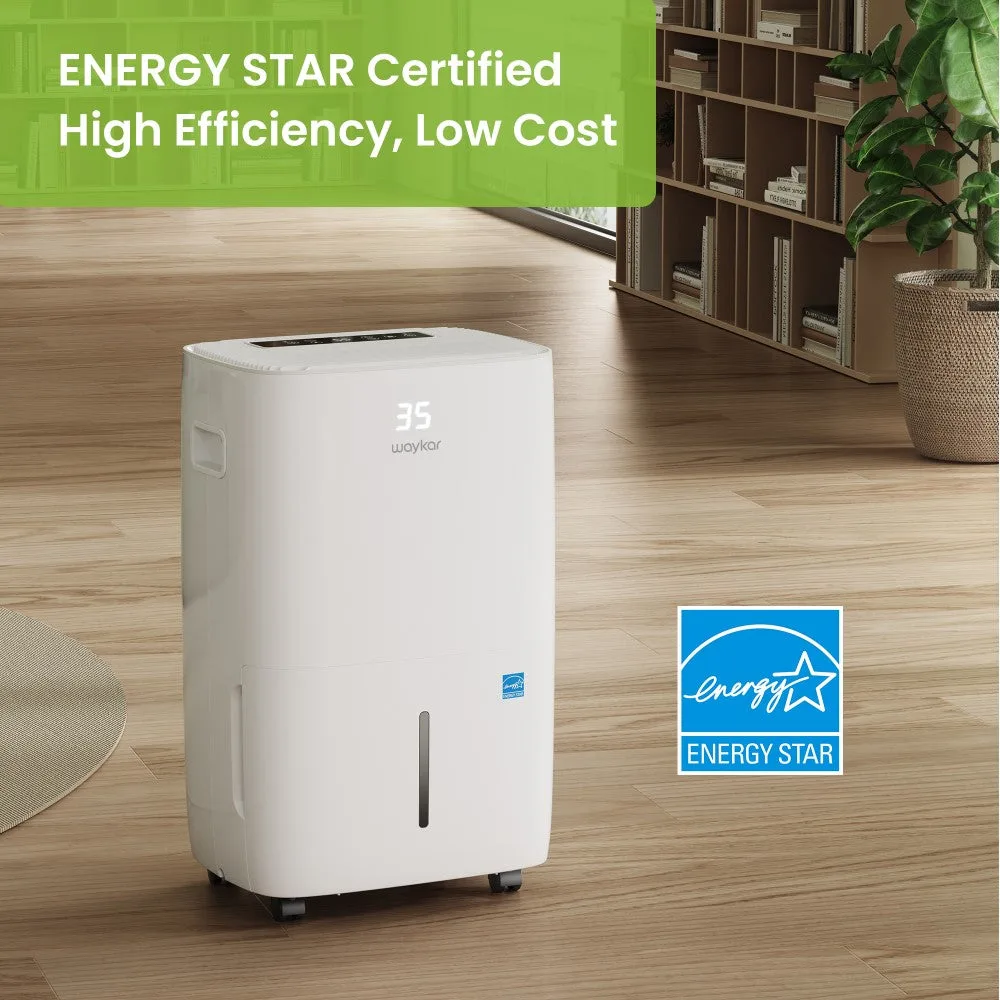
Image source: Bing (Web (fair-use with source credit))
Worth the extra upfront cost? Most ENERGY STAR models cost $20 to $50 more. You recoup that in electricity savings within one to two years. After that, it’s pure profit.
If you run the unit regularly, the label is a no‑brainer.
Common Mistakes That Make Your Dehumidifier Cost More Than It Should
Even the most efficient dehumidifier can waste energy if you set it up wrong. Here are the biggest culprits.
Setting the humidity too low. This is mistake number one by a wide margin. Many people set their unit to 30% thinking lower equals better. That forces the compressor to run almost nonstop.
The sweet spot for comfort and energy use is 45% to 55%. At that range, you still prevent mold and mustiness without the constant draw.
Placing the unit too close to a wall. Dehumidifiers pull air in from the sides. If you cram it into a corner or against furniture, airflow gets choked. The compressor struggles to pull in enough air, so it runs longer than needed.
Give it at least 6 inches of space on all sides.
Neglecting to clean the coils and filter. Dust buildup on the evaporator coils acts like a blanket. The compressor has to work harder to cool the coils, which means more electricity and less water removal. Clean the filter every month and the coils every three months.
A quick vacuum with a brush attachment works fine.
Using the wrong size for the space. A 30‑pint unit in a 2,000‑square‑foot basement will run continuously. It can never catch up. A 70‑pint unit in a small laundry room will cycle on and off too quickly, wasting energy on startup surges.
Match the pint capacity to the square footage. For a best dehumidifier for basement applications, get a size that handles the dampness.
Ignoring the drain hose option. Some people let the bucket fill up and the unit turns off. When it stops, humidity rises again. The compressor has to restart and re‑cool everything from scratch.
Running it with a continuous drain hose means constant operation at lower demand instead of repeated full‑power restarts.