How Long Should a Dehumidifier Run After a Shower
If you've ever googled how long should a dehumidifier run after a shower, you've probably seen a single number. 30 minutes. 45 minutes. Maybe an hour. The truth is, that's the wrong way to think about it.
There's no universal timer that works for every bathroom, every dehumidifier, or every climate.
Per ASHRAE standards, indoor relative humidity should stay between 30% and 60% for comfort and mold prevention. After a shower, that number can spike to 80% or 95% in minutes. How long it takes to pull it back down depends on four specific conditions.
Let's walk through them so you can find your exact runtime.
Image source: Bing (Web (fair-use with source credit))
Quick Answer
Run your dehumidifier until the relative humidity drops to 50-60%. Measure it with a hygrometer. For a small bathroom, expect 30-60 minutes.
For a medium bathroom, 1-2 hours. For a large bathroom, 2-3 hours. Use your exhaust fan to speed things up.
Stop when the target is reached, not when the timer beeps.
Why "30 Minutes" Is the Wrong Answer
The fixed-number approach sounds convenient. Set a timer, walk away, done. But here's the problem: that number works for one specific set of conditions and fails for everything else.
The variables are too wide. A small half-bath with a window and an exhaust fan will dry out in 20 minutes. A master bathroom with a soaking tub, no window, and a weak fan might take 3 hours. The same dehumidifier behaves completely differently in each space.
The real goal is a target humidity, not a fixed time. Your bathroom's relative humidity after a shower is what matters. The dehumidifier's job is to bring it from 85% back down to a healthy range. That target doesn't change based on the clock.
It changes based on the air.
Your unit's capacity makes a huge difference. A 20-pint dehumidifier in a small bathroom works fine. A 20-pint unit in a large master bath will run for hours without catching up. You need to match the equipment to the room size.
If you're unsure what capacity fits your space, our guide to the best 20-pint dehumidifier for bedroom is a good starting point for smaller bathrooms.
The simple fix. Stop asking "how long." Start asking "what humidity is my target." Once you know that, the runtime takes care of itself.
The 4 Variables That Control Post-Shower Runtime
Four specific conditions determine how long your dehumidifier needs to run. Change any one of them, and the runtime changes too.
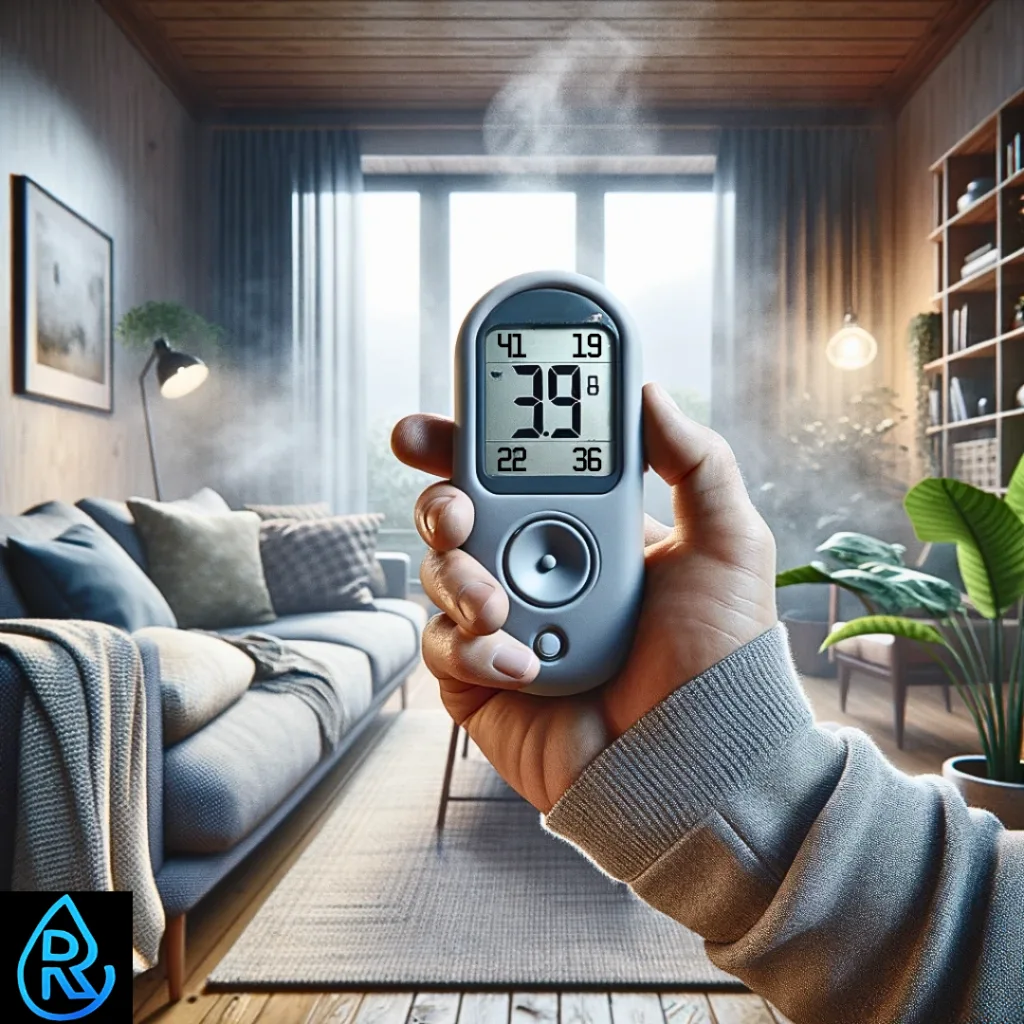
Image source: Bing (Web (fair-use with source credit))
1. Room Size and Layout
Bigger rooms hold more moist air. A 50-square-foot powder room clears fast. A 150-square-foot master bath with a vaulted ceiling takes longer.
Open floor plans that include the bathroom and adjacent hallway also extend runtime.
2. Exhaust Fan Usage
An exhaust fan is your best ally. It vents moisture directly outside. Using it during and after your shower can cut dehumidifier runtime by 30-50%.
Not using it means the dehumidifier does all the work alone.
3. Dehumidifier Capacity and Features
The pint rating matters. A 30-pint unit extracts 30 pints of moisture per day under standard conditions. In a small bathroom, that's plenty.
In a larger space, you might need a 50-pint model. Our recommendations for the best 50-pint dehumidifier for large rooms can help you choose the right size.
4. Starting Humidity Level
The higher the humidity after your shower, the longer the run. A 10-minute shower in a humid climate might push RH to 95%. A quick rinse in a drier climate might only hit 70%.
The starting point directly affects the finish line.
Here's a quick reference table:
| Variable | Shorter Runtime | Longer Runtime |
|---|---|---|
| Room size | Small (under 75 sq ft) | Large (over 150 sq ft) |
| Exhaust fan | Used during and after shower | Not used or weak |
| Dehumidifier capacity | 30-50 pints (oversized for room) | 20 pints (undersized for room) |
| Starting humidity | 70-80% | 90-95% |
Your Personal Decision Tree: Find Your Exact Runtime
Now let's turn those variables into a step-by-step process. Follow these branches based on your specific situation.
Step 1: Measure your starting humidity. Place a hygrometer in the bathroom. Wait 10 minutes after your shower. Note the reading.
If it's 80% or higher, you need a longer runtime. If it's 70-80%, you'll clear faster.
Step 2: Check your exhaust fan. Is it working? Do you use it during the shower? If yes, your dehumidifier will run roughly 30% less time.
If no, expect a longer cycle.
Step 3: Calculate your room size. Measure length and width in feet. Multiply them. A 10×8 bathroom is 80 square feet.
Use this number to estimate runtime.
Step 4: Match your dehumidifier capacity. For a bathroom under 100 sq ft, a 20-30 pint unit works well. For 100-200 sq ft, consider a 30-50 pint unit. For larger spaces, a 50-70 pint unit is better.
Our guide to the best 70-pint dehumidifier covers options for bigger bathrooms.
Step 5: Choose your runtime based on the table below.
| Your Conditions | Estimated Runtime |
|---|---|
| Small room, fan on, 30-50 pint unit | 20-40 minutes |
| Small room, fan off, 20-30 pint unit | 40-60 minutes |
| Medium room, fan on, 30-50 pint unit | 45-90 minutes |
| Medium room, fan off, 20-30 pint unit | 90-120 minutes |
| Large room, fan on, 50-70 pint unit | 60-90 minutes |
| Large room, fan off, 30-50 pint unit | 2-3 hours |
Step 6: Monitor and adjust. Run the dehumidifier. Check the hygrometer every 30 minutes. Stop when RH hits 50-60%.
If it's still climbing after 30 minutes, your unit may be undersized. Consider a more powerful model.
Common Mistakes That Throw Off Your Timing
Even with the right plan, a few common errors can ruin your results. Here's what to watch out for.
Mistake 1: Placing the dehumidifier too close to the shower. Water spray can damage the unit. It can also cause the sensor to read incorrectly. Keep it at least 3 feet from direct water.
Mistake 2: Running the unit in a cold bathroom. Most compressor dehumidifiers struggle below 60-65°F. Frost can build up on the coils. The unit runs longer and less efficiently.
If your bathroom is cold, look for a model with a low-temperature operation mode.
Mistake 3: Forgetting to empty the tank. A full tank triggers an automatic shutoff. Your dehumidifier stops, humidity stays high, and you get mold. This is one of the most common frustrations.
Use a continuous drain hose if possible. If you can't, check the tank every hour.
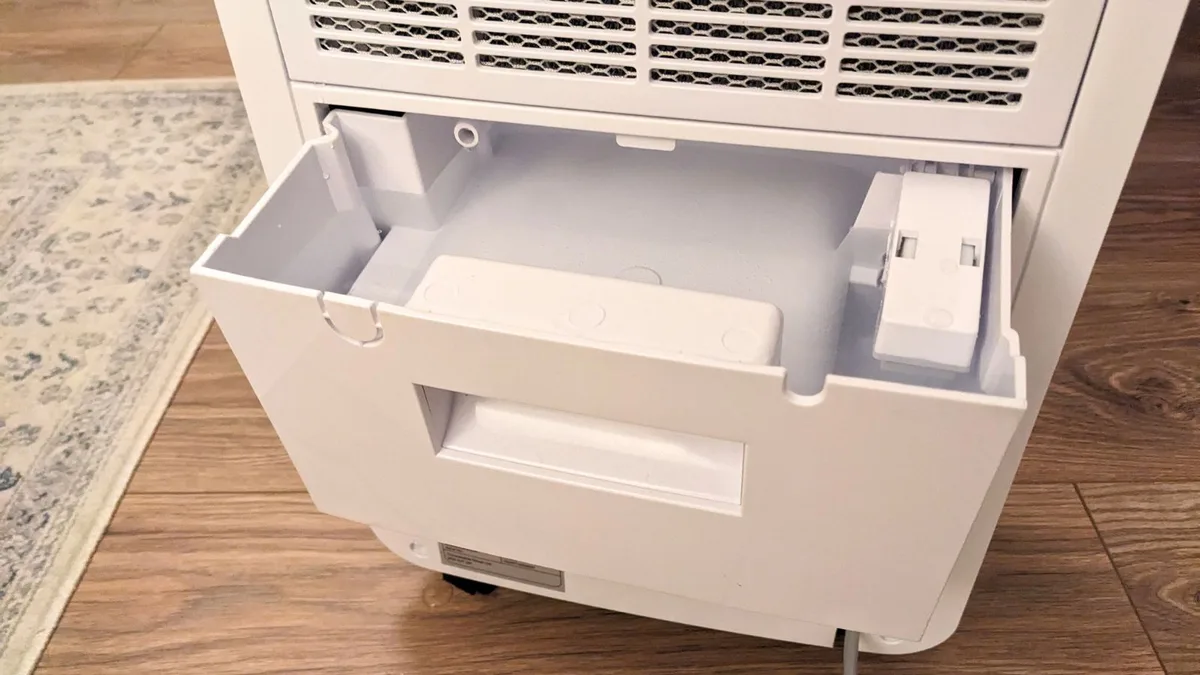
Image source: Bing (Web (fair-use with source credit))
Mistake 4: Ignoring the filter. A dirty filter blocks airflow. The unit works harder, runs longer, and extracts less moisture. Clean it every 2 weeks during heavy use.
A quick rinse under running water is usually enough.
Mistake 5: Thinking the dehumidifier replaces the fan. It doesn't. The fan vents moisture directly outside. The dehumidifier pulls moisture from the air inside.
They work best together. Use both.
Mistake 6: Setting the humidity target too low. Below 30% is uncomfortable. It can cause dry skin, static electricity, and even damage wood floors and furniture. Stick to 50-60% for the bathroom.
That's comfortable and effective for mold prevention.
Real Scenarios: What Different Bathrooms Actually Need
Let's put the decision tree to work with three real bathroom examples.
Scenario 1: Small guest bathroom (50 sq ft, no window, weak fan, 20-pint dehumidifier).
After a 10-minute shower, humidity hits 90%. The fan is on but barely moves air. The dehumidifier runs for about 45 minutes to reach 55%.
Without the fan, it would run 70 minutes. The lesson: even a small unit works in a small space, but the fan cuts runtime significantly.
Scenario 2: Master bathroom (120 sq ft, window but no fan, 30-pint dehumidifier).
Humidity spikes to 85%. No exhaust fan means the dehumidifier does all the work. It runs for about 90 minutes to hit 55%.
Opening the window helps, but only if outdoor humidity is lower than indoor. On a humid summer day, keep the window closed. The unit needs to be sized correctly for this room.
A smaller model would struggle for hours.
Scenario 3: Large master bathroom (180 sq ft, exhaust fan, 50-pint dehumidifier).
Humidity reaches 88% after a long shower. The fan is running. The 50-pint unit pulls the room down to 50% in roughly 60 minutes.
The fan and the larger capacity work together efficiently. This is the ideal setup. If you're looking for a unit that can handle this kind of load, our selection of the best 50-pint dehumidifier for basement is also relevant for large bathrooms, as the capacity needs are similar.
Pro Tips: Optimize Your Dehumidifier for Post-Shower Use
Once you've dialed in your runtime, a few small tweaks can make the whole process smoother and more efficient.
Use the continuous drain setup. If your dehumidifier has a hose port, connect a garden hose to a floor drain or sink. This eliminates the need to empty the tank. The unit can run as long as needed without interruption.
For bathrooms without a floor drain, consider a condensate pump model that pushes water uphill to a sink or laundry tub.
Set the humidistat correctly. Most dehumidifiers have a built-in humidistat. Set it to 50%. The unit will run until it reaches that level and then shut off automatically.
This is more reliable than a timer. You don't have to guess or check the clock.
Run the exhaust fan during the shower. This is the single most effective thing you can do. It vents the bulk of the steam before it saturates the room. The dehumidifier then only has to handle the residual moisture.
Aggregate reviews show that using both cuts total runtime by 30 to 50 percent.
Position the dehumidifier for best airflow. Place it in the center of the room, not in a corner. Keep it at least six inches from walls. Make sure nothing blocks the intake or exhaust.
Good airflow means faster extraction.
Clean the filter every two weeks. A clogged filter reduces airflow by up to 30 percent. The unit runs longer and uses more energy. A quick rinse under the tap takes two minutes.
Do it while you're brushing your teeth.
FAQs: How Long Should a Dehumidifier Run After a Shower?
Can I run the dehumidifier while I shower?
Yes, but it's not the most efficient approach. The dehumidifier pulls moisture from the air, but it can't keep up with the steam from a running shower. The exhaust fan is better for that job.
Run the fan during the shower. Turn on the dehumidifier after.
Should I use a timer or a humidistat?
Use the humidistat. A timer runs for a fixed period regardless of the actual humidity. A humidistat stops the unit when the target is reached.
This saves energy and prevents over-drying. Most modern units have a built-in humidistat.
What humidity level should I target for the bathroom?
Target 50 to 60 percent relative humidity. This range is comfortable for most people. It also prevents mold growth and condensation.
Below 30 percent is too dry. Above 60 percent risks mold and mildew.
Do I need a dehumidifier if I have a good exhaust fan?
Not always. A properly sized and vented exhaust fan can clear a bathroom in 20 to 30 minutes. But if your fan is weak, noisy, or not vented outside, a dehumidifier is a good backup.
It also helps in bathrooms without windows.
How do I know if my dehumidifier is the right size for my bathroom?
Check the pint rating against your room size. A 20-pint unit works for bathrooms under 100 square feet. A 30 to 50-pint unit is better for larger spaces.
If the unit runs for hours without reaching the target, it's likely undersized. Our roundup of the best value dehumidifier can help you find a well-priced option that fits.
Can I leave the dehumidifier running all the time?
You can, but it's not necessary. The unit will cycle on and off as needed if you set the humidistat. This is fine for energy use.
But if the bathroom is dry most of the day, you're better off running it only after showers. It saves wear on the unit.
The Bottom Line: Your Quick Reference Guide
Here's the takeaway. Stop thinking in minutes. Start thinking in humidity levels.
Your target: 50 to 60 percent relative humidity after a shower.
Your tools: A hygrometer to measure humidity. A dehumidifier with a humidistat. An exhaust fan used during the shower.
Your process: Shower with the fan on. Turn on the dehumidifier after. Let it run until the hygrometer reads 50 to 60 percent.
That's it.
Estimated runtimes: Small bathroom with fan, 20 to 40 minutes. Medium bathroom without fan, 90 to 120 minutes. Large bathroom with fan and a 50-pint unit, 60 to 90 minutes.
When to upgrade: If your unit runs for more than two hours without reaching the target, it's probably undersized. Consider a larger capacity model. Our guide to the best affordable dehumidifier covers options that won't break the bank.
One final reminder. A dehumidifier is a tool, not a magic wand. Use it with the exhaust fan. Keep the filter clean.
Empty the tank or use a continuous drain. Measure the humidity, not the clock. Do that, and you'll never have to ask "how long should a dehumidifier run after a shower" again.