Can You Use a Dehumidifier in a Bathroom
Waking up to fogged mirrors and dripping walls? That's a sign your bathroom is holding onto too much moisture. So can you use a dehumidifier in a bathroom?
Yes, but it depends on the type of unit, how you place it, and how you handle the collected water.
The average hot shower pushes bathroom humidity from 40% up to 90% or higher. The EPA recommends keeping indoor relative humidity between 30% and 50% to discourage mold growth. That gap is exactly why a dehumidifier can help, provided you follow a few rules.
Let's walk through what actually works.
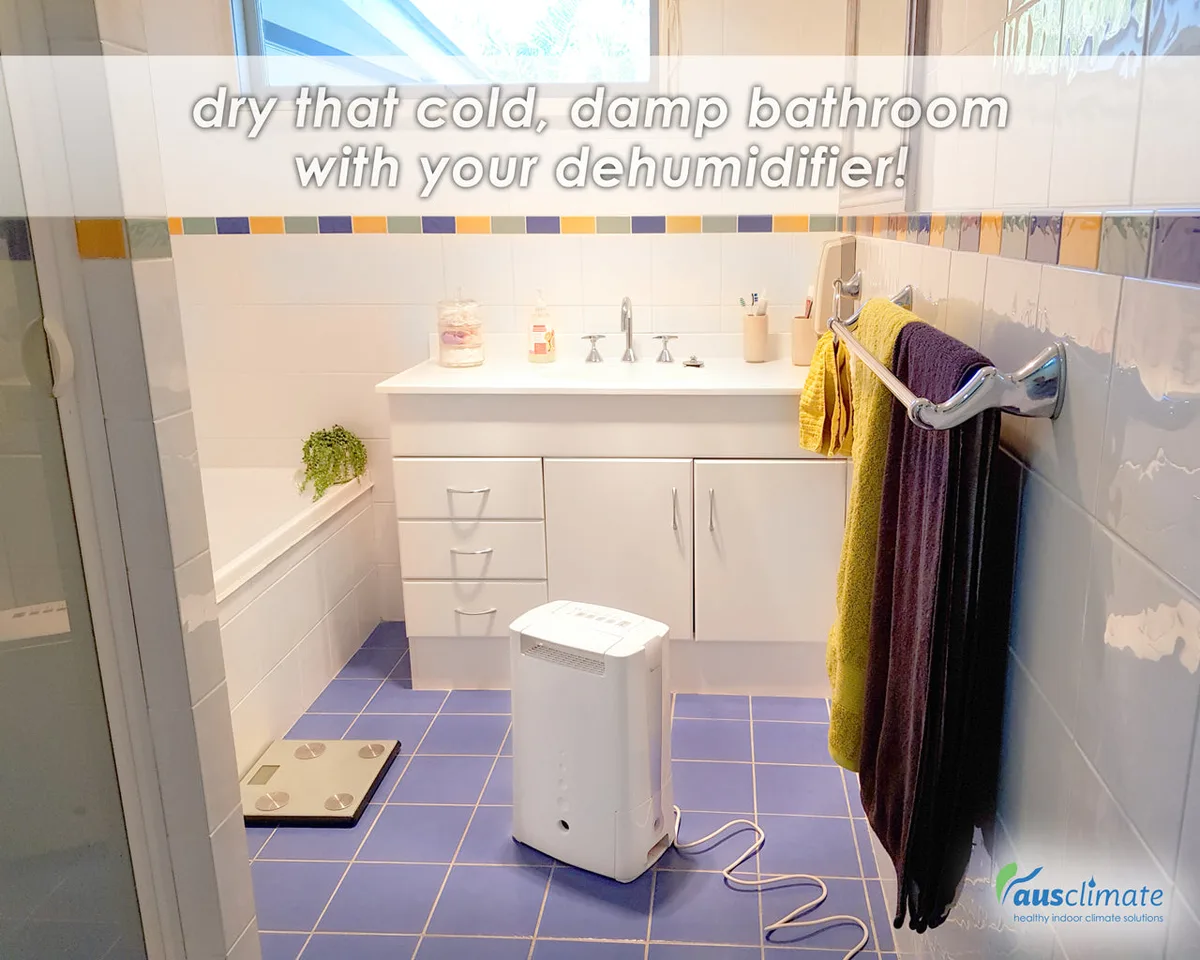
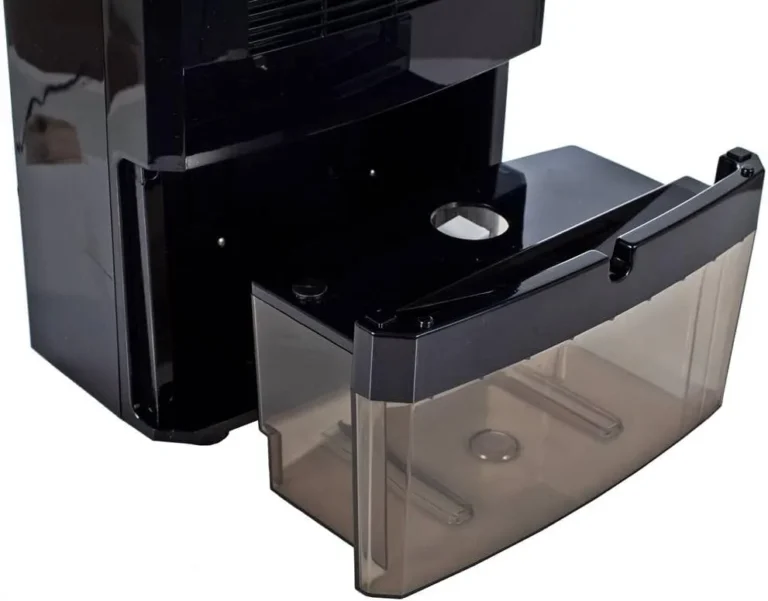
Image source: Bing (Web (fair-use with source credit))
Quick Answer
Yes, you can use a dehumidifier in a bathroom, but only if it has the right features. Choose a unit with an IPX4 splash-proof rating and place it away from direct water spray. Desiccant models handle cold bathrooms better than compressor models.
Use the continuous drain hose when possible to avoid emptying the tank. Set the target humidity between 40% and 50%.
Desiccant vs Compressor – Which Type Actually Works in a Bathroom
Not every dehumidifier is built for a bathroom. The two main types work very differently in small, damp, and often cold spaces.
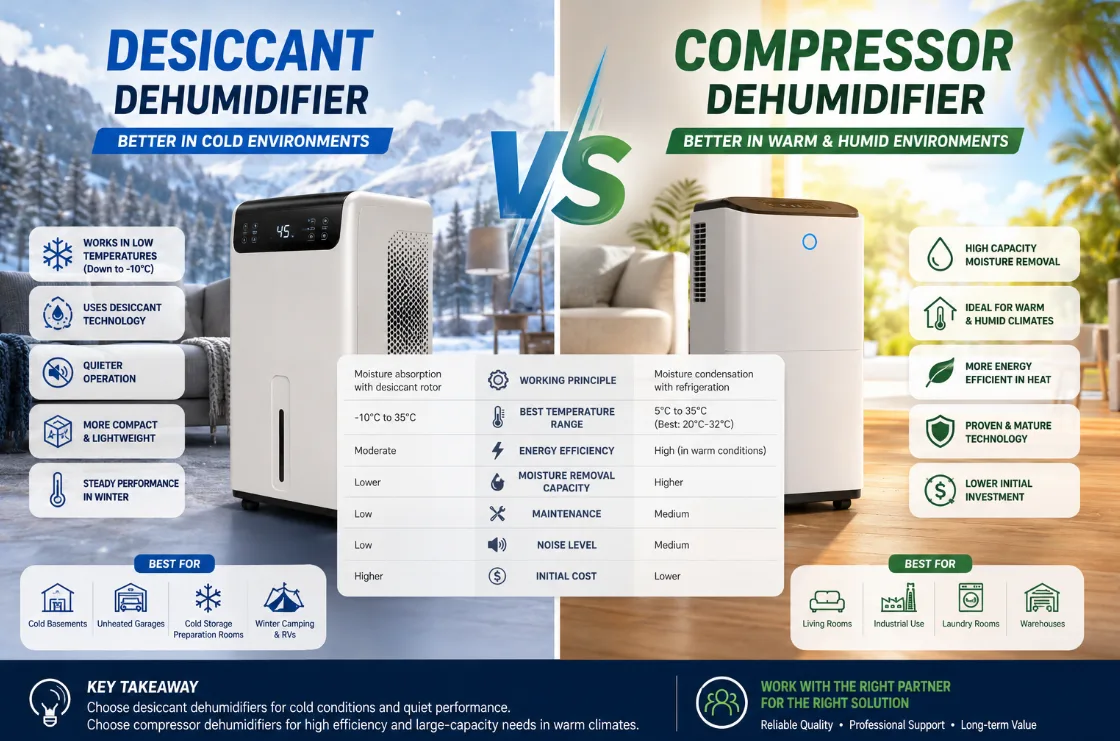
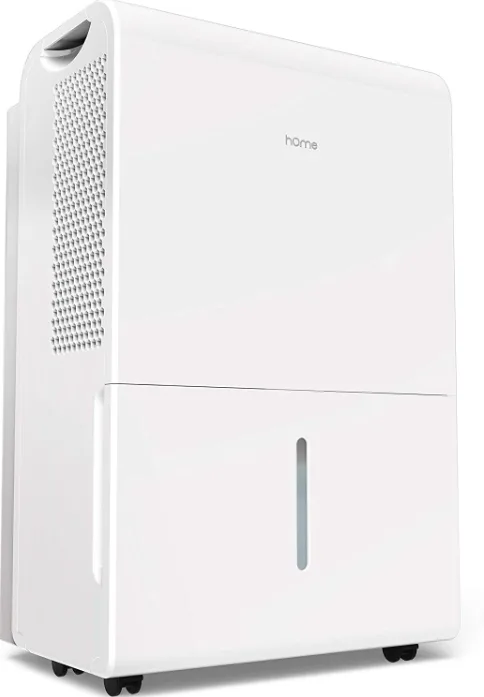
Image source: Bing (Web (fair-use with source credit))
Compressor models work like an air conditioner. They pull air across cold coils to condense moisture. They're powerful and efficient in warm rooms above 20°C.
But they lose performance when the room is cold, which is common in unheated bathrooms.
Desiccant models use a moisture-absorbing wheel and a small heater. They work well at lower temperatures and often weigh less. They're also quieter, which matters in a bathroom where you don't want to wake the whole house.
| Type | How It Works | Best For |
|---|---|---|
| Compressor | Cold coils condense water vapor | Heated bathrooms, larger spaces |
| Desiccant | Absorbent wheel + warm airflow | Cold bathrooms, smaller rooms |
In our research, desiccant units are the safer bet for most bathrooms, especially in winter. Compressor units make sense if the bathroom is attached to a heated living space. If you're only managing a small powder room, compact 20-pint units often do the job without taking up too much floor space.
For seasonal shifts, models built for year-round use tend to offer more flexibility.
How to Set Up and Run a Dehumidifier Safely in Your Bathroom
Placement matters more than people think. The unit needs to sit on a flat, dry surface, at least a metre away from the sink, shower, and bathtub. Water and electricity don't mix, so the machine must be out of any splash zone.
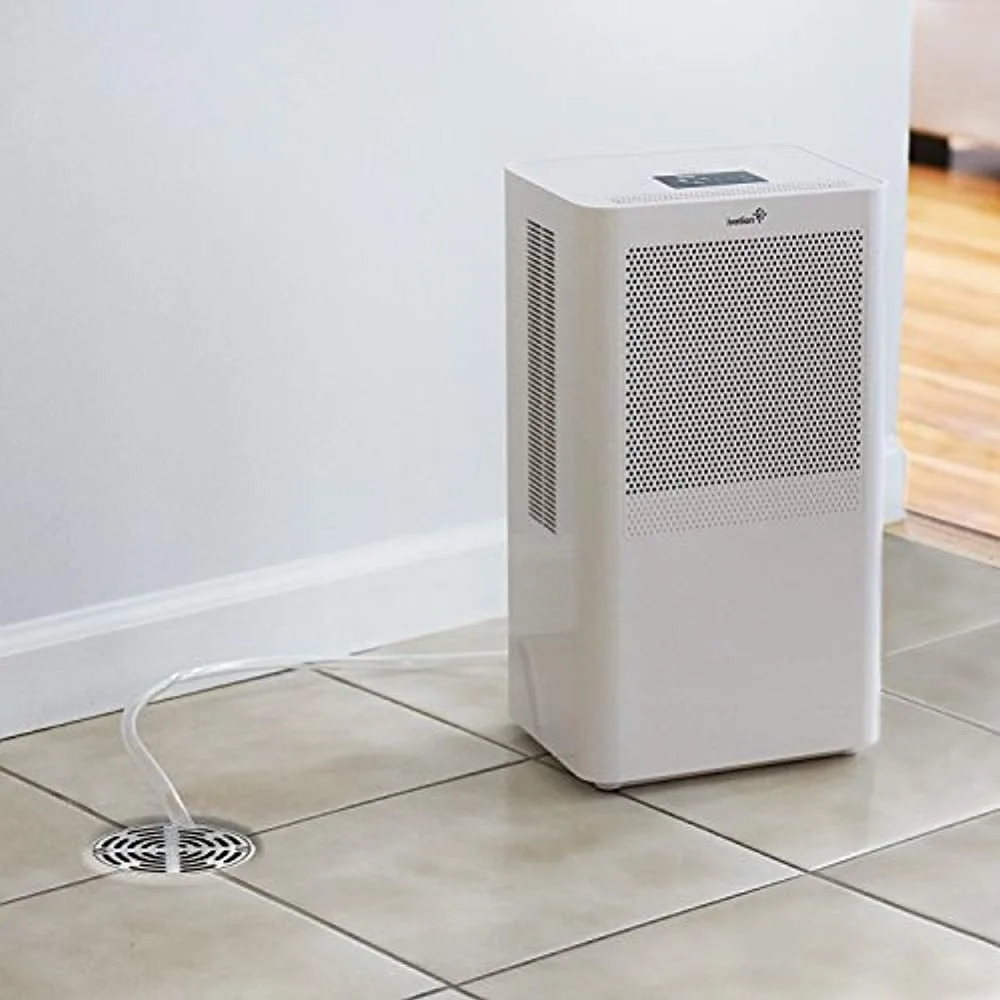
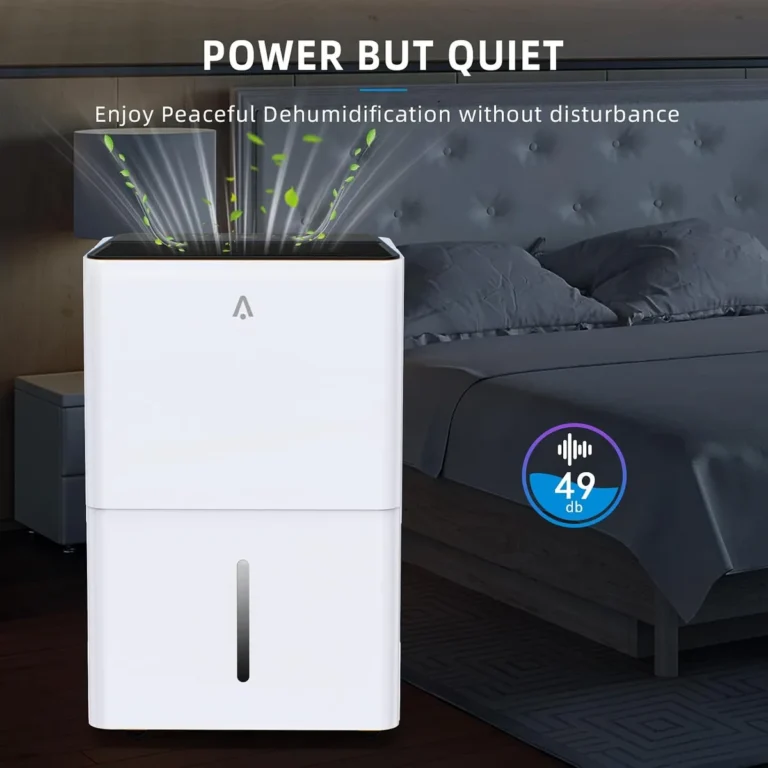
Image source: Bing (Web (fair-use with source credit))
Here's a simple setup process to follow:
- Measure the bathroom and note the humidity with a hygrometer.
- Choose a unit with the right capacity for the room size.
- Place it on a stable surface away from direct water spray.
- Plug it into a GFCI-protected or RCD-protected socket.
- Attach the continuous drain hose to a sink or shower drain if possible.
- Set the target humidity between 40% and 50%.
- Run it during and for 30 minutes after a shower.
The continuous drain hose is a game-changer. It means you don't have to empty the tank after every shower, which gets old fast. That also prevents overflow and the water damage that comes with it.
If you've dealt with spills before, you'll understand why most experienced owners consider that hose non-negotiable. For larger bathrooms, 35-pint models often provide the right balance of capacity and footprint.
Common Mistakes People Make (and How to Avoid Them)
People often buy the wrong type or place it poorly. Here are the mistakes that show up again and again:
- Using a compressor unit in a cold bathroom, then wondering why it barely collects water.
- Picking a tiny thermoelectric mini-dehumidifier, which struggles to remove enough moisture.
- Keeping the unit too close to the shower, risking electrical shock or damage.
- Forgetting to clean the filter, which kills airflow and extraction performance.
- Running it without a drain hose, then coming home to a full tank that switched off hours ago.
- Leaving it running without a humidistat, which can over-dry the room and crack paint or woodwork.
One of the biggest frustrations is buying a unit that's too big for the space. Oversized machines cycle on and off, waste energy, and can make the room feel uncomfortably dry. On the other hand, an undersized unit never catches up.
You want a balanced capacity, and sometimes that means looking at value-focused models that sit in the mid-range rather than the cheapest or most expensive options. If you're on a strict budget, affordable dehumidifiers can still perform well when matched to the right room size.
Dehumidifier vs Extractor Fan – Which One Should You Use?
Here's the honest answer: an extractor fan is usually the first choice. It removes steam directly at the source, before it spreads across the room. Building regulations in most regions still require mechanical ventilation in bathrooms, so a fan isn't optional in new builds.
As of 2026, that hasn't changed.
But a fan only helps when it's running. If you forget to switch it on, or your bathroom has no external wall, a dehumidifier is a useful backup. It also runs on its own schedule, which means it keeps drying long after the shower is done.
| Extractor Fan | Dehumidifier |
|---|---|
| Removes steam at the source | Pulls moisture from the air and surfaces |
| Needs a vent or external wall | Works anywhere there's a socket |
| No water tank to empty | Requires regular tank emptying or a drain hose |
| Loud but brief | Quieter and continuous |
| Best for post-shower bursts | Best for ongoing moisture control |
Think of it this way: the fan handles the wet air before it settles. The dehumidifier cleans up what's left, plus whatever the fan missed. Many people with persistent mold run both, and that's often the winning setup.
For older homes where a fan installation isn't practical, a dehumidifier is the pragmatic workaround. Renters in particular benefit, since you don't need to drill holes or rewire anything. Just make sure you follow the safety rules we covered above.
For rooms that stay damp constantly, basement-rated units often hold up better to continuous use.
Frequently Asked Questions
Can I leave a dehumidifier running in the bathroom overnight?
Yes, if the unit has an auto shut-off feature and a continuous drain hose. Without the hose, the tank will fill up and the machine will stop. That's fine for safety but useless for moisture control.
Set the target humidity to 50% to avoid over-drying.
What size dehumidifier do I need for a small bathroom?
A small bathroom under 10 square metres typically needs a 20-pint unit. Larger main bathrooms with tubs benefit from 30-pint or 35-pint models. Oversized units cycle too often and waste energy.
Undersized units never catch up. Match the capacity to the room, not the price tag.
Will a dehumidifier stop condensation on bathroom windows?
Yes, it will. Condensation forms when warm, moist air hits a cold surface. The dehumidifier pulls that moisture out of the air before it can settle.
You'll notice the difference within a few days, especially if the unit runs consistently during and after showers.
How often should I clean the dehumidifier filter in a bathroom?
Every two weeks, minimum. Bathroom air carries soap residue, dust, and skin cells. Those particles clog the filter fast.
A dirty filter cuts airflow and extraction performance by half. Rinse it under warm water and let it dry completely before reinserting.
Is it safe to use a dehumidifier near a toilet or sink?
Yes, as long as the unit has an IPX4 splash-proof rating and sits at least one metre away from any water source. Never place it where water can drip directly onto the casing. Use a GFCI or RCD-protected socket for extra protection.
The National Electrical Code requires GFCI protection in bathrooms for all outlets.
Can a dehumidifier replace a bathroom extractor fan?
No, not completely. Building regulations in most regions require mechanical ventilation in bathrooms. A dehumidifier is a strong supplement, especially in homes without an external wall for a fan.
But it doesn't remove steam at the source the way a fan does. The EPA's moisture control guidance recommends ventilation as the primary strategy for bathrooms.
Your Decision Guide – Should You Use a Dehumidifier in Your Bathroom?
Let's pull everything together into a simple decision framework. You don't need to guess anymore.
If your bathroom has an extractor fan that works well and you use it every time, you probably don't need a dehumidifier. The fan handles the peak moisture. Just keep cleaning the fan grille and let it run for 20 minutes after each shower.
If your bathroom has no fan, a weak fan, or you forget to turn it on, a dehumidifier is a smart addition. It runs independently and keeps working long after you leave the room. That's especially useful for windowless bathrooms.
If you live in a humid climate year-round, consider a dehumidifier even with a fan. The fan handles immediate steam. The dehumidifier controls the baseline humidity that never drops below 60% in summer.
Compact 30-pint models often hit the sweet spot for this kind of supplemental use.
If you rent and can't install a fan, a dehumidifier is your best option. No drilling. No wiring.
No permission needed. Just plug it in and follow the safety rules. Premium units tend to offer better build quality and quieter operation, which matters in a small space.
One last thing: don't forget the continuous drain hose. It's the single upgrade that turns a good setup into a hands-off solution. You'll thank yourself every time you don't have to empty that tank after a hot shower.