How Long Should a Basement Dehumidifier Run
If you've ever asked, "how long should a basement dehumidifier run?" you're aiming at the wrong question. The real question is whether your basement is holding a healthy humidity level. Runtime is a symptom, not a goal.
Across manufacturer specs, the answer changes with your basement size, climate, and drainage setup.
The Environmental Protection Agency recommends keeping indoor relative humidity between 30 and 50 percent. Most dehumidifiers cycle to hold that range. Depending on the space, that can mean a few hours a day or nearly all day.
As of 2026, Energy Star certified models make the cost of that runtime much easier to predict.

Image source: Bing (Web (fair-use with source credit))
Quick Answer: Typical Runtimes for Common Basement Setups
A correctly sized basement dehumidifier usually runs between 4 and 12 hours a day. In humid summer months, it can run longer. In winter, much less.
The exact number depends on how damp the space is and where the unit drains.
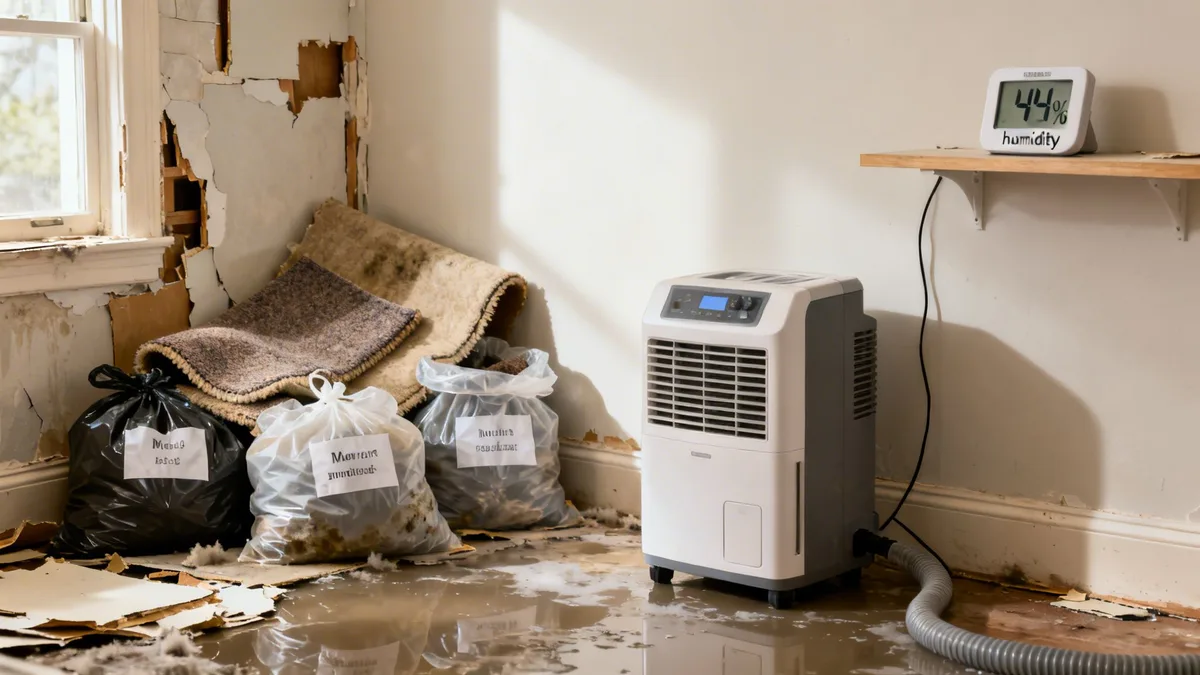
Image source: Bing (Web (fair-use with source credit))
| Basement Setup | Typical Daily Runtime | Notes |
|---|---|---|
| Finished, dry, good drainage | 2 to 4 hours | Short cycles, holds 45% RH easily |
| Seasonally damp in summer | 6 to 10 hours | Longer cycles when outdoor humidity is high |
| Unfinished, exposed concrete | 10 to 16 hours | Moisture seeps up and through walls |
| Post-flood or water damage | 24 hours until dry | Run continuously with continuous drainage |
Continuous operation isn't automatically a problem. If the unit drains through a hose to a floor drain, running for long stretches is normal. It's only a red flag when humidity never drops after 48 hours.
For badly flooded conditions, consider a unit built for flooded conditions that can handle heavy moisture loads without shutting off.
Why "How Long" Isn't a One-Number Answer
Humidity levels change by season, weather, and how sealed your basement is. Concrete floors and walls release moisture into the air. A sump pump or floor drain changes how water leaves the space.
That's why no single daily runtime applies to every home.
Manufacturer specifications list capacity in pints per 24 hours. A 50-pint unit removes up to 50 pints of moisture daily under ideal conditions. Actual runtime depends on how much moisture is in the air.
If your basement is dry and well insulated, the compressor may run for short bursts. If it's damp and cool, it may run much longer.
Think in if/then terms. If your basement humidity stays above 60 percent, expect long cycles. If you have a continuous drain setup, you can let the unit run until it reaches the setpoint without worrying about the tank.
If you rely on a bucket, the unit stops whenever it fills.
Choosing a unit matched to your basement's square footage matters more than chasing an hourly number. A 30-pint dehumidifier that runs all day uses more energy than a 50-pint model that cycles off for hours at a time.
The 30 to 50% Rule: What Your Dehumidifier Is Actually Trying to Do
The target is relative humidity, not runtime. The EPA's mold guidance recommends keeping indoor humidity between 30 and 50 percent. Staying below 60 percent is the priority.
Mold growth becomes more likely when humidity sits above that threshold for long stretches.
Your dehumidifier has a built-in humidistat, a sensor that reads the air and cycles the compressor. Set it to 50 percent, and the unit runs until the air reaches that mark. Then it shuts off.
That cycling is normal.
When the unit is off, humidity slowly climbs back up. That's what makes it run again later. If the room stays at 45 percent, the runtime simply reflects how quickly moisture re-enters the space.
A unit designed for year-round use handles seasonal swings better and keeps cycling predictable.
Don't set it below 30 percent. That dries out wood, causes static, and wastes electricity. Let the humidistat do its job.
Treat runtime as information about your basement's moisture load.
How to Dial In the Right Runtime for Your Basement (Step-by-Step)
Start with accurate readings. The humidistat on the unit is handy, but these sensors aren't always calibrated. Place a standalone hygrometer in the center of the room, away from walls and air vents.
Wait a few hours and note the number.
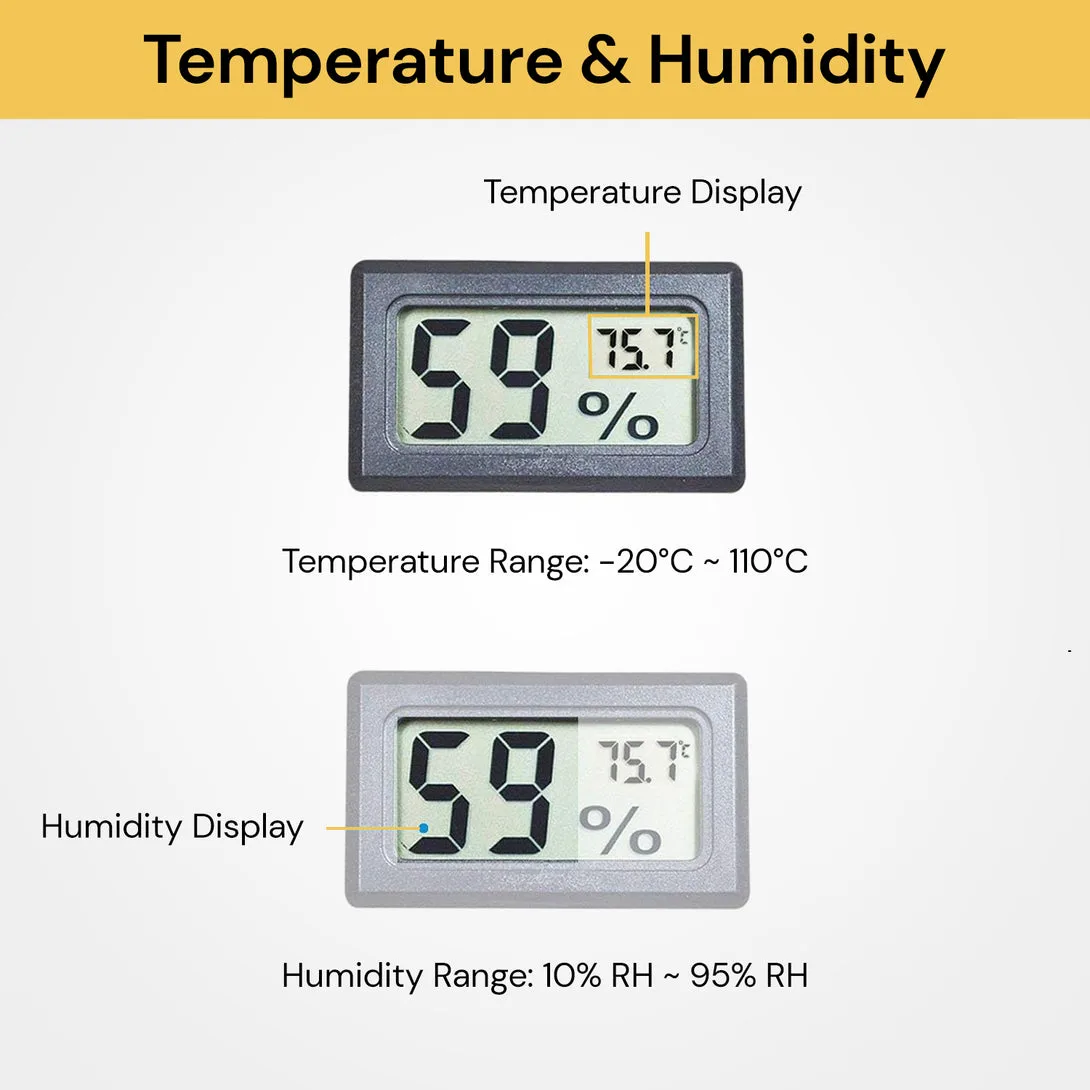
Image source: Bing (Web (fair-use with source credit))
Here's the workflow that works in almost every basement.
Step 1: Set the humidistat to 50 percent. Let the dehumidifier run for a full 48 hours. Don't empty the tank obsessively. Just keep it working.
Step 2: Check your standalone hygrometer. If the reading is between 45 and 55 percent, the runtime is correct for that setting. If it's still stuck above 60, the unit is undersized or there's a drain issue.
Step 3: Watch how often it cycles, not just how long each run lasts. A pattern of shorter runs with longer off periods means the setpoint is doing its job.
Step 4: Adjust in 5 percent increments. Raise the setpoint if the air feels too dry. Lower it only if humidity refuses to stay below 55 percent.
Step 5: Confirm after a rainy day. Wet weather is the toughest test. It tells you whether your baseline runtime actually works. If you're replacing an old unit, budget-friendly options can perform just as well as premium models.
Why Your Dehumidifier Runs Nonstop (and When That's Actually Fine)
Continuous running is common. In many basements, it's the correct answer. The real question is whether the air is actually reaching the setpoint.
Here are the usual reasons it won't stop:
- The unit is undersized for the square footage or moisture load.
- The basement stays below 65°F, so compressor efficiency drops.
- The drain hose is kinked, causing the tank to fill and the unit to shut off.
- The filter is clogged, reducing airflow.
- Outdoor humidity is very high, and walls and floors wick moisture inside.
Sometimes nonstop is fine. After a flood, run the dehumidifier continuously until moisture levels fall. Use a continuous drain line if you have one.
If you're tackling a soaked space, look for a unit built for water damage recovery, not just routine maintenance.
If it runs all day but never drops below 55 percent, check the basics. Clean the filter. Shorten the drain hose.
Move the unit away from walls.
If that doesn't help, you likely need more capacity. Larger 70-pint units remove moisture faster and can cycle off more often. That actually cuts energy use over time.
Common Dehumidifier Mistakes That Screw Up Runtime and Readings
Most people blame the unit when runtime seems off. In most cases, the problem is placement or setup. Small fixes change the numbers significantly.
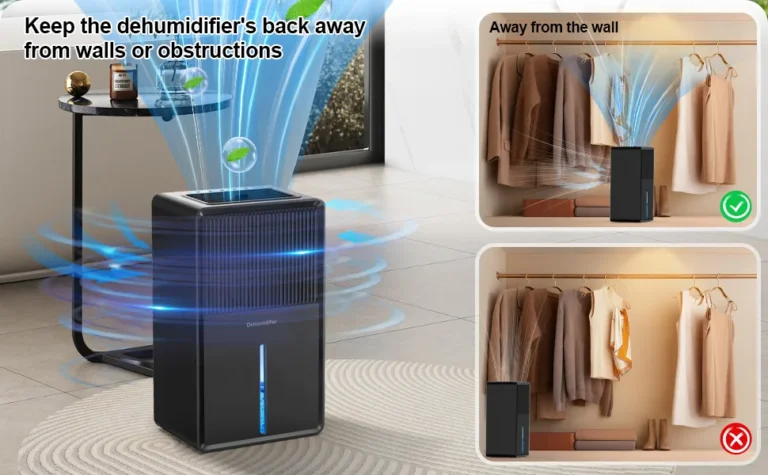
Placing the unit tight against a wall. Air needs to flow in from the sides and out the top. Six inches of clearance is the minimum. Twelve inches is better.
Cramped placement starves the compressor and increases runtime.
Setting the humidistat below 30 percent. The unit works harder to hit an impossible number. It may never shut off. Chasing 25 percent wastes energy and dries out wood floors and trim.
Stick to the 30 to 50 percent range.
Ignoring a full bucket or kinked hose. Even with a continuous drain, a kink stops the water flow. The tank fills, the unit shuts off, and humidity climbs back up. Check the hose run.
Shorten it if needed.
Closing basement doors and windows incorrectly. A sealed basement traps moisture. An open window on a humid day lets more moisture in. Know which direction the air is coming from.
In summer, keep windows closed.
Running a compressor model in a cold basement. Most compressor dehumidifiers lose efficiency below 65°F. Coils can frost over. The unit runs longer but removes less water.
A model with low-temperature operation handles this much better.
Using a single hygrometer reading is another mistake. Place a standalone unit in the center of the room. Check it after 48 hours.
Verify the reading against the built-in humidistat. If they disagree by more than 5 percent, calibrate or replace the hygrometer.
Dehumidifier Runtime FAQs
Is it safe to run a dehumidifier 24/7?
Yes, it is safe. Most modern units have auto shutoff and overflow protection. If you use a continuous drain, running 24/7 is fine.
Just check the filter monthly and clean the coils twice a year.
How much electricity does it use running all day?
A typical 50-pint dehumidifier uses about 500 to 700 watts. At 12 hours a day, that is roughly 6 to 8 kilowatt-hours. At average US electricity rates, that costs about 75 cents to a dollar per day.
Energy Star models use less power overall.
Should I run it in winter when the basement feels drier?
Only if the humidity stays above 50 percent. In winter, outdoor air is drier, so many basements need less dehumidification or none. Check the hygrometer.
If it reads below 50 percent, let the unit stay off.
Does a bigger unit mean shorter runtimes?
Yes, within reason. A 70-pint dehumidifier removes moisture faster than a 50-pint model. It cycles off sooner.
But it also draws more power when running. A correctly sized unit balances runtime and energy use.
How do I know if I need a 50-pint or 70-pint model?
It depends on the basement size and moisture level. For a 1,500-square-foot finished basement, a 50-pint unit is usually enough. For an unfinished basement with exposed concrete or a high water table, a 70-pint model handles the load better.
Compare top-rated 50-pint models to see what fits your basement.
Your Decision Guide: Set It, Test It, Adjust It
The whole process comes down to three steps. Set the humidistat to 50 percent. Let the unit run for 48 hours.
Check the humidity with a standalone hygrometer.
If the reading is between 45 and 55 percent, you are done. The runtime is correct for that setting. If it is above 60 percent, the unit is undersized or the drain is blocked.
Check the hose and filter first. If that does not fix it, consider a higher capacity unit.
If the unit short cycles, running for a few minutes and then shutting off, the setpoint is too low. Raise it by 5 percent. If it still short cycles, the sensor may be faulty.
Move the unit to a different spot and test again.
For a flooded basement, run the unit continuously until moisture levels drop. Use a continuous drain line. Do not rely on the bucket.
Check the unit daily for frost buildup. If you see ice, the basement is too cold for the compressor to work efficiently.
Per NIST guidance, hygrometers should be calibrated against a known reference. Cheap hygrometers can be off by 5 to 10 percent. A ten-dollar digital hygrometer from a hardware store is better than guessing.
Keep it in the same room as the dehumidifier for consistent tracking.
When you match the runtime to the actual moisture load, the unit works less and lasts longer. That's the real goal. Let the humidistat drive the cycle.
Focus on the humidity reading, not the clock.