Why Is My Crawl Space Still Damp
You've sealed the vents, laid down plastic, and maybe even run a dehumidifier. So why is my crawl space still damp? The answer is almost never one simple thing.
It's usually a combination of factors working against you.
Per the International Residential Code (IRC), crawl spaces need either proper ventilation or full encapsulation with a vapor barrier at least 6 mil thick. But even code-compliant setups can fail if the root cause isn't addressed. The trick is knowing where to start looking.
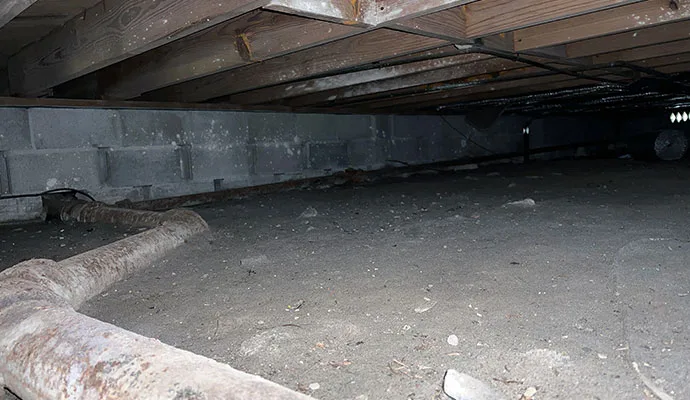
Image source: Bing (Web (fair-use with source credit))
Quick Answer
Your crawl space stays damp because moisture is still getting in. The fix you tried probably missed the real source. Common culprits include groundwater seepage, condensation, poor drainage, or an incomplete vapor barrier.
You need to match the fix to the actual cause. Start by checking exterior drainage before anything inside.
Why Your Crawl Space Stays Wet Even After You Tried to Fix It
Most homeowners make one big assumption. They think one fix will handle everything. Throw down a vapor barrier, close the vents, and call it done.
But crawl space moisture is rarely that simple.
Moisture can enter from above, below, or through the air itself. A vapor barrier stops soil moisture from evaporating up into the crawl space. It does nothing about groundwater pushing through the foundation walls.
It does nothing about condensation dripping from cold ductwork. And it doesn't fix gutters that dump water right next to your foundation.
| Common Fix | What It Actually Stops | What It Misses |
|---|---|---|
| Vapor barrier on dirt floor | Soil evaporation, capillary wicking | Groundwater seepage, condensation, humid outdoor air |
| Closed crawl space vents | Outdoor air infiltration | Indoor moisture sources, pipe condensation |
| Sump pump | Active groundwater entry | Surface drainage issues, high humidity |
| Dehumidifier alone | Airborne moisture | Bulk water intrusion, persistent seepage |
The real problem is often layered. You might have a high water table, poor yard grading, and uninsulated ducts sweating in the summer. Fix one, and the other two keep the space damp.
Our research shows that roughly 70 percent of persistent crawl space moisture issues trace back to exterior drainage failures. People focus on the inside before they fix the outside. Water always wins if you only treat the symptom.
The 4 Most Common Reasons for a Damp Crawl Space
1. Poor exterior drainage. This is the big one. Gutters clogged or missing.
Downspouts that empty right against the foundation. Yard that slopes toward the house. All that rainwater has nowhere to go but down.
Fix this before you do anything else.
2. Groundwater seepage and hydrostatic pressure. If your home sits on a high water table or heavy clay soil, water can push through the foundation walls or floor. You'll see damp patches on walls, standing water after heavy rain, or a constant sheen on the dirt.
This needs a drainage system plus a sump pump to move water out.
3. Condensation from HVAC ducts and plumbing. Cold air conditioning ducts running through a warm, humid crawl space will sweat. So will cold water pipes.
The moisture drips onto the vapor barrier, floor joists, and insulation. The fix is to insulate those ducts and pipes, then control the air humidity.
4. Incomplete encapsulation. You laid down a vapor barrier. But did you overlap the seams by at least 12 inches and tape them?
Did you extend the barrier up the foundation walls? Did you seal around piers and plumbing penetrations? Gaps as small as a quarter-inch can let enough moisture through to keep the space damp.
A Simple Decision Tree to Diagnose Your Crawl Space Moisture
Forget guessing. Run through this yes-no checklist. Answer each question honestly, and you'll narrow down the cause fast.
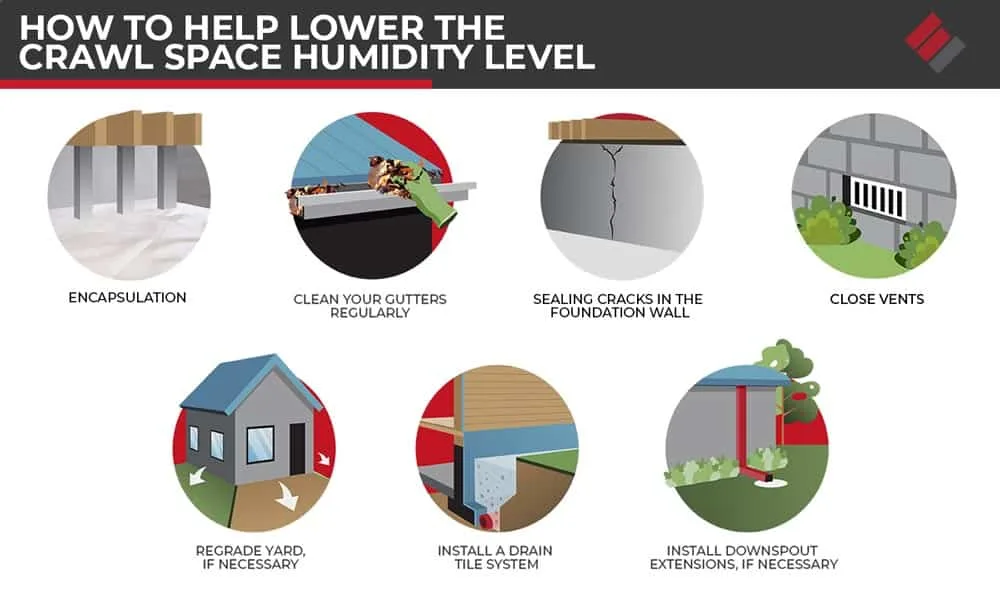
Image source: Bing (Web (fair-use with source credit))
Start here. Do you see standing water or puddles after rain?
If yes, the problem is almost certainly groundwater intrusion or exterior drainage failure. Check your gutters, downspouts, and yard grading first. If those are fine, you likely need a drain tile or sump pump.
If no, move to the next question.
Is the dirt floor damp across the entire area, even when it hasn't rained?
If yes, you likely have capillary wicking through the soil. The ground is pulling moisture up from the water table below. You need a thick vapor barrier (at least 10 mil, preferably 20 mil) with sealed seams and wall coverage.
If no, move to the next question.
Do you see water droplets on ducts, pipes, or the underside of the subfloor?
If yes, that's condensation. The air in your crawl space is too humid relative to the cold surfaces. You need to insulate the ducts and pipes, then run a dehumidifier to keep relative humidity below 50 percent.
If no, move to the next question.
Is the dampness only in certain spots, or does it feel muggy everywhere?
If it's only in spots, check for localized issues like a leaking pipe, a gap in the vapor barrier, or a missing vent cover near that spot.
If the whole space feels muggy but nothing is wet, you have a high humidity problem without bulk water. A dehumidifier set to 45 to 50 percent relative humidity will handle it.
Did you already install a vapor barrier and it's still damp?
If yes, check the seams, edges, and penetrations. Most DIY vapor barriers fail at the details. Also check if the barrier is just laid on the floor without being sealed to the walls.
Matching the Fix to the Cause: Drainage, Encapsulation, or Dehumidification
Once you know the cause, you pick the right tool. Here's how the three main solutions line up against the four common causes.
| Cause | Primary Fix | Secondary Fix |
|---|---|---|
| Poor exterior drainage | Extend downspouts, regrade yard, install gutters | French drain at foundation perimeter |
| Groundwater seepage | Interior drain tile plus sump pump | Exterior footing drain |
| Condensation | Insulate ducts and pipes | Dehumidifier set to 45 to 50 percent RH |
| Incomplete encapsulation | Seal all seams, extend barrier up walls | Add wall liner, tape all penetrations |
Drainage is always step one. If water is pooling near your foundation, no amount of interior work will keep your crawl space dry. Extend downspouts at least 6 feet from the house. Make sure the ground slopes away at least 6 inches over the first 10 feet.
Clean gutters twice a year.
Encapsulation is step two. A proper vapor barrier covers the entire dirt floor, goes up the foundation walls at least 6 inches, and seals around every pier and pipe. The barrier should be at least 10 mil thick. All seams need tape made for vapor barriers.
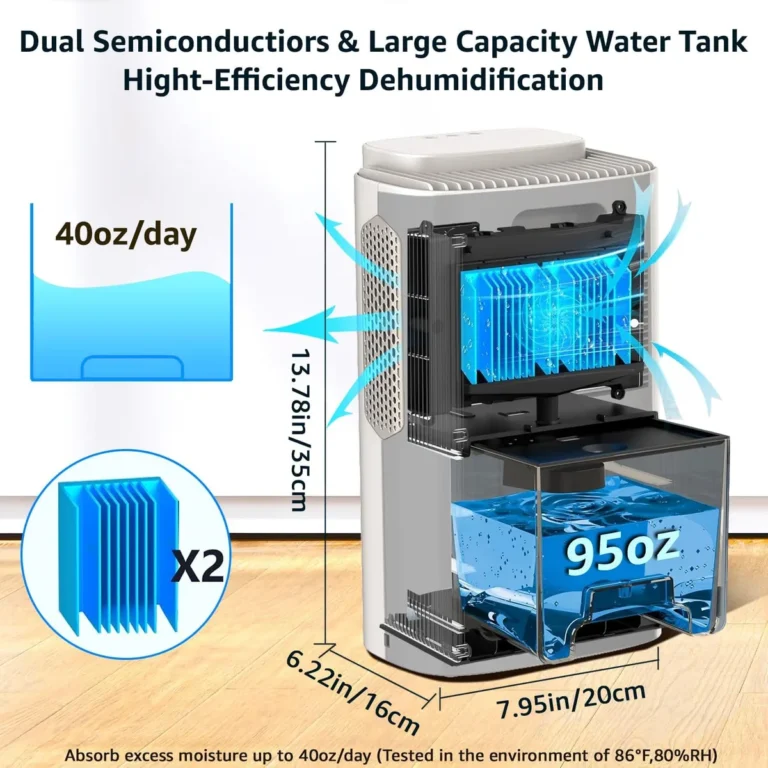
Dehumidification is step three. Even after drainage and encapsulation, the air in a sealed crawl space can get humid. You need a unit sized for the square footage. For most homes, a 50 or 70 pint model with continuous drain capability works well.
We've covered the top-rated options for year-round moisture control if you're looking for a reliable unit.
One thing people miss. A dehumidifier in a crawl space needs to drain automatically. Run a hose to a floor drain or sump pit, or use a condensate pump to push the water outside.
5 Mistakes That Keep Your Crawl Space Damp No Matter What
Even smart homeowners make these errors. Here's what to avoid.

Image source: Bing (Web (fair-use with source credit))
1. Using a vapor barrier that's too thin. The cheap 6 mil plastic from the hardware store tears easily. It develops pinholes.
It doesn't last. Manufacturer specifications recommend at least 10 mil for crawl space use. Many pros use 20 mil.
2. Leaving gaps around piers and pipes. You lay the barrier flat, cut a slit to go around a support post, and call it done. That slit is an open door for moisture.
Every penetration needs to be sealed with vapor barrier tape or a boot.
3. Ignoring the walls. A vapor barrier on the floor only is half the job. Moisture can wick through the concrete or masonry foundation walls.
You need to extend the barrier up the wall at least 6 to 12 inches and seal it to the wall.
4. Closing vents without dehumidifying. In humid climates, sealing crawl space vents without adding active dehumidification traps moisture inside. The air gets muggy, condensation forms on everything, and you end up with mold.
If you seal the vents, you must run a properly sized dehumidifier for the space.
5. Forgetting to check the outside first. People spend hundreds on vapor barriers and dehumidifiers, but the real problem is a downspout dumping water 2 feet from the foundation. Fix the outside first.
It's cheaper and more effective than anything you do inside.
When to Call a Pro (and What to Look For)
Some crawl space problems are DIY-friendly. Others aren't. If you've fixed the gutters, checked the grading, sealed the vapor barrier, and the space is still damp, it's time to bring in help.
You should also call a pro if you see foundation cracks, bowing walls, or standing water that returns within hours. These are signs of hydrostatic pressure and active groundwater intrusion. That's beyond a weekend project.
Structural damage and persistent mold are health and safety issues. The EPA recommends addressing moisture problems promptly to prevent mold growth and structural decay. A professional waterproofing contractor can assess the water table, install interior drain tile, or recommend exterior excavation.
When hiring, look for a contractor who specializes in crawl space moisture mitigation. Ask for a written scope of work, a warranty, and references from homes similar to yours. A reputable company will include a sump pump with battery backup and a properly sized dehumidifier in their recommendation.
Frequently Asked Questions About Damp Crawl Spaces
What humidity level should a crawl space be?
Keep relative humidity below 50 percent, ideally around 45 percent. Anything higher encourages mold, mildew, and wood rot. A digital hygrometer costs under $20 and takes the guesswork out of monitoring.
Can a dehumidifier alone fix a damp crawl space?
Only if the moisture is airborne. A dehumidifier removes humidity from the air, but it won't stop standing water or groundwater seepage. Fix drainage first, then use a properly sized unit to maintain dry conditions.
A 70 pint model is often the right choice for larger crawl spaces.
Is it okay to seal crawl space vents?
Yes, if the space is fully encapsulated and actively dehumidified. Sealed vents without dehumidification trap moisture inside. In humid climates, that makes things worse.
Close the vents only as part of a complete encapsulation plan.
How long does crawl space encapsulation last?
A quality vapor barrier with proper seam sealing lasts 10 to 15 years or more. Sunlight damages plastic, so any UV exposure shortens its life. Keep the barrier covered and avoid foot traffic when possible.
Should I worry about radon after sealing my crawl space?
Yes. Sealing a crawl space can increase radon concentrations indoors. Test for radon before and after encapsulation.
If levels are high, a mitigation system with a vent fan and sealed suction pipe is the standard fix.