Does a Dehumidifier Help Dry Laundry Indoors
If you've ever hung wet laundry in a spare room or bathroom and watched it stay damp for a full day, you've probably wondered: does a dehumidifier help dry laundry indoors? The short answer is yes, but only if you set things up right. A dehumidifier can turn a 24-hour waiting game into a 4- to 8-hour job.
Here's what makes it work: a typical high-spin washing cycle leaves about 1.5 to 2 pints of water in a load of mixed fabrics. A dehumidifier rated for 50 pints per day can pull that much moisture out of the air in roughly an hour. But the real trick is how you arrange the room.
Let's walk through it.
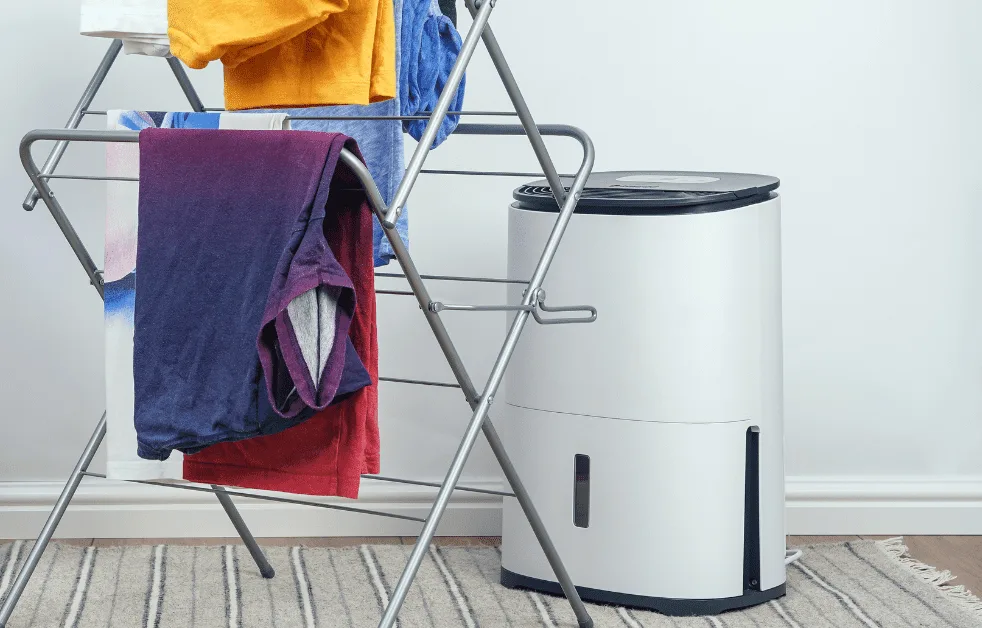
Image source: Bing (Web (fair-use with source credit))
Quick Answer
Yes, a dehumidifier helps dry laundry indoors. It pulls moisture from the air. This speeds up evaporation from wet clothes.
The effect depends on room size, humidity, and airflow. For best results, keep the room closed and the dehumidifier close to the drying rack.
What the Dehumidifier Actually Does to Your Laundry (and Your Room)
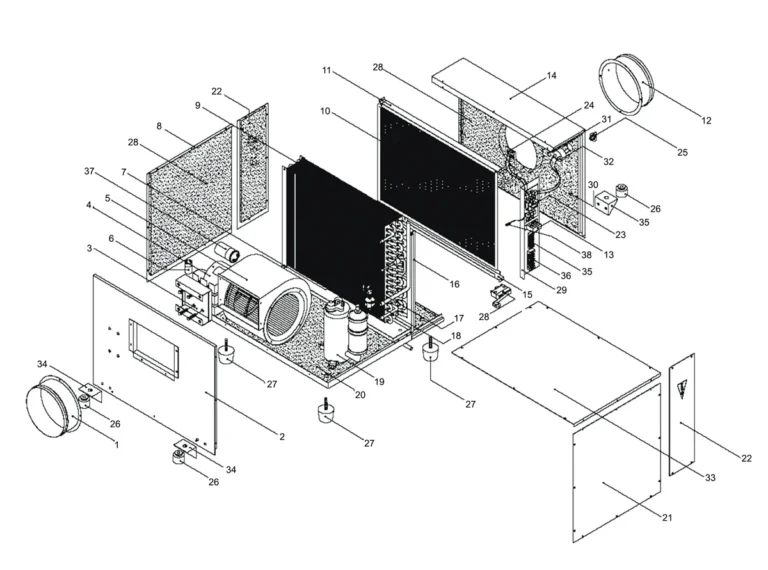
A dehumidifier works by drawing in humid air and passing it over cold coils. The water vapor condenses into liquid and drains into a tank. The drier air then blows back into the room.
This lowers the relative humidity, which is the key number.
When the air is drier, it can hold more moisture from your clothes. The process creates a vapor pressure deficit. That pressure difference pulls water out of the fabric fibers and into the air.
The dehumidifier then captures that moisture before it settles on walls or windows.
Per AHAM testing standards, a 50-pint dehumidifier can remove about 2 pints of water per hour in a 1,500 square foot room at 80% relative humidity. That aligns with the moisture left in a typical laundry load. So in theory, the machine can handle the job.
But the room's starting humidity matters a lot. If your indoor humidity is already at 70% or higher, the dehumidifier has to work hard just to lower the baseline. It may take longer to start drying the clothes.
That's why you should check your room's humidity before you begin.
The U.S. Department of Energy recommends keeping indoor humidity between 30% and 50% for comfort and efficiency. For drying laundry, aim for the lower end of that range.
A good target is 40% relative humidity.
The type of dehumidifier also matters. Compressor units work well in warm rooms above 15°C (59°F). Desiccant models handle colder spaces better.
If you're drying laundry in a basement or garage, a desiccant unit may be the smarter choice. You can find the right extraction rate for your space in our year-round guide.
The 3 Conditions That Make or Break Indoor Drying
Three factors determine whether your dehumidifier setup will work or waste electricity. You need all three aligned for good results.
1. Room Temperature
The temperature in the room directly affects how fast water evaporates from fabric. Warmer air holds more moisture. Colder air slows evaporation dramatically.
If your room is below 15°C (59°F), a compressor dehumidifier will cycle on and off instead of running continuously. This can double or triple drying time. A desiccant unit works better in cold rooms because it doesn't rely on condensation.
The ideal temperature range for drying laundry with a dehumidifier is 20°C to 25°C (68°F to 77°F). If you can't heat the room, a desiccant model is your best bet.
2. Room Size vs. Dehumidifier Capacity
The size of your room and the capacity of your dehumidifier must match. A 20-pint unit in a 1,500 square foot basement will run all day and barely make a dent.
Here's a quick reference table:
| Condition | Ideal Range | What Happens If It's Wrong |
|---|---|---|
| Room Temperature | 20°C–25°C (68°F–77°F) | Compressor units struggle below 15°C. Desiccant units work better in cold. |
| Room Size vs. Capacity | Unit rated for the room's square footage | Undersized unit runs constantly, clothes dry slowly or not at all. |
| Airflow | Closed room, dehumidifier within 3–5 feet of drying rack | Open doors or windows let in humid air. Distance reduces moisture capture. |
For a large laundry load, you need a unit that can handle the room. If you're working with a bigger space, consider a larger unit rated for your square footage.
3. Airflow
The dehumidifier must be placed close to the drying rack. The moist air from the clothes needs to be drawn directly into the machine. If the dehumidifier is on the other side of the room, the air mixes with the rest of the house and the machine works less efficiently.
The best setup is a small, sealed room like a bathroom or utility closet. The less air volume the dehumidifier has to process, the faster it can lower the humidity.

Image source: Bing (Web (fair-use with source credit))
How to Set Up Your Room for Maximum Drying Speed
Setting up correctly is the difference between clothes drying in 4 hours versus 12 hours. Follow these steps in order.
Step 1: Close All Doors and Windows
This is the most important step. Open doors or windows let in humid outside air. The dehumidifier then has to fight the whole house instead of just the laundry room.
Seal the room completely.
Step 2: Choose the Right Location
Place the drying rack within 3 to 5 feet of the dehumidifier. The intake should face the wet clothes. The exhaust should blow away from the rack to create a circulation loop.
Step 3: Set the Target Humidity
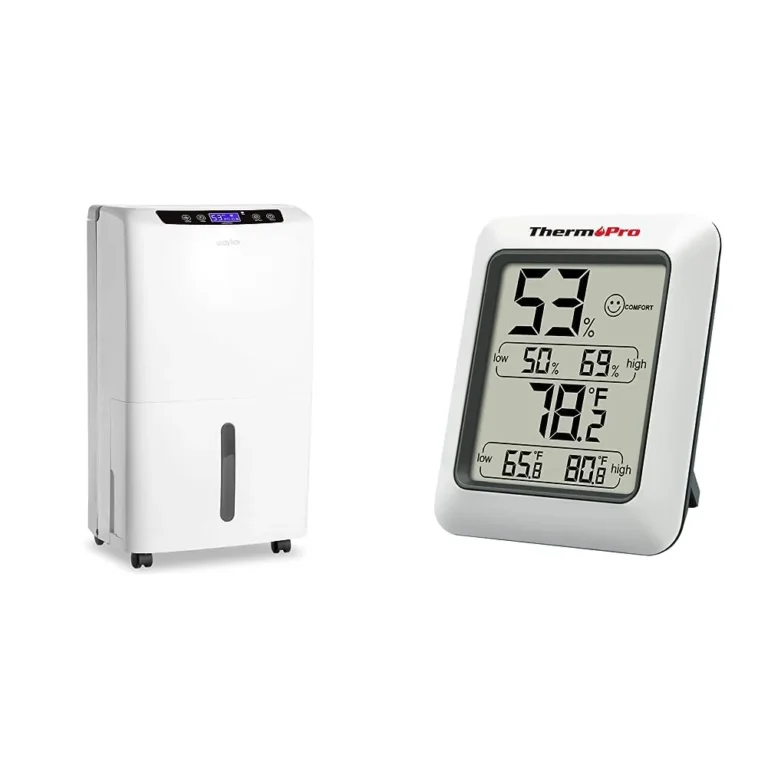
Most dehumidifiers have a built-in humidistat. Set it to 40% relative humidity. That's dry enough to pull moisture from clothes quickly but not so dry that it makes the room uncomfortable.
Step 4: Use the Highest Fan Speed
Run the dehumidifier on the highest fan setting. This moves more air across the clothes, which speeds up evaporation. The noise may be noticeable, but it's worth it for faster drying.
Step 5: Empty the Tank or Connect a Drain
A full tank will stop the dehumidifier. If you're drying a large load, the tank can fill up in 2 to 3 hours. Connect a continuous drain hose if your unit supports it.
Otherwise, check the tank every 2 hours.
Step 6: Run for 4 to 8 Hours
Let the dehumidifier run until the clothes feel dry. In most setups, lightweight fabrics like cotton t-shirts dry in 4 to 5 hours. Heavier items like jeans or towels may take 6 to 8 hours.
If you're looking for an affordable model that still pulls enough water, our budget picks can help you get started without overspending.
Image source: Bing (Web (fair-use with source credit))
5 Mistakes That Will Wreck Your Drying Setup (Even with a Good Dehumidifier)
Even a high-quality dehumidifier can fail if you make these common errors. Avoid them to save time and electricity.
Mistake 1: Leaving Windows Open
This is the number one mistake. An open window lets in humid air, which the dehumidifier then has to remove. It's like trying to dry a towel with a leaky hose.
Keep the room sealed.
Mistake 2: Using an Undersized Dehumidifier
A 20-pint unit designed for a small bedroom won't handle a full laundry load in a living room. The machine will run continuously and still not lower the humidity enough. Always match the capacity to the room size.
Mistake 3: Placing the Dehumidifier Too Far from the Clothes
If the dehumidifier is on the other side of the room, the moist air from the clothes mixes with the room air before reaching the intake. This reduces the machine's efficiency. Keep it within 5 feet of the drying rack.
Mistake 4: Setting the Humidity Target Too High
Setting the humidistat to 60% relative humidity means the dehumidifier will stop working before the air is dry enough to pull moisture from clothes. The clothes will stay damp. Set it to 40% for laundry drying.
Mistake 5: Not Pre-Spinning Clothes Enough
The more water your washing machine removes during the spin cycle, the less work the dehumidifier has to do. Use the highest spin speed setting. A poorly spun load can leave 3 to 4 pints of water in the fabric.
That extra water adds hours to the drying time.
If you're unsure about the right size for your space, check out a properly sized model that balances cost and performance.
Two Real-World Scenarios: The Studio Apartment vs. the Basement
The Studio Apartment. Picture a 400 square foot studio. One main room, a small bathroom, and radiators keeping things at 21°C (70°F). A 20-pint dehumidifier sits 3 feet from a freestanding drying rack.
With one load of pre-spun cotton shirts and trousers, the unit pulls the room to 40% relative humidity in about 2 hours. Clothes finish drying in roughly 5 hours. That's a full evening, not a full day.
A compact unit designed for bedrooms works fine here because the air volume is small.
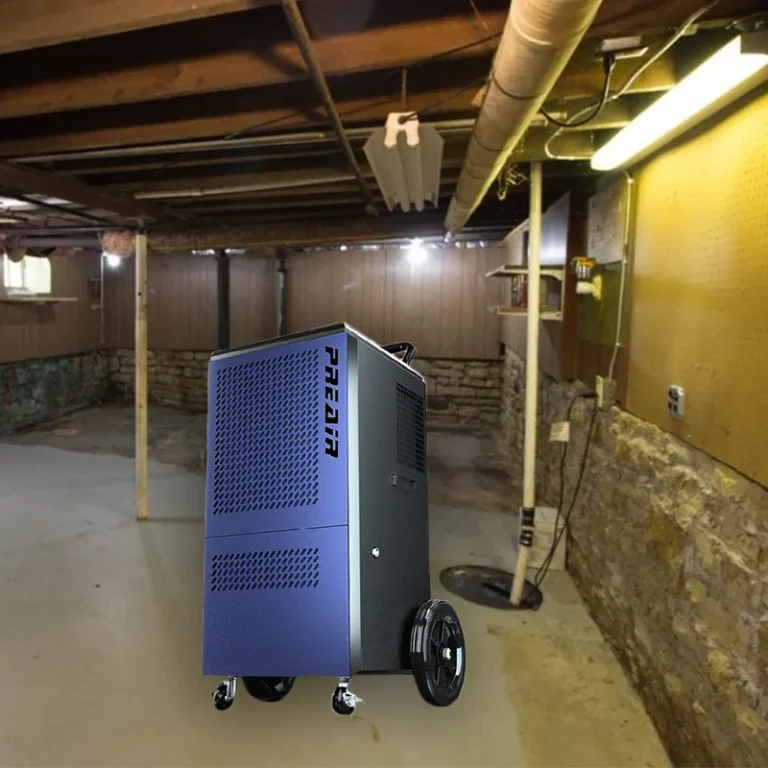
The Basement Laundry Room. Basements are hard mode. Typical conditions: 18°C (64°F), starting humidity of 75%, and more floor area. A 20-pint unit fails here.
You need a 50-pint model rated for the full square footage. In a sealed basement, it pulls humidity down to 50% in about 3 hours. Towels and heavy jeans take 8 to 10 hours to fully dry.
Connect a continuous drain hose, because the tank fills after two loads. A compressor unit is fine if the basement stays above 15°C. If it dips cooler, use a desiccant model.
Check out basement-rated units if that sounds like your space.
The lesson? Match the extraction rate to the room size. Set your expectations for cold spaces.
Frequently Asked Questions
How long does a dehumidifier take to dry laundry?
Most loads dry in 4 to 8 hours. Lightweight fabrics like shirts finish in 4 to 5 hours. Towels and jeans take longer.
Total time depends on room temperature, starting humidity, and how well the washing machine spun the clothes.
Can a dehumidifier replace a tumble dryer?
It can replace most of the job, but not all of it. Clothes come out dry, just not as soft. You may need to shake them out or iron more.
For a single person or small household, a dehumidifier plus drying rack works well. For large families, the time commitment gets old.
Where should I place the dehumidifier for drying clothes?
Put it within 3 to 5 feet of the drying rack. The intake should face the wet clothes. Keep doors and windows closed.
The dehumidifier needs to pull moist air directly from the fabric, not from across the house. Distance slows everything down.
Does running a dehumidifier for laundry use a lot of electricity?
No, not compared to a tumble dryer. A typical portable dehumidifier draws 300 to 800 watts. A tumble dryer draws 2,000 to 5,000 watts.
One load on a dehumidifier costs roughly $0.10 to $0.30. A tumble dryer can cost five times that.
Your Decision Guide: Should You Try It?
Ask yourself three questions before committing to this method.
1. Can you seal the room? If doors and windows stay closed, continue. If not, fix that first.
Open spaces let in humid air that the machine has to fight.
2. Is the dehumidifier sized for the room? Use the unit's rated coverage area as your guide. An undersized machine will run all day and leave your clothes damp.
3. Can you keep the room above 15°C? If yes, a standard compressor unit works well. If no, choose a desiccant model or switch to a heated airer.
If you answered yes to all three, a dehumidifier will dry your laundry indoors. It's a proven method that saves energy compared to a tumble dryer. The U.S.
Department of Energy recommends keeping indoor humidity between 30% and 50%, and drying clothes is a great way to hit that target.
Still comparing machines? Start with our value-focused recommendations to balance price and performance.