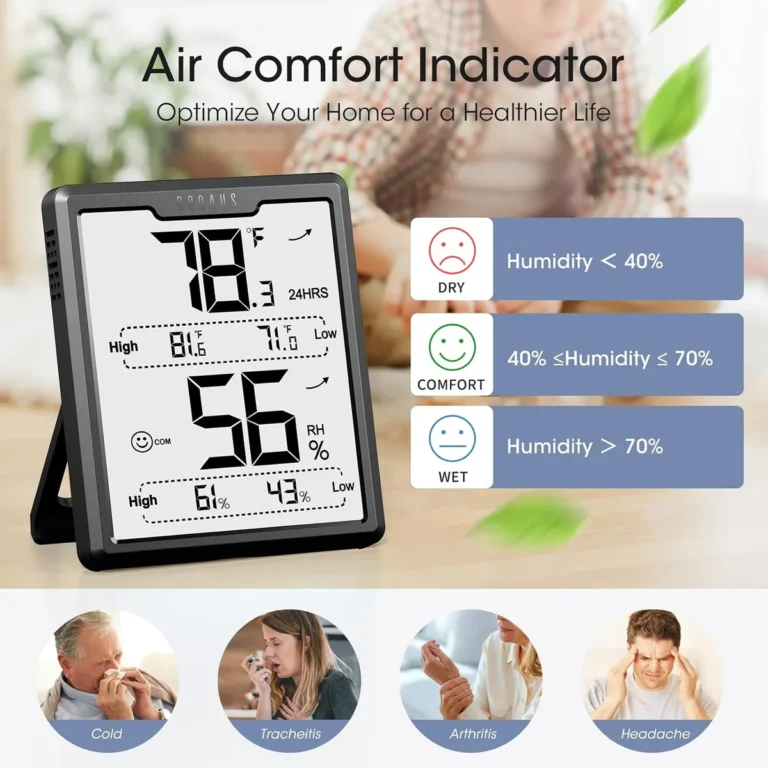
What Is a Hygrometer
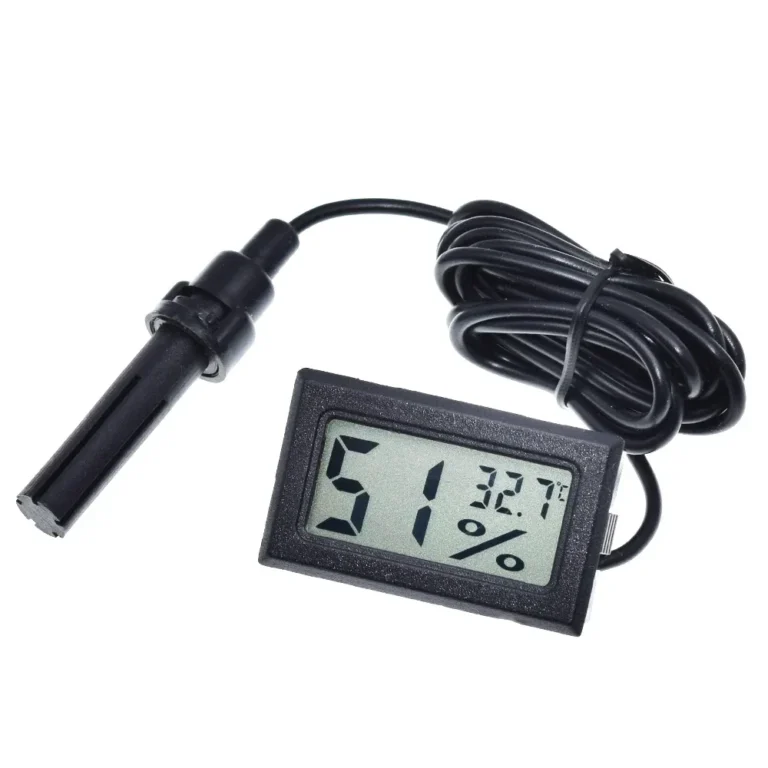
Humidity changes everything, from the sound of a guitar to the growth of mold. So what is a hygrometer? It's a tool that measures how much water vapor is in the air.
The number it gives you is relative humidity, or RH, expressed as a percentage. That one reading explains a lot about comfort, damage, and health.
In our research, a typical home sits between 30% and 50% RH when things feel right. ASHRAE Standard 55 lists that same range for occupant comfort. As of 2026, a reliable digital hygrometer costs anywhere from $12 to $30.
That's a small price for knowing whether your house is slowly damaging your stuff.
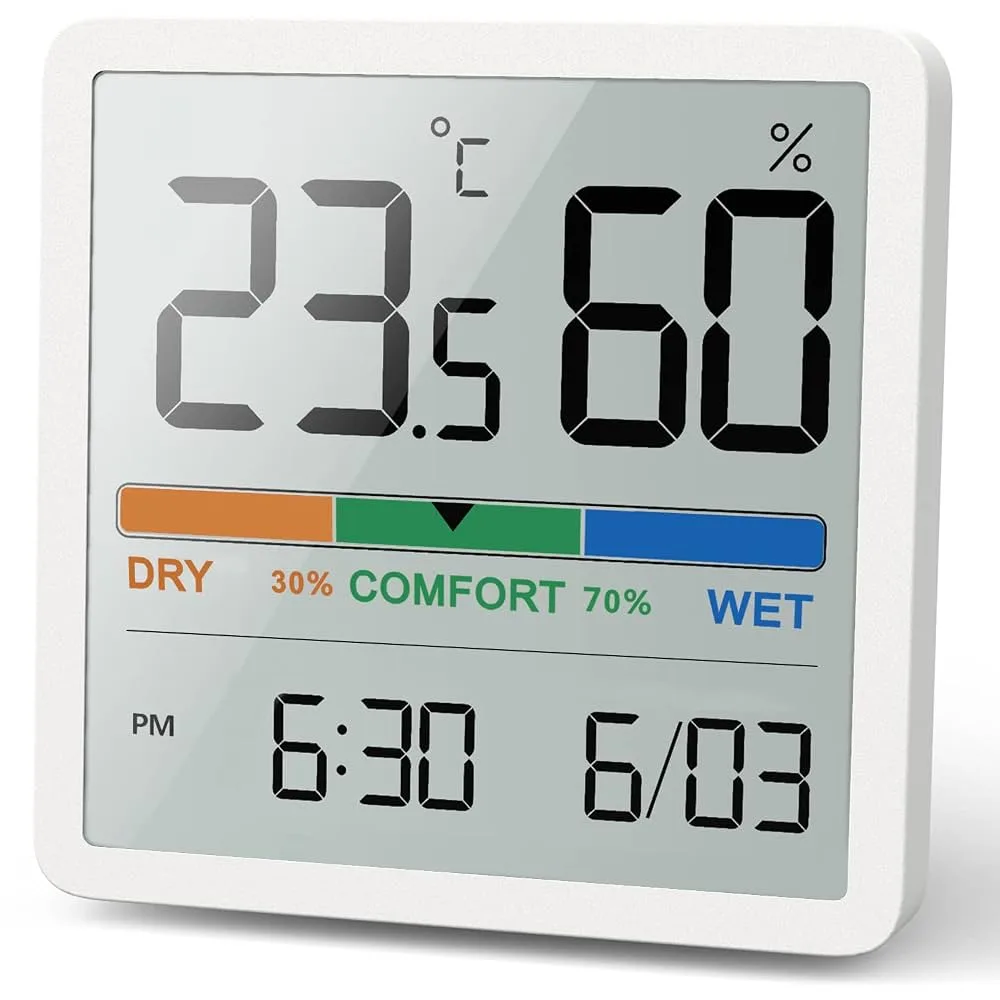
Image source: Bing (Web (fair-use with source credit))
Quick Answer: The One-Minute Answer
What is a hygrometer? It's a device that measures relative humidity. It gives you a percentage number.
That number shows how dry or wet the air is. Use it to protect wood, stop mold, and stay comfortable. Ideal indoor levels range from 30% to 50% RH.
Relative humidity compares the moisture in the air to the maximum it can hold at a given temperature. Warm air holds more water than cold air. That's why heating your home in winter dries everything out, and why cold windows collect condensation.
Here's roughly where indoor RH should land:
- Below 30%: Dry air. Static shock, dry skin, cracked wood.
- 30% to 50%: Comfortable and safe for people and belongings.
- 50% to 60%: Getting damp. Watch for condensation.
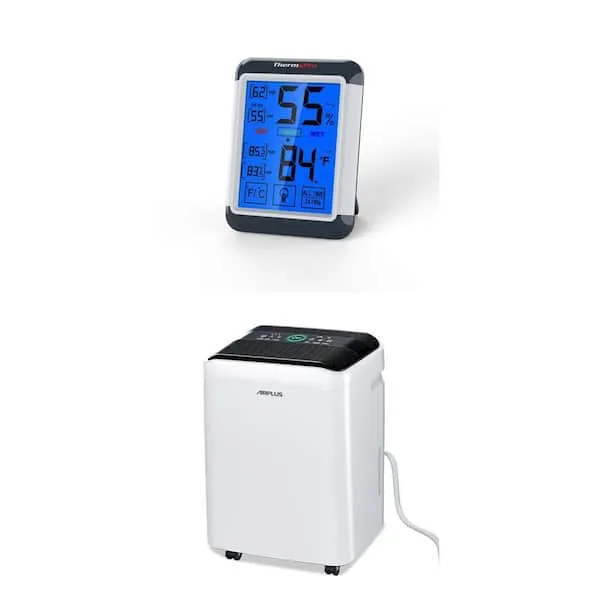
- Above 60%: Mold risk climbs fast. Run a dehumidifier.
You may already have a thermostat with a humidity readout. Many smart thermostats include a basic sensor. But those sit on a wall, often near drafts, so they lag behind the rest of the room.
A dedicated hygrometer placed where you actually need data gives far more trustworthy readings.
Core Explanation: How a Hygrometer Actually Works
Every hygrometer measures the same thing. They just use different tricks to do it. The four main types are capacitive, resistive, mechanical, and psychrometric.
Capacitive sensors are the standard in modern digital hygrometers. Two metal plates sandwich a polymer layer. The polymer absorbs or releases water as humidity changes.
That shifts the capacitance, the circuit reads it, and you get an RH percentage. They're fast, accurate, and cheap to manufacture.
Resistive sensors work on a similar idea. A conductive salt or polymer changes its electrical resistance with moisture. They cost less but drift more over time.
Most budget digital hygrometers use them.
Mechanical hygrometers use natural hair, usually human or horsehair. Hair changes length with humidity, moving a needle across a dial. They respond slowly and can stick.
But they never need a battery.
A psychrometer takes a different approach. It uses two thermometers side by side. One bulb stays dry, the other is wrapped in a wet wick.
Evaporation cools the wet bulb. The temperature difference between the two translates into humidity. Weather stations and HVAC technicians use this method.
| Type | How it works | Accuracy | Typical use |
|---|---|---|---|
| Capacitive | Polymer absorbs water | ±2% to ±3% RH | Digital home sensors |
| Resistive | Salt changes resistance | ±3% to ±5% RH | Budget digitals |
| Mechanical | Hair expands and contracts | ±5% to ±10% RH | Analog dials |
| Psychrometer | Wet vs dry bulb temperature | ±2% when used correctly | HVAC and weather |
Here's the catch: relative humidity depends on temperature. Place a hygrometer near a heat vent or a cold window, and the reading reflects that microclimate, not the whole room. That's why placement matters as much as sensor type.
The U.S. National Institute of Standards and Technology (NIST) maintains the calibration standards for humidity instruments. Their methods are the reference point for lab-grade devices.
NIST is worth exploring if you want to understand how traceable accuracy is defined.
Comparison: Which Hygrometer Is Right for You?
Not all hygrometers are created equal. The right choice comes down to what you're protecting and how much accuracy you need.
Start with one question: what's the worst thing that happens if the reading is wrong? If you're safeguarding a $2,000 guitar, a cheap mechanical dial won't cut it. If you just want to know whether your basement feels damp, it's fine.
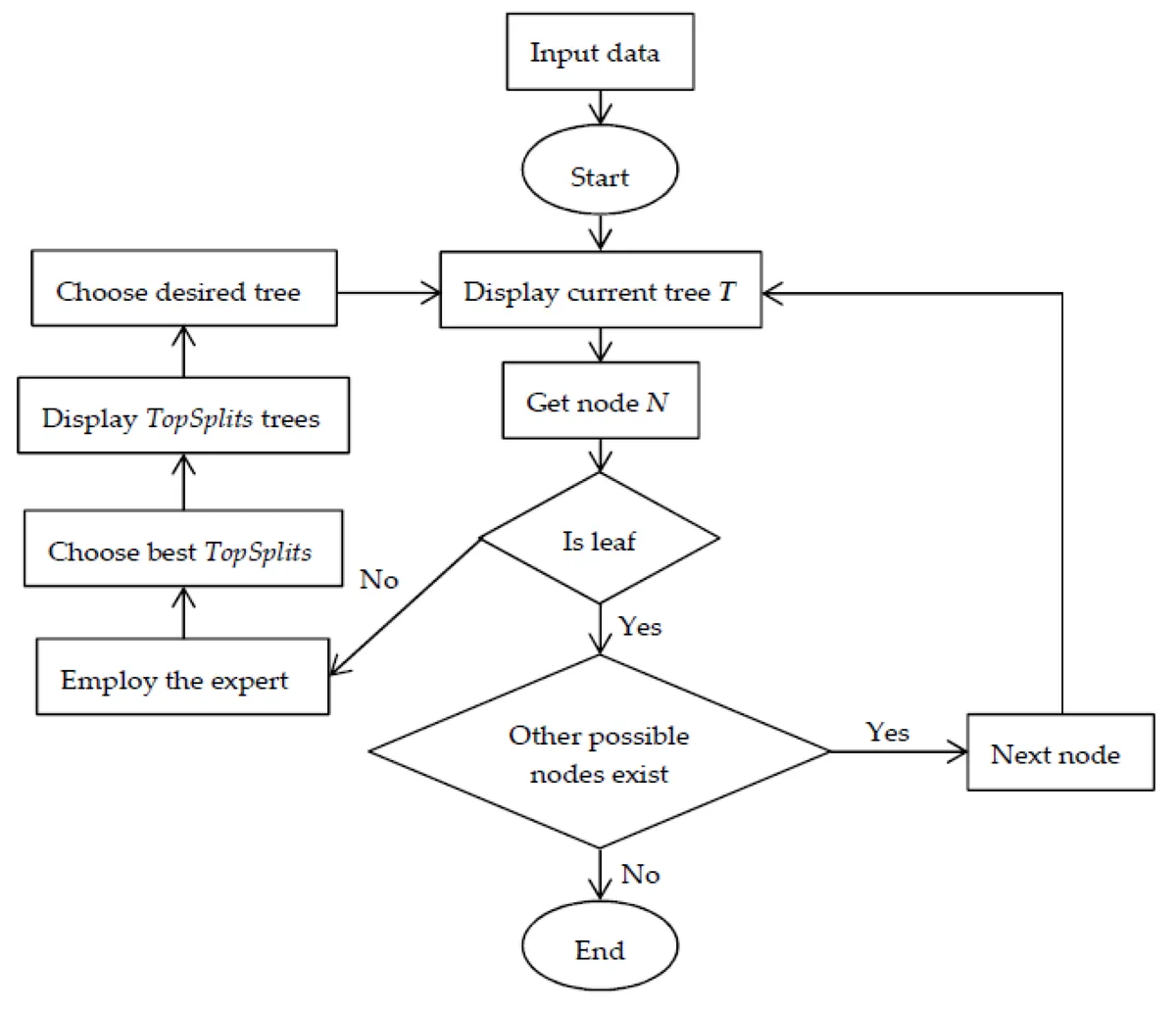
Image source: Bing (Web (fair-use with source credit))
The decision tree looks like this:
- Stored valuables like cigars, instruments, or artwork: get a capacitive digital rated at ±2% RH.
- Remote spaces like a greenhouse or wine cellar: get a Bluetooth or Wi-Fi model with data logging.
- Occasional room checks on a budget: a mechanical dial works after calibration.
- HVAC, weather, or lab work: use a psychrometer or a professionally calibrated capacitive unit.
| Option | Best for | Accuracy | Price range |
|---|---|---|---|
| Mechanical dial | Casual room checks | ±5% to ±10% RH | $5 to $15 |
| Budget digital | General home use | ±3% to ±5% RH | $10 to $25 |
| Capacitive digital | Wood, guitars, humidors | ±2% RH | $20 to $50 |
| Bluetooth/Wi-Fi | Remote monitoring | ±2% to ±3% RH | $25 to $80 |
| Psychrometer | HVAC, field work | ±2% when used right | $30 to $100+ |
Aggregate reviews show that most people regret buying ultra-cheap analog units. They drift. A $6 hygrometer can read 20% off and you'd never know.
That defeats the purpose entirely.
If you want the device to act instead of just measure, look at a humidistat. It triggers a humidifier or dehumidifier based on the RH reading. Many homes already have one wired into the HVAC system.
Use Cases: Where to Put It (and Where Not To)
A hygrometer only helps if it measures the right spot. Placement matters just as much as sensor type.
General rule: five feet off the floor, on an interior wall, away from drafts and direct sunlight. That gives you a reading for the whole room, not one corner.
For specific items, place the sensor closer:
- Guitar case: inside the case, near the neck or body.
- Humidor: center of the humidor, away from the humidifier element.
- Plant tent: at canopy level, not near an intake fan.
- Reptile enclosure: on the cool side, not under a heat lamp.
Avoid these spots: within three feet of a heating or cooling vent, right next to a humidifier, over a stove, near a window, or in direct sunlight. Those locations create microclimates. You'll get a number that reflects a tiny patch of air, not your actual living space.
Who is this for? Homeowners checking basement dampness. Musicians protecting instruments.
Cigar smokers maintaining humidors. Growers managing tents and drying rooms. Anyone worried about mold.
If you've ever found condensation on your windows or noticed a musty smell, you're the target audience.
For most people, one sensor per floor is enough. Put one in the basement and one in the main living area. If you have a dedicated hobby space, add one there too.
Multiple sensors help you spot problem zones before they become damage.
The U.S. Environmental Protection Agency recommends keeping indoor humidity below 60% to prevent mold. Use that as your benchmark.
If your readings stay above it, you have a moisture problem to solve, not just a number to watch.
Calibration: How to Check If Your Hygrometer Is Lying
Cheap sensors drift. Even good ones drift over time. The fix is calibration, and the simplest method is the salt test.
Table salt and water create a stable 75% RH environment inside a sealed container.
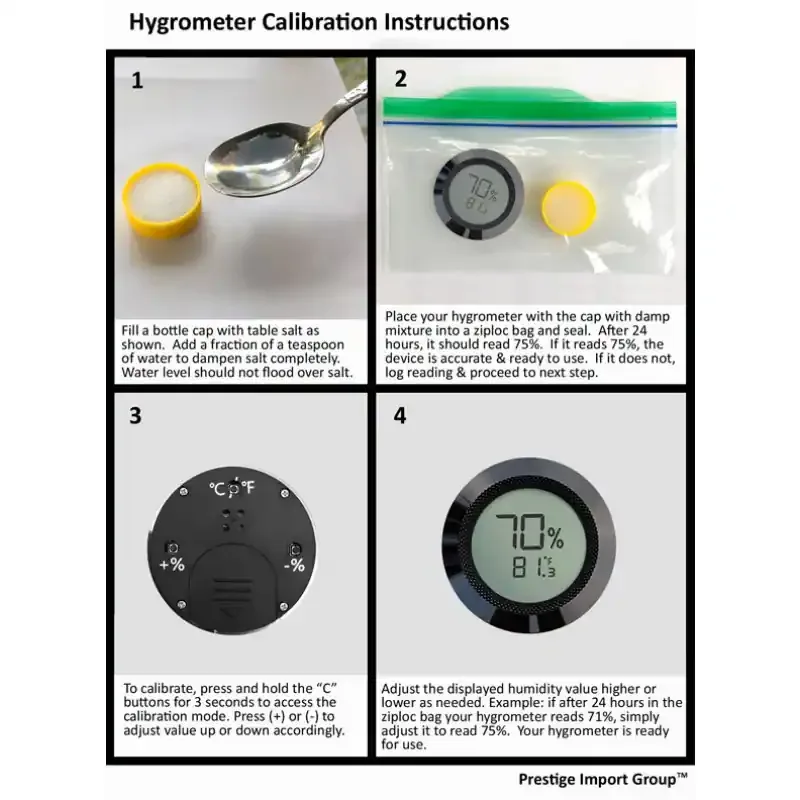
Image source: Bing (Web (fair-use with source credit))
Here's what you need:
- A clean, airtight container
- About 2 tablespoons of table salt
- A small dish or lid for the salt
- Your hygrometer
Steps:
- Put the salt in the dish. Add a few drops of water. It should look like wet sand, not soup.
- Place the dish and the hygrometer in the container. Keep them separate. Don't let the sensor touch the salt.
- Seal the container tightly. Leave it for 8 to 12 hours. Overnight works best.
- Read the hygrometer. It should read exactly 75% RH.
- If it's off, adjust it. Digital units often have a calibration function or offset setting. Analog units have a small screw on the back.
You now know your sensor's error. If it reads 70% in the test, subtract 5% from future readings. Or reset the offset if your model supports it.
Boveda makes pre-filled calibration kits. These are sealed pouches that hold a known humidity level, usually 75% RH. You put your hygrometer in a bag with the pouch for 24 hours.
No mixing, no waiting, no guesswork.
Recalibrate every 6 to 12 months. Sensors drift slowly. A yearly check keeps your data honest.
Common Mistakes That Mess Up Your Readings
Even a good hygrometer gives bad data if you use it wrong. These mistakes show up constantly in user reviews and forum threads:
- Placing the sensor near a vent or humidifier. Readings swing wildly. Move it to a neutral spot.
- Skipping calibration on a new unit. A fresh hygrometer can be off by 5% out of the box. Test it first.
- Putting it in direct sunlight. Heat skews the RH reading downward.
- Ignoring low batteries. Many digital models act erratically when power runs low.
- Leaving it in a damp spot after use. Condensation on the sensor causes false 100% readings. Dry it off and let it air out.
- Relying on a keychain hygrometer for critical storage. Those are novelty items, not instruments.
One more: reading RH without checking temperature. The two are linked. A basement at 65°F feels damper than a living room at 75°F even at the same RH.
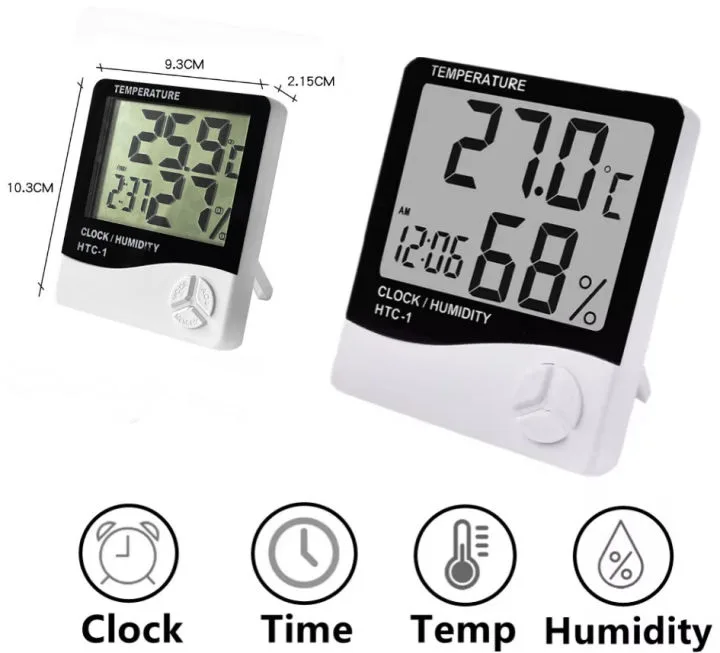
Use a thermo-hygrometer that shows both numbers together.
Also remember: if readings stay above 60% RH, you don't have a sensor problem. You have a moisture problem. Run a dehumidifier, fix leaks, improve ventilation.
The hygrometer is doing its job by telling you something is wrong.
Expert Tips: Simple Rules for Healthy Humidity
Here are practical rules to apply once you have reliable readings:
- In winter, heated homes often drop below 30% RH. Run a humidifier if you notice dry skin, static shock, or cracked wood.
- In summer, humid regions push RH above 60%. A dehumidifier in the basement is the most common fix.
- Use a humidistat for automation. It links your humidity reading to your humidifier or dehumidifier.
- Check readings seasonally. One reading in January and one in July covers most homes.
- For critical storage like guitars or cigars, use a hygrometer with a remote sensor. You don't want to open the case and disturb the environment just to check.
Frequently Asked Questions
How accurate are cheap hygrometers?
Budget digital hygrometers typically range from ±3% to ±5% RH out of the box. Mechanical dials are worse, often ±10% or more. Always test a new hygrometer with the salt test before relying on it.
What is the ideal indoor humidity level?
For comfort and health, keep indoor RH between 30% and 50%. The EPA suggests staying below 60% to prevent mold. In winter, aim above 30% to avoid dry skin and static electricity.
Do I need to calibrate a new hygrometer?
Yes. Even quality units can be off by a few percentage points from the factory. Run the salt test or use a Boveda calibration kit before trusting it.
Recalibrate every 6 to 12 months.
What's the difference between a hygrometer and a humidistat?
A hygrometer measures humidity. A humidistat measures humidity and controls connected equipment. It turns a humidifier or dehumidifier on and off to maintain a set level.
Can I measure humidity without a hygrometer?
Certain signs indicate dry air: static shock, cracked wood, dry lips. Mold and condensation indicate excess moisture. But those are guesses.
A hygrometer gives you an exact number for roughly $15 to $30.